


In Zuuku, near Bawku in the Upper East Region, the search for cooking fuel begins after the harvest.
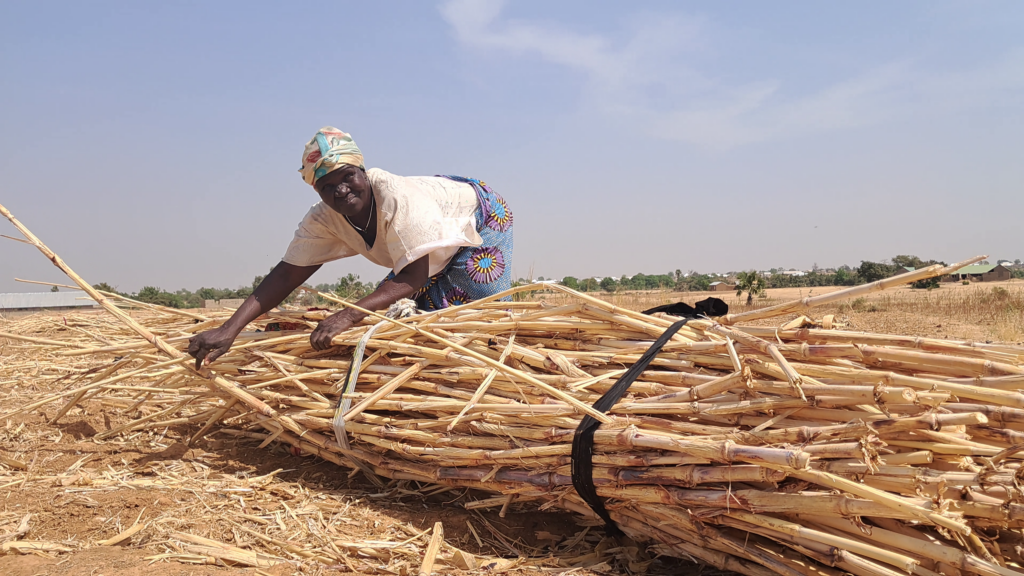
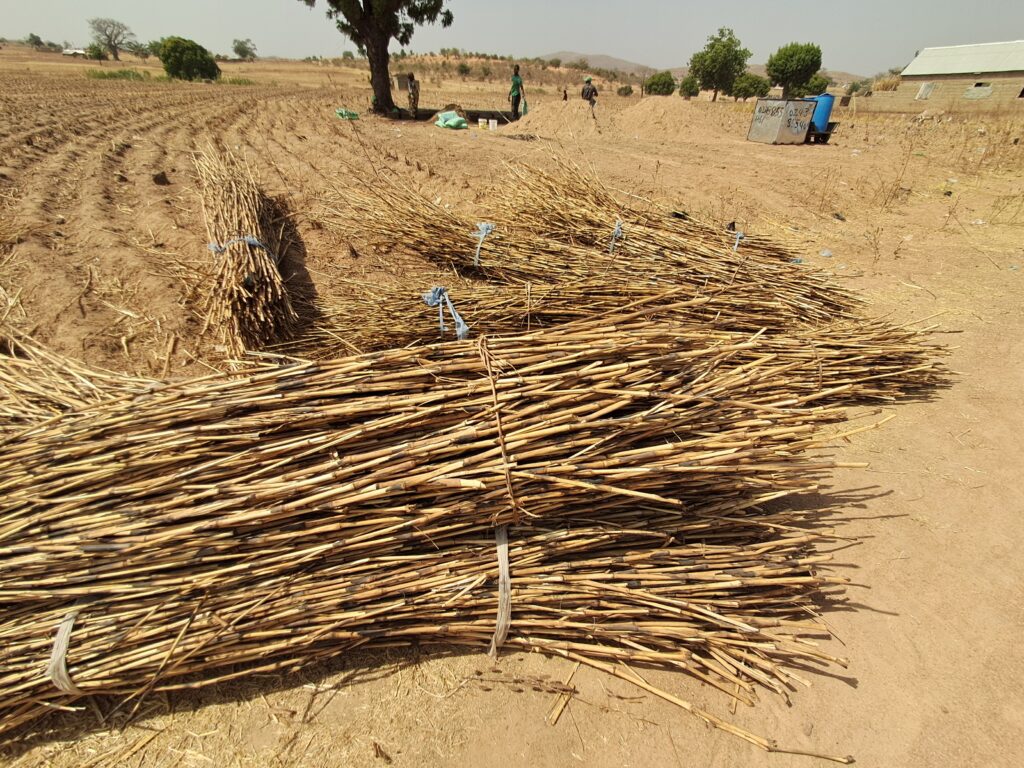
Women gather maize and millet stalks from the fields, tie them into bundles and carry them home. The stalks are then dried and stored in small barns or sheltered corners of their compounds, ready for use during the dry season and the rainy months.
For many households, these crop residues provide an affordable source of cooking fuel.
Charcoal is difficult to obtain in the community, while firewood is becoming increasingly scarce. For families who cannot afford or easily access other fuels, the remains of the harvest offer a readily available alternative.
At a mud house in the community, a woman feeds dry millet stalks into a small cooking fire as children wait nearby for breakfast.
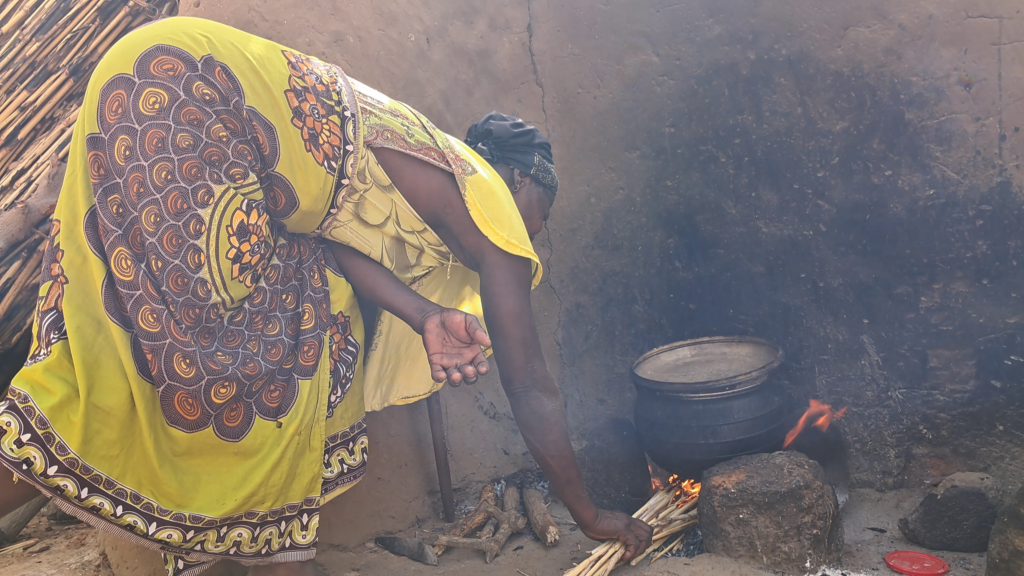
The practice is not new. Older residents say it has been passed down through generations, long before climate change became part of everyday conversation.
“We have used these stalks since the time of our parents,” said Ayishetu Ayaanab, 66, who cooks with crop residues every day.
“Sometimes I sell some of the stalks. With even 10 cedis, I can buy soap or help with food at home. This energy is cheaper than firewood, and firewood is destroying our forests,” she added.
The sale of surplus stalks provides a small income for some women, while their use at home reduces the need to buy firewood.
A practical local option
The stalks are a form of biomass, organic material that can be used as fuel. They grow alongside food crops and are available after each harvest.
For residents of Zuuku, however, the value of the practice is mainly practical. The fuel is readily available, costs little or nothing to collect, and can reduce reliance on wood and charcoal.
An environmental expert with the Centre for Climate Change and Food Security, Dr Alexander Nti Kani, said using residues that would otherwise be burned or discarded could help reduce pressure on nearby trees.
“When crop residues are reused for cooking, there is less need to cut trees,” he said. “That helps protect forests and reduce carbon emissions.”
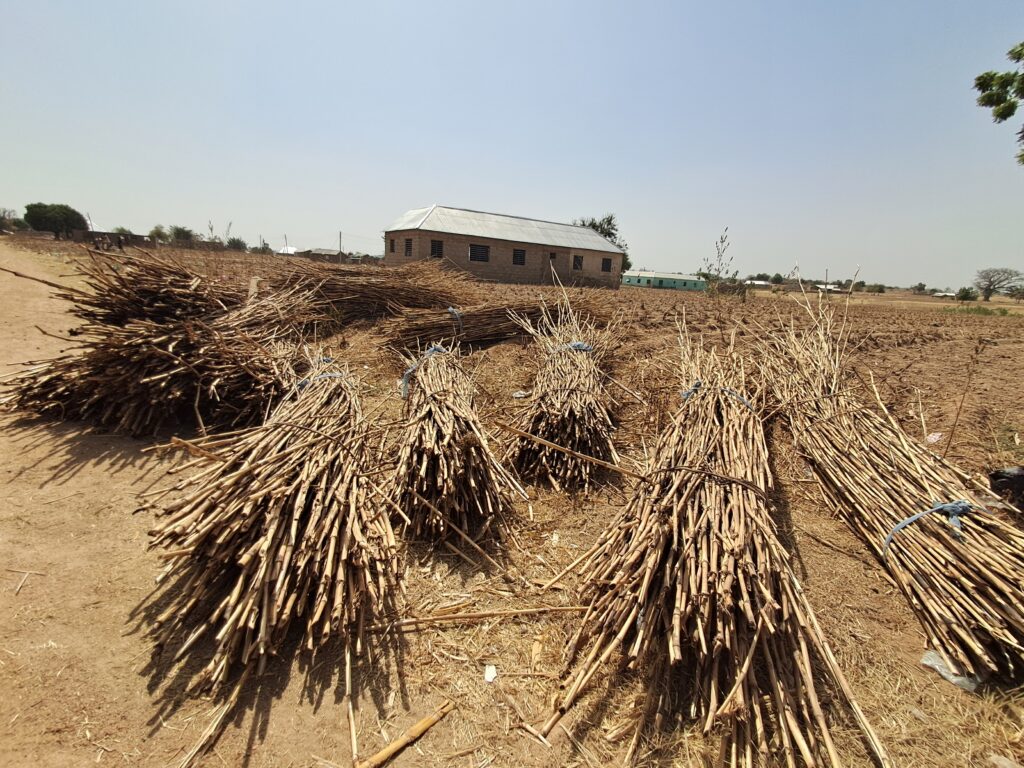
But crop-residue cooking is not without risks. Like other solid fuels, burning stalks produces smoke and emissions. The health effects depend on the type of stove used, whether the fuel is dry, and how well the cooking area is ventilated.
In Zuuku, many households cook in open compounds, where smoke can disperse more easily than in enclosed kitchens. Residents say properly dried stalks are easier to use than damp firewood, but they do not describe the fuel as completely clean or risk-free.
The wider challenge is significant. The International Energy Agency says about one billion people in sub-Saharan Africa still lack access to clean cooking solutions, while many households continue to rely on wood and charcoal.
The World Health Organization has also warned that smoke from traditional cooking fuels contributes to serious health problems, particularly for women and children who spend long periods near cooking fires.
For Zuuku, the question is not whether crop residues are perfect fuel. It is whether they are preferable to the alternatives available to households.
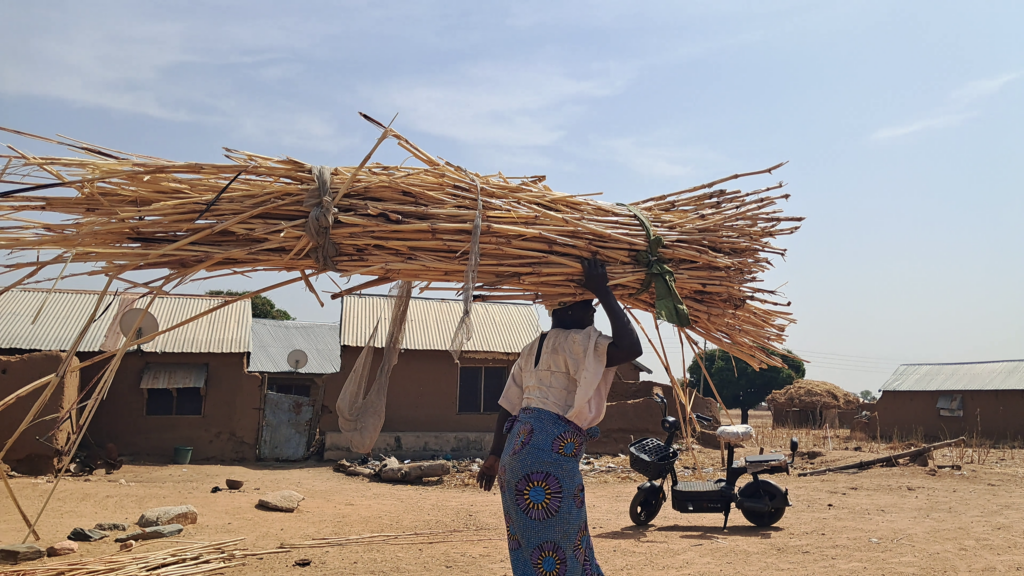
Charcoal may burn with less smoke at the point of use, but its production is linked to tree cutting, carbon emissions and deforestation. Firewood can also contribute to forest loss, particularly where it is collected faster than trees can regrow.
Crop residues offer a lower-cost option when they are already available on farms and would otherwise be openly burned.
Balancing fuel and farming
Residents say the practice can also prevent the open burning of agricultural waste.
Amadi Abugre, a farmer in his 70s, said using some of the stalks for cooking made sense for both households and farms.
“When waste is left on the farm and burned, it affects the soil over time,” he said. “Using the stalks for cooking keeps the land healthy and helps us in the home.”
The Food and Agriculture Organization says open burning of crop residues can release harmful gases and particulate matter, while also destroying nutrients and beneficial organisms in the soil.
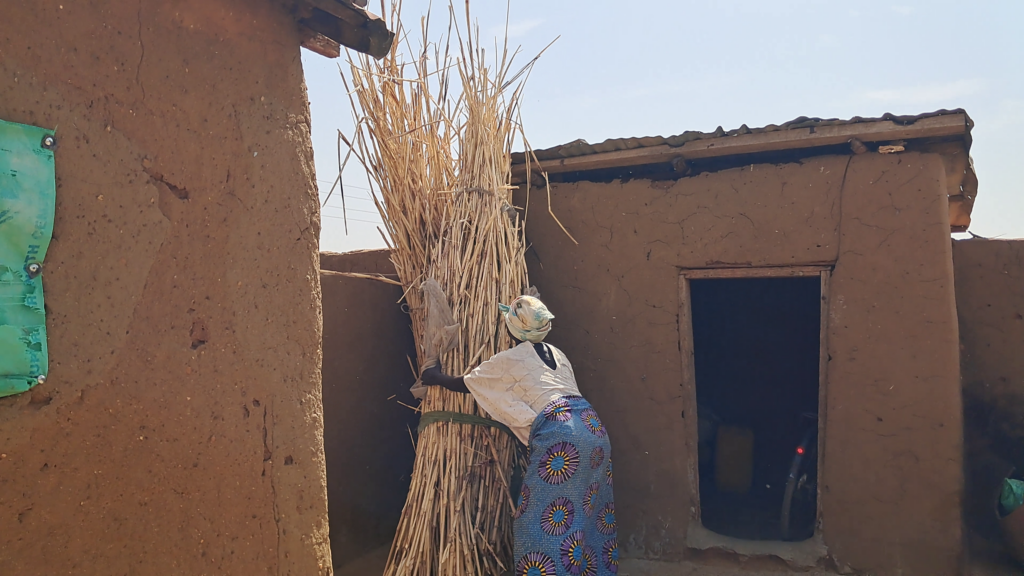
However, agricultural specialists also caution that residues should not automatically be removed from every field. Some are needed as mulch, compost, livestock feed or ground cover to help protect soil moisture and fertility.
The challenge is to use the material that would otherwise be wasted without taking so much from the land that farming productivity suffers.
This means households need practical guidance on how much residue can be collected, how it should be stored and dried, and how it can be burned more efficiently.
Improved stoves and better ventilation could reduce smoke exposure, while storage protects the stalks from rain and makes them easier to use throughout the year.
A wider opportunity
Researchers in Ghana are also examining how organic waste can be used more effectively.
A Ghana-Germany study in Sunyani, in the Bono Region, found that large quantities of unused biomass could be converted into energy instead of being left to rot or burned in the open.
Ghana lead for the Level Up Waste-to-Energy Project at the University of Energy and Natural Resources, Professor Nana Sarfo Agyemang Derkyi, said organic waste had significant potential.
“We have so much organic waste that can produce energy,” he said. “If serious action is taken, some areas could be powered with waste within a month.”
Such projects could involve technologies such as biogas production and electricity generation. They are different from the household use of crop stalks in Zuuku, but they reflect the same broader concern of how to make better use of material that is often treated as waste.
A renewable-energy lecturer at the university, Dr Gifty Serwah Mensah, said unmanaged organic waste could also create climate problems.
“When organic waste is left to rot, it releases methane,” she said. “But we can capture this waste and turn it into energy.”
For communities such as Zuuku, large-scale technologies may not be immediately available or affordable. Liquefied petroleum gas, for example, can reduce smoke from cooking when used safely, but it remains beyond the reach of many low-income rural households and has climate costs linked to its production and transport.
Crop residues are therefore not a replacement for every form of modern energy. They are a local response to a local reality.
Knowledge passed down
Rebecca Azure, 73, remembers watching her parents use crop residues for cooking.
“Trees are meant to protect humans,” she said. “Using the stalks instead of cutting trees shows respect for God’s creation.”
She believes younger people should recognise the value of knowledge developed by earlier generations.
“What our grandparents did naturally is what the world now calls climate action,” she said.
Zuuku’s experience does not offer a single solution to the challenges of clean cooking, forest protection and climate change. Burning crop residues still requires care, and the needs of the soil must be considered alongside the needs of the household.
But where families would otherwise depend on charcoal or freshly cut firewood, using carefully managed crop residues can reduce costs and lessen pressure on forests.
For the people of Zuuku, an old farming practice remains part of daily life. With safer stoves, dry storage, ventilation and better advice on protecting soils, it could also form part of a wider effort to support affordable and practical climate action.
DISCLAIMER: The Views, Comments, Opinions, Contributions and Statements made by Readers and Contributors on this platform do not necessarily represent the views or policy of Multimedia Group Limited.
DISCLAIMER: The Views, Comments, Opinions, Contributions and Statements made by Readers and Contributors on this platform do not necessarily represent the views or policy of Multimedia Group Limited.
Source link
