


![I was happy with my Pixel camera until I tried the Oppo Find X9 Ultra [Gallery]](https://i0.wp.com/pressinformant.com/wp-content/uploads/2026/04/i-was-happy-with-my-pixel-camera-until-i-tried-the-oppo-find-x9-ultra-gallery.webp?w=1200&resize=1200,600&ssl=1 "I was happy with my Pixel camera until I tried the Oppo Find X9 Ultra [Gallery]")
For many smartphone users, myself included, the camera isn’t just a feature; it’s often the single most significant factor influencing a purchasing decision. For years, Google Pixel devices have held a coveted spot in my pocket, primarily due to their unparalleled consistency, computational photography prowess, and the sheer ease with which one could capture stunning images. The “point-and-shoot” magic of the Pixel camera meant I rarely worried about complex settings or missed shots. It was a reliable, always-on companion for documenting life’s moments. However, after just a week of experiencing the Oppo Find X9 Ultra, I find myself at a crossroads, seriously contemplating a permanent shift. This device hasn’t just impressed me; it has fundamentally challenged my long-held perceptions of what a smartphone camera is truly capable of.
The Shifting Landscape of Smartphone Photography
It’s undeniable that smartphone cameras have reached an impressive level of quality across the board. Even mid-range devices can capture respectable photos. Yet, a clear disparity has emerged between what’s available in Western markets, particularly the US, and the cutting-edge innovations being pushed by certain brands in China. While established players like Samsung, with their “Ultra” branding, have often opted for incremental upgrades, sometimes releasing what feels like the same phone for several generations in a row, Chinese manufacturers frequently interpret “Ultra” as a mandate for truly groundbreaking camera specifications and ambitious technological leaps. This divergence has created a fascinating and sometimes frustrating gap for global consumers.
This year, Oppo is making a significant move by launching its Find X9 Ultra globally, allowing a wider audience to experience its photographic capabilities. As someone deeply invested in smartphone photography, I eagerly anticipated the opportunity to put this camera-centric flagship through its paces. My initial reaction, after just a short period of use, can be summed up in a single, emphatic word: “Wow.”
Unpacking the Oppo Find X9 Ultra’s Hardware Prowess
Before diving into the photographic experience, it’s essential to acknowledge the beastly specifications that underpin the Find X9 Ultra. This device is a true flagship, boasting the formidable Snapdragon 8 Elite Gen 5 processor, ensuring blistering performance and efficient image processing. A massive 7,050 mAh battery promises extended shooting sessions without constant power anxiety, a critical factor for any serious camera phone. The immersive 6.82-inch display provides a generous canvas for framing shots and reviewing captured content with stunning clarity. My review unit came equipped with a robust 12GB of RAM and a spacious 512GB of storage, though configurations extending to 16GB of RAM and a colossal 1TB of storage are also available, catering to even the most demanding users and their ever-growing photo and video libraries.
However, it is unequivocally the camera system that truly defines and elevates this phone, making it a compelling proposition in a crowded market.
A Revolutionary Camera System: Hasselblad and Lumo
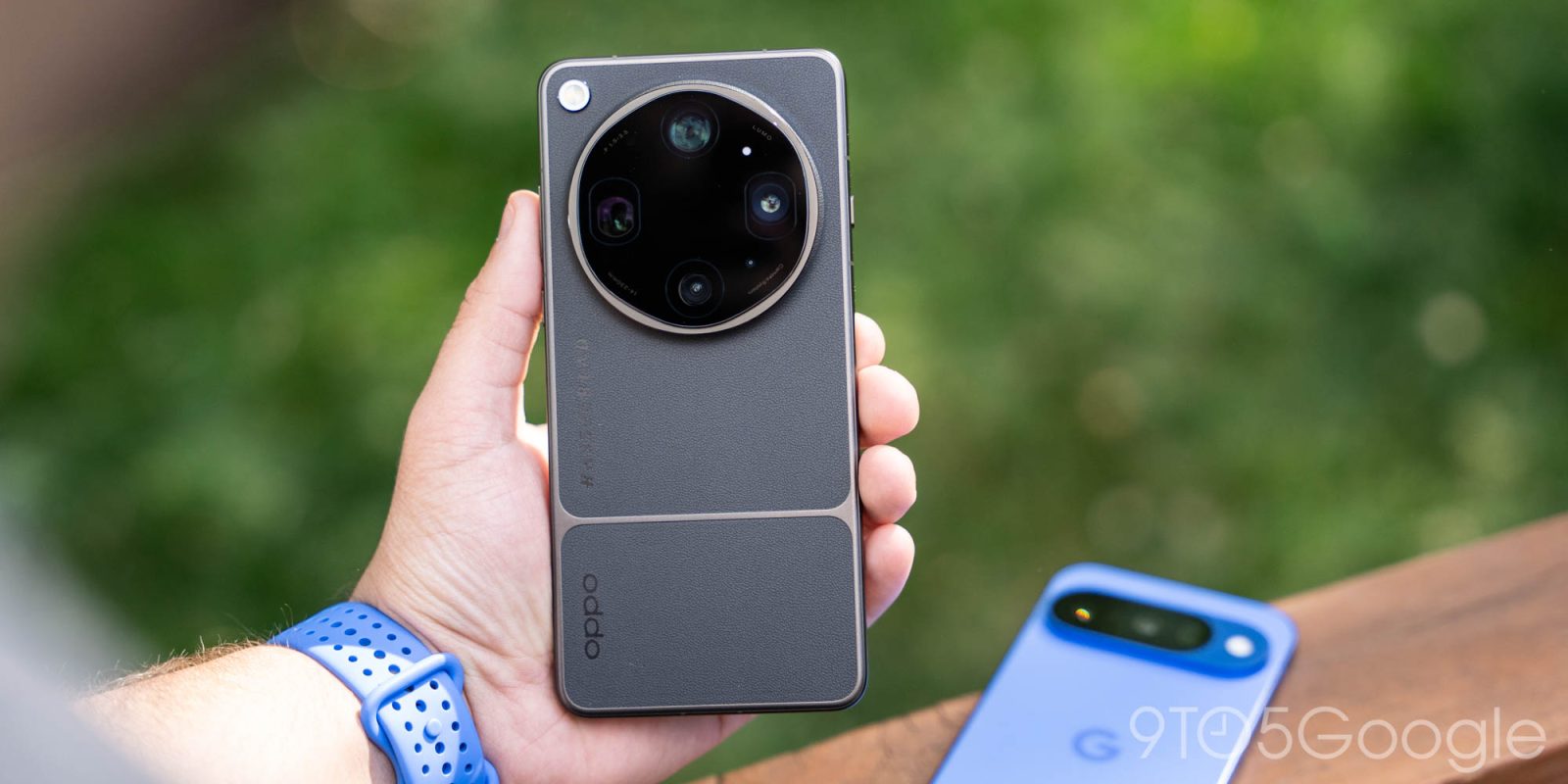
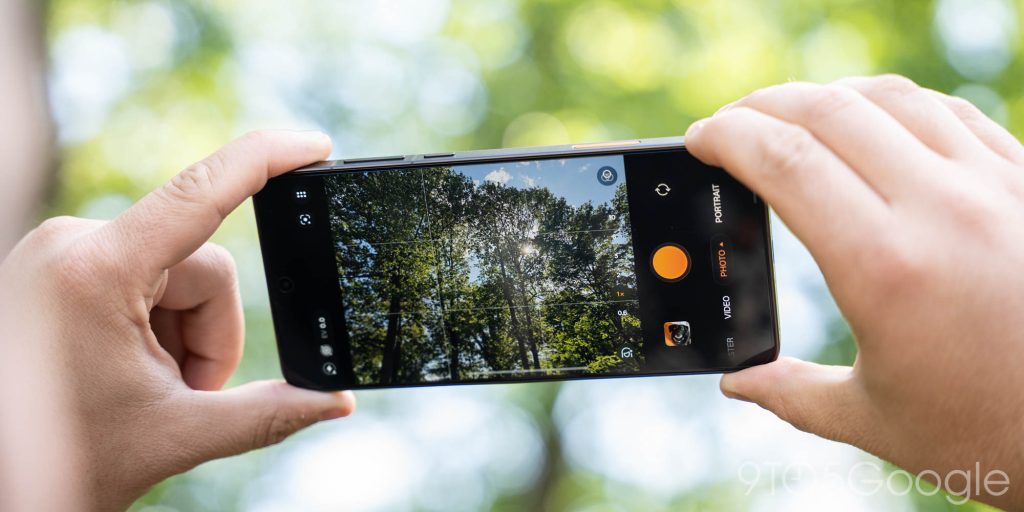
At the heart of the Find X9 Ultra’s photographic prowess lies a meticulously engineered camera system, co-developed with legendary camera maker Hasselblad and featuring Oppo’s proprietary “Lumo” imaging engine. This collaboration brings a distinct color science and image rendering to the table, aiming for a more natural, true-to-life aesthetic.
The rear camera array is nothing short of breathtaking on paper:
- 200MP Main Sensor: This ultra-high-resolution sensor is designed to capture an incredible amount of detail, allowing for significant cropping flexibility and stunning clarity in well-lit conditions. Its large sensor size also promises exceptional low-light performance and natural depth of field.
- 200MP 3x Periscope Telephoto Lens: Far from being a mere afterthought, this dedicated telephoto lens offers genuine optical zoom. The high megapixel count ensures that even at 3x magnification, images retain remarkable detail. This lens is particularly crucial for creating a natural separation between subject and background, often referred to as “bokeh,” without relying solely on artificial software processing.
- 50MP 10x Periscope Telephoto Lens: Pushing the boundaries of smartphone zoom, this 10x periscope lens allows users to capture distant subjects with an impressive level of optical magnification. It’s a game-changer for capturing details that would be invisible or heavily pixelated on most other smartphones.
- 50MP Ultrawide Lens: Rounding out the versatile quartet, the ultrawide lens offers an expansive field of view, perfect for sweeping landscapes, architectural shots, or fitting large groups into a single frame, all while maintaining high resolution and detail.
On paper, these specifications are genuinely incredible, but what’s truly remarkable is how the actual results have managed to exceed even these high expectations.
The Art of Smartphone Photography: Mimicking a Traditional Camera
The output from the Find X9 Ultra is, frankly, unreal. For too long, photos and videos taken with smartphones have carried a distinct “phone look” – a tell-tale signature often characterized by flat backgrounds, aggressive and overly obvious software processing (think artificial sharpening and saturation boosts), and a general lack of the nuanced depth and organic feel associated with dedicated cameras. The moment you place a smartphone photo next to one from a traditional DSLR or mirrorless camera, these differences become glaringly apparent.
The Oppo Find X9 Ultra is the first smartphone I’ve used that genuinely manages to mimic the output of a traditional camera. There’s an astonishing amount of natural depth and intricate detail present in the Ultra’s photos, a quality that elevates them far beyond the typical smartphone aesthetic. This is most dramatically pronounced when utilizing the 3x periscope telephoto lens. While many phones attempt to simulate background blur with portrait mode, the Find X9 Ultra achieves a true optical depth of field that feels far more natural and less artificial. In video, this effect is even more striking, as it’s something that simply cannot be convincingly faked through software alone. The way the background melts away, drawing focus to the subject, feels genuinely cinematic.

Note: All photos and videos in this post needed to be compressed – you can view full-size samples here.
The Nuances of Processing: Strengths and Areas for Improvement
While the impressive camera hardware certainly does much of the heavy lifting, Oppo’s image processing plays an equally crucial role in achieving these exceptional results. I observed this particularly in challenging scenarios like action shots. Often, the initial raw capture would appear slightly blurry or “wonky,” indicating the rapid movement. However, upon reviewing the image a moment later, Oppo’s intelligent processing would have refined it into a remarkably sharp and usable photograph. This intelligent post-processing, which likely leverages the powerful Snapdragon chip and Lumo engine, effectively salvages shots that might otherwise be discarded.
However, this processing isn’t without its limitations, especially as you push the optical zoom capabilities. Beyond the native 10x optical zoom, when entering the digital zoom territory (e.g., a 383mm equivalent, or roughly 16-17x magnification), the results can become noticeably softer. For instance, a quick shot of my dogs at this extreme zoom, taken with less-than-steady hands, wasn’t the sharpest I’ve ever seen. Yet, the processed output still managed to strike a commendable balance between a blurry digital mess and a somewhat realistic image. Another attempt at the same focal length, with more stable hands, yielded a much better result, indicating the potential is there, but consistency needs work. Oppo should definitely refine its processing algorithms for magnifications beyond 10x to deliver sharper and more consistent results.
This leads to an interesting philosophical point about the Find X9 Ultra’s camera: it isn’t perfect, nor does it strive to be in a clinically sterile sense. Much like traditional photography, where factors like lighting, composition, and even minor lens imperfections contribute to the “art,” the Oppo Find X9 Ultra seems to embrace a degree of organic realism. It doesn’t attempt to digitally erase every single “flaw” to achieve an unnatural, pristine image. Instead, it leans into the capabilities of its impressive optics, letting the hardware speak for itself, with processing acting as a sophisticated enhancement rather than an aggressive overhaul. This approach, ironically, makes the images feel more authentic and less “computational,” bridging the gap between smartphone convenience and photographic artistry.
A Personal Shift: Ditching the Pixel
After just a few days with the Oppo Find X9 Ultra, my allegiance has been swayed. I am officially ditching my Pixel 10 – which, for clarity, was a personal purchase and not a review unit – as my secondary phone, at least for the foreseeable future. My primary device remains the Galaxy Z Fold 7, a fantastic foldable but one whose camera, while competent, has always left me feeling the need for a stronger photographic backup in my other pocket. The Find X9 Ultra fills that void with such resounding success that it’s undeniable.
The camera experience on this phone is simply too good to pass up. It’s not just a great smartphone camera; it genuinely feels like carrying a dedicated, high-quality camera in my pocket. The sheer optical capability, coupled with sophisticated yet natural processing, creates images that stand apart.
Software: The Achille’s Heel?
Despite the camera’s undeniable brilliance, the Oppo Find X9 Ultra is not without its compromises. These primarily manifest in the software experience, which, somewhat surprisingly, feels like a step backward compared to even the Oppo Find N6 that I recently reviewed. While I can tolerate minor UI quirks or features that might seem like a “Liquid Glass ripoff” (referring to a noticeable lack of originality in some design elements), certain omissions in ColorOS are genuinely infuriating.
One significant frustration is Oppo’s persistent refusal to support a simple double-tap camera shortcut. This quick access feature is a staple on many Android devices and is essential for capturing fleeting moments instantly. Furthermore, the notification shade, a core component of the Android experience, inexplicably lacks fundamental Android gestures for easy management. The inability to swipe down to expand a group of notifications or an individual one, to quickly view more details or access actions, is a baffling design choice that hinders daily usability. These small, yet impactful, software shortcomings highlight an area where Oppo still has considerable ground to cover to match the seamless and intuitive experience offered by devices like the Google Pixel.
Normally, software fluidity and thoughtful design are the primary reasons I gravitate back to a Pixel device, even when other phones boast superior hardware. However, the camera experience on the Oppo Find X9 Ultra is so profoundly impressive, so genuinely revolutionary, that it manages to overcome these software frustrations. It speaks volumes about the photographic capabilities of this device that I am willing to overlook significant UI inconveniences for the sake of its imaging prowess.
Global Reach, US Exclusion: A Missed Opportunity
It is truly a crying shame that this exceptional phone will not be officially coming to the United States. The US market is missing out on a truly innovative and high-performing camera phone that pushes the boundaries of mobile photography. However, the good news is that it is making its way to more global markets, allowing a broader audience to experience what Oppo has achieved.
Conclusion: A New Standard for Mobile Photography
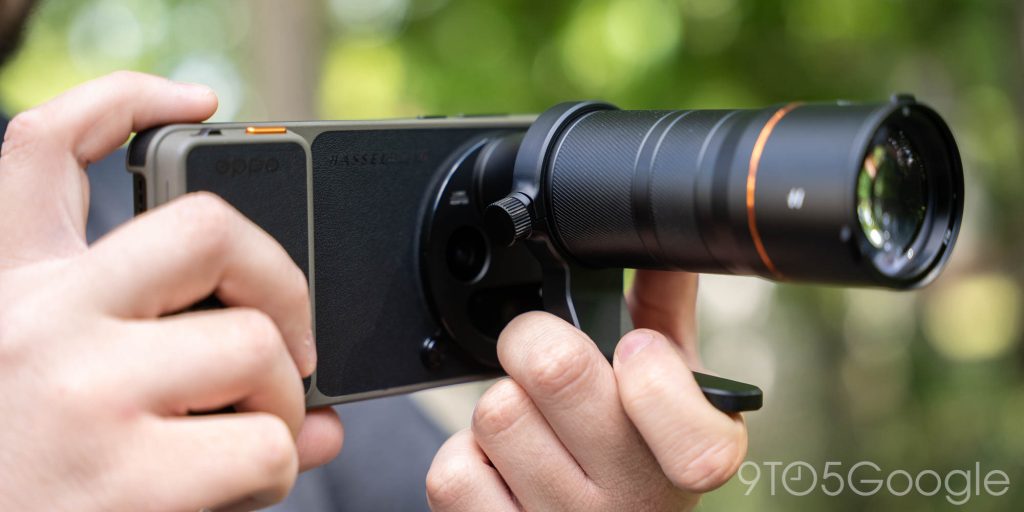
My time with the Oppo Find X9 Ultra has been brief, spanning only a few days, but it has been enough to fundamentally alter my perspective on smartphone cameras. Beyond the cameras, which are unequivocally great, I’m already impressed with the phone’s solid battery life and its stunning hardware design, which I explored in a previous hands-on. The arrival of Oppo’s wild Hasselblad 300mm lens accessory further hints at the extreme potential this device holds for serious photographers.
The Oppo Find X9 Ultra isn’t just another smartphone with a good camera; it’s a statement. It demonstrates that mobile photography can transcend the “phone look” and genuinely aspire to the artistry and depth traditionally associated with dedicated cameras. While its software experience might require some refinement, the sheer quality and versatility of its imaging system make it a groundbreaking device. For those who prioritize photographic excellence above all else, and who are willing to navigate regional availability, the Find X9 Ultra is a compelling, perhaps even revolutionary, choice that truly sets a new standard. Stay tuned for a comprehensive full review, where I’ll delve deeper into every aspect of this remarkable device.


*FTC: We use income earning auto affiliate links.* [More.](https://9to5mac.com/about/#affiliate)
