


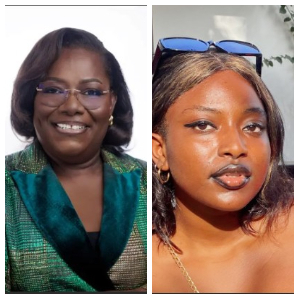

Ghana’s fight for human rights is being powerfully advanced by a group of dedicated female activists.
These women, with their diverse skills and shared commitment to justice, are driving real change across the country.
From legal reforms and policy advocacy to grassroots empowerment and digital activism, their works are shaping a more just and equitable society.
Meet some of Ghana’s leading female human rights activists:
1. Nana Oye Bampoe Addo
A seasoned barrister and politician, Nana Oye Bampoe Addo is a force in legal advocacy.
She firmly believes that strong laws are the foundation of human rights protection.
Her efforts have directly influenced policies benefiting vulnerable groups, especially women and children, and have expanded access to justice.
Her strength lies in bridging the gap between complex legal systems, policymakers, and the communities these policies are meant to serve.
She currently serves as the Deputy Chief of Staff at the Office of the President.
2. Angela Dwamena-Aboagye
Angela Dwamena-Aboagye is a lawyer, gender activist, and the Executive Director of The Ark Foundation Ghana. She focuses her work on combating gender-based violence and improving women’s economic empowerment.
Through advocacy, direct support for survivors, and the promotion of gender-sensitive policies, she addresses the root causes of inequality and works to build a safer, more inclusive environment for women in Ghana.
3. Genevieve Partington
Genevieve Partington is a human rights activist, feminist, and Director of Amnesty International Ghana.
Her work centers on advocating for the rights of vulnerable populations, especially children and persons with disabilities.
She combines community-level initiatives with national policy advocacy to ensure these groups are protected, supported, and given equal opportunities.
4. Professor Emerita Takyiwaa Manuh
Professor Emerita Takyiwaa Manuh is a highly respected academic, author, and thought leader.
Her extensive research on gender, development, and human rights have significantly shaped policies and informed national debates on social justice in Ghana.
Through teaching, writing, and public engagements, she has contributed to a deeper national understanding of human rights issues and remains a key voice in policy discourse.
5. Elorm Ababio, popularly known as Ama Governor
Ama Governor has harnessed the power of digital platforms to challenge outdated social norms and raise awareness, particularly among the youth.
As a lawyer and social media influencer, her online presence is a key platform for discussing issues such as gender equality, LGBTQ+ rights, and youth empowerment, making her an influential voice in the digital age.
Despite facing public controversy and backlash, Ama remains committed to championing human rights and social change.
A collective force for change
These women demonstrate that change can come through multiple channels, whether it’s the courtroom, the classroom, the community, or the internet.
Their dedication and diverse strategies exemplify how human rights advocacy must be both intersectional and inclusive.
Together, they are building a legacy of justice, equity, and hope, bringing Ghana closer to a society where every individual’s rights are not only recognized but actively protected.
PAT/AE


