


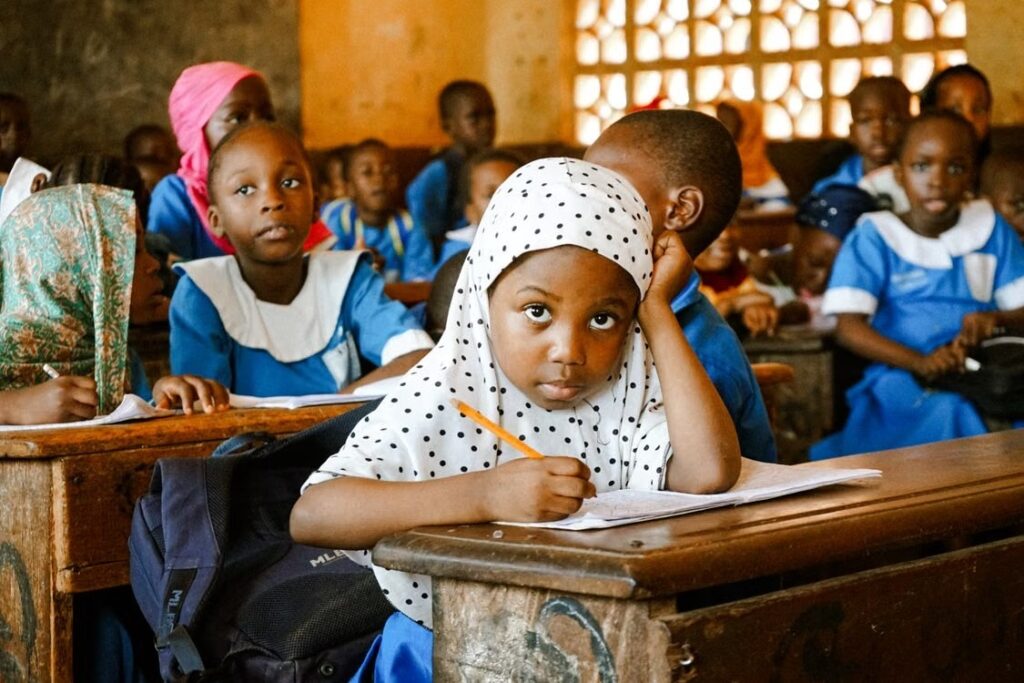

West African countries are stepping up efforts to ensure children and young people affected by conflict, displacement, climate-related disasters, public health emergencies and socio-economic shocks continue to have access to safe, quality and inclusive education.
The push is at the centre of the 2nd High-Level Conference on Scaling Education Initiatives in Emergencies (EiE), West Africa, ACCELERATE+, which will bring together policymakers, researchers, education practitioners, innovators, development partners and financing institutions to explore practical solutions to the growing challenges confronting education in crisis situations.
Across West Africa, persistent emergencies continue to disrupt schooling, restrict access to education and affect learning outcomes, with girls and other vulnerable and marginalised children often facing the greatest challenges.
While research has produced a growing number of promising education innovations, a major challenge remains ensuring that successful interventions move beyond pilot projects and are adopted through national policies, sustainable financing and large-scale implementation.
The conference will therefore focus on using policy-relevant evidence to identify and scale education innovations capable of improving access, learning, continuity, safety and the well-being of children and young people affected by crises.
Participants will assess which innovations are ready for expansion, the conditions required for successful implementation, and the policy and financing mechanisms needed to integrate proven approaches into national and regional education systems.
Key areas of discussion will include education in emergencies and the development of resilient education systems, with particular attention to strengthening systems to withstand conflict, displacement, climate shocks and other emergencies.
The conference will also examine foundational learning, e-learning, inclusion and educational innovation, including accelerated education, early childhood education and inclusive learning approaches.
Other areas will include teacher well-being, social protection and safe learning environments, with discussions covering psychosocial support, safeguarding, girls’ empowerment and peacebuilding.
Gender, youth, skills development and the transition to work will also feature prominently, with emphasis on girls’ participation, youth empowerment and pathways to sustainable livelihoods.
Education financing and innovative resource mobilisation will form another key area of focus, particularly new approaches to financing education innovations in fragile and crisis-affected settings.
The conference highlights the need to move beyond successful individual interventions towards sustainable, system-wide solutions capable of reaching more children and young people, particularly those living in communities affected by crises.
Through stronger collaboration and the exchange of evidence and practical experiences among countries, ACCELERATE+ seeks to support the institutionalisation of proven education solutions and contribute to building more resilient education systems across West Africa.
Ultimately, the initiative seeks to ensure that conflict, displacement, disasters and other crises do not prevent children and young people from exercising their right to learn, develop their potential and build meaningful futures.
DISCLAIMER: The Views, Comments, Opinions, Contributions and Statements made by Readers and Contributors on this platform do not necessarily represent the views or policy of Multimedia Group Limited.
DISCLAIMER: The Views, Comments, Opinions, Contributions and Statements made by Readers and Contributors on this platform do not necessarily represent the views or policy of Multimedia Group Limited.


