


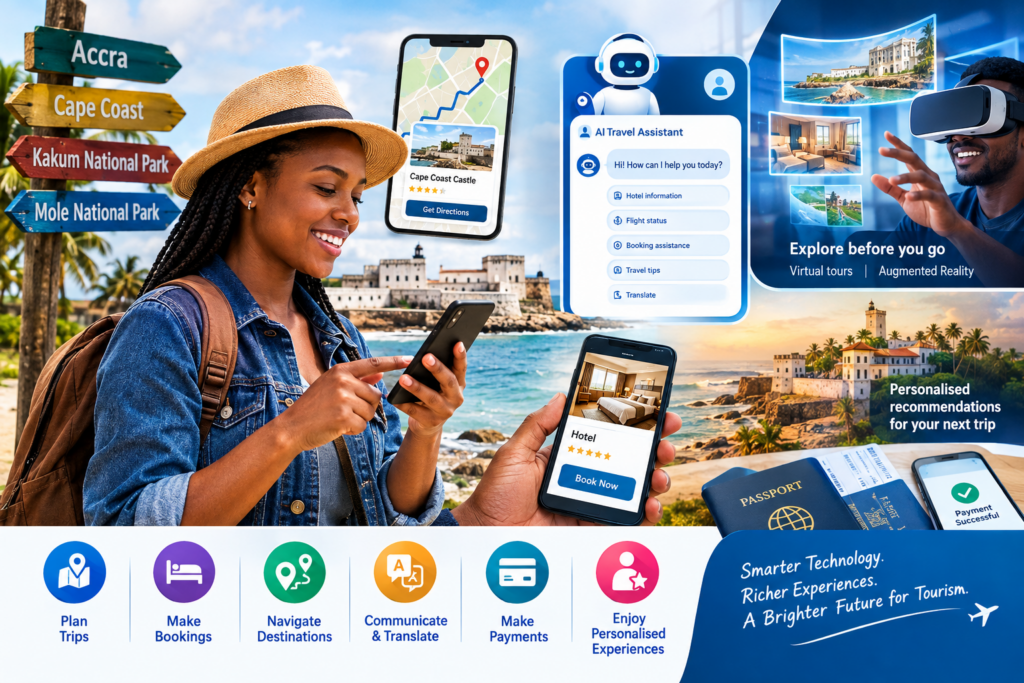
AI-generated illustration.
Technology applies scientific knowledge to achieve practical goals, solve problems, extend human capabilities, and perform daily tasks. Technology has become an important part of the tourism industry; from booking flights and hotels online to using mobile apps and digital maps, technology has changed how people plan, experience, and share their travels. Technology tools such as mobile phones and computers make communication and booking reservations easier for tourists planning to visit tourist sites.
Artificial intelligence, on the other hand, is a branch of computer science and technology concerned with developing computer systems, software, and machines capable of performing tasks that normally require human intelligence and cognitive abilities. These abilities include learning from experience, understanding and processing language. The use of chatbots and artificial assistants such as Siri and Google Assistant helps in translating languages and provides quick answers to questions asked by the tourist; it also helps navigate unfamiliar places and receive personalised services
The introduction of technology and artificial intelligence in tourism has shaped and reshaped the industry over the past few years. In the past, tourists depended mainly on travel agents, guidebooks, and physical maps to plan their journeys. Today, people can use smartphones, websites, mobile applications, and artificial intelligence to plan and enjoy their trips more easily. Technology and AI have therefore changed how people travel and how tourism businesses provide services. The effects of technology and AI can be seen throughout the tourism sector, from the initial planning of a trip to the tourist’s experience at a destination and even after the trip has ended.
Today, technology has made it much easier for tourists to obtain information about destinations. In the past, travellers often relied on travel agencies, guidebooks, newspapers, and recommendations from friends and family. Today, tourists can now use search engines, websites, social media, blogs, online reviews, and travel applications to obtain information within seconds. Tourists can now research hotels, restaurants, attractions, transportation, prices, weather conditions, cultural practices, and activities before visiting a destination.
For example, a tourist planning to visit Ghana can use the internet to research places such as Accra, Cape Coast, Kakum National Park, and Mole National Park before deciding where to go. This easy access to information allows tourists to make more informed decisions and plan their trips according to their interests and budgets.
AI chatbots have become increasingly useful in the tourism and hospitality industries. Hotels, airlines, travel agencies, and tourism websites can use AI-powered chatbots to communicate with customers. These chatbots can answer questions about hotel facilities, check-in times, flight information, prices, destinations, and booking procedures. They can also operate 24 hours a day, allowing tourists to receive assistance even outside normal business hours. For example, a tourist may ask a hotel chatbot about its check-in time, available rooms, or airport transportation and receive an immediate response.
Technology has introduced new ways for people to experience destinations before physically visiting them. Virtual reality and virtual tours can allow potential tourists to explore hotels, museums, attractions, and other locations digitally. For example, a person considering a particular hotel can take a virtual tour of the rooms and facilities before making a reservation. Augmented Reality (AR) can also provide additional digital information about physical locations. A tourist visiting a historical site may use a smartphone or AR device to view information about buildings, monuments, or historical events. These technologies can make tourism experiences more interactive and educational.
One of the major changes brought about by artificial intelligence is the ability to provide personalised tourism experiences. AI systems can analyse information about a customer’s interests, previous searches, bookings, and preferences. For example, if a tourist frequently searches for beaches and cultural attractions, an AI-powered travel platform may recommend destinations, hotels, restaurants, and activities that match those interests. This means that tourists no longer have to search through large amounts of information to find suitable options. AI can help narrow down the choices and provide recommendations based on individual preferences.
Although technology and Artificial Intelligence (AI) have brought many benefits to tourism, they also create several challenges and difficulties. Technology and Artificial Intelligence also create challenges involving privacy, cybersecurity, employment, accuracy, and excessive dependence on automated systems. The future of tourism will therefore depend not only on adopting new technologies but also on using them responsibly. When appropriately applied, technology and AI can continue to support innovation and improve the experiences of both tourists and tourism businesses.
In conclusion, Technology and Artificial Intelligence (AI) have significantly changed the tourism industry by transforming how people discover destinations, plan trips, make bookings, communicate, navigate, make payments, and experience tourism services.
The internet and social media have made tourism information more accessible, while online booking systems have made reservations faster and more convenient. AI has further expanded these changes through personalised recommendations, chatbots, predictive analysis, translation, and automated services. For tourism businesses, technology and AI can improve efficiency, customer service, marketing, decision-making, and competitiveness. For tourists, they can make travel more convenient, personalised, accessible, and informative.
–
Author: Worklatsi John Edem
Intern, Corporate Affairs Department
Ghana Tourism Authority
DISCLAIMER: The Views, Comments, Opinions, Contributions and Statements made by Readers and Contributors on this platform do not necessarily represent the views or policy of Multimedia Group Limited.
Tags:
DISCLAIMER: The Views, Comments, Opinions, Contributions and Statements made by Readers and Contributors on this platform do not necessarily represent the views or policy of Multimedia Group Limited.
Source link


