


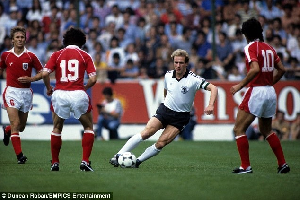
 Germany and Austria played a boring game to get a desired result
When Algeria were drawn into the same World Cup group as Austria for the 2026 tournament, it did more than raise eyebrows; it stirred an old wound that has lived in Algerian football folklore for more than four decades.
It revived memories of 1982, a year when a brilliant Algerian team arrived in Spain with flair, fearlessness, and a belief that they could shock the world. And they did.
Algeria stunned West Germany 2–1 in Gijón, a victory that shook the football world. They, however, lost their next game against Austria and followed it up with a 3-2 win over Chile.
They finished their group matches early, leaving the door open for what should have been a historic qualification.
Instead, what followed became one of the darkest moments in World Cup history.
Jamie Carragher drops the hammer on Mohammed Salah, calls him Chelsea reject
Because Algeria had played a day earlier, Austria and West Germany walked onto the pitch the next day knowing the exact result that would send both sides through and eliminate Algeria.
A 1–0 West German win was all they needed. And from the moment Horst Hrubesch scored early, both teams appeared to stop playing. The ball was passed sideways and backwards. Tackles were half-hearted. Attacks evaporated.
The crowd’s mood shifted from confusion to fury.
Inside the packed Estadio El Molinón, fans whistled, booed, and threw objects.
An Algerian supporter stood up in the stands, waving a banknote toward the pitch, his way of accusing the teams of corruption, of fixing a result that had nothing to do with sporting merit.
But no protest could reverse the damage. Algeria were eliminated despite winning four points same as Germany and Austria, who finished first and second, respectively.
Punished not by their own play but by what many believe was a prearranged understanding between their European opponents.
The scandal sent shockwaves across the football world. FIFA, embarrassed into action, introduced a rule that remains today: all final group matches must be played simultaneously to protect sporting integrity.
For Algerians, it became known as the Disgrace of Gijón, a story told from generation to generation. And now, as Algeria prepare to meet Austria again, the ghosts of 1982 hover in the background, waiting to see if football history will offer a moment of redemption.
FKA/EB
