


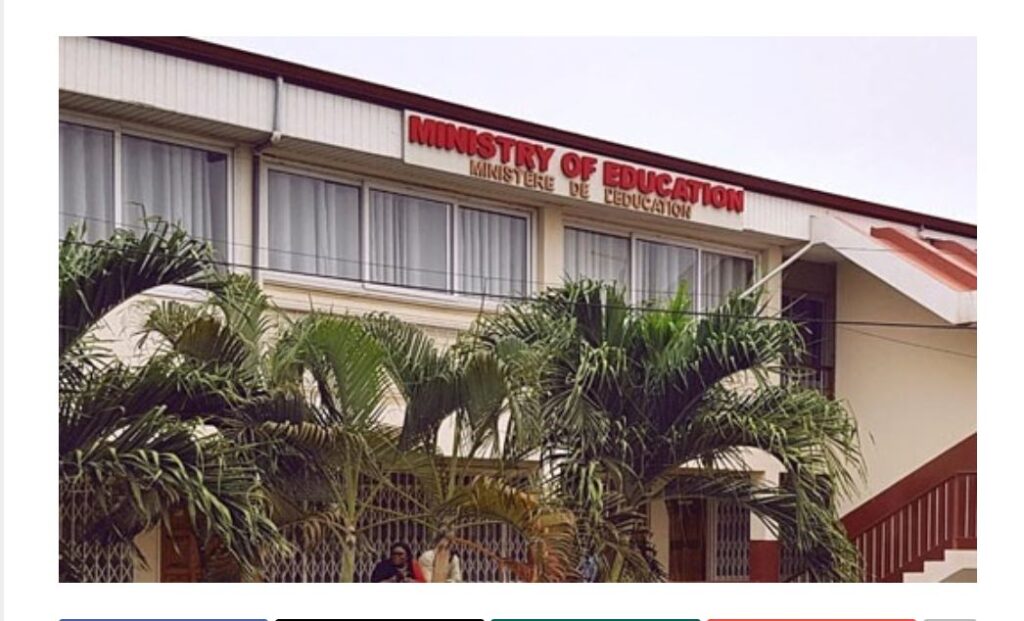
Deputy Director of the Tertiary Directorate at the Ministry of Education, Harriet Krakani, says sexual harassment has no place in Ghana’s educational institutions.
She said tertiary institutions must strengthen prevention, reporting and support systems to protect students and staff and ensure safe learning environments.
Ms Krakani said this at a multi-tertiary stakeholder conference in Accra on strengthening survivor-centred sexual harassment prevention and response in tertiary institutions.
She said sexual harassment undermined the dignity and well-being of individuals, affected the educational experience of students and staff, and could erode confidence in institutions.
“Government is unequivocal in its position that sexual harassment has no place in our educational institution,” she said.
The conference focused on strengthening survivor-centred sexual harassment prevention and response in tertiary institutions.
It was organised by the Perfector of Sentiments (POS) Foundation and Amplify Change on the theme: “From Policy to Practice: Strengthening Survivor -Centered Sexual Harassment Prevention and Response in Tertiary Institutions.”
Representatives from the University of Ghana, Kwame Nkrumah University of Science and Technology, University of Cape Coast, University of Education, Winneba, and University for Development Studies attended the conference.
Ms Krakani said institutional responses should go beyond dealing with incidents after they occurred.
“Our response must therefore go beyond dealing with incidents after they occur. We must create institutional cultures where sexual harassment is actively prevented, reporting is encouraged, survivors are treated with dignity and confidentiality and perpetrators are held accountable,” she said.
Ms Krakani said the existence of policies was only the beginning, adding that their effectiveness depended on proper implementation.
“The real test is whether these policies are effectively implemented and whether students and staff can confidently access appropriate reporting, support and referral mechanisms when they need them,” she said.
Ms Krakani said the Government, through the Ministry and its agencies, remained committed to strengthening safety and inclusiveness within the tertiary education system.
“Through the Ministry of Education and its agencies, the government remains committed to strengthening quality, inclusive safety within the tertiary education system,” she said.
Ms Krakani said the Ghana Tertiary Education Commission (GTEC) had developed guidelines for anti-sexual harassment policies in tertiary education institutions.
She said the guidelines provided a framework for prevention, reporting and response, protection and enforcement.
Ms Krakani commended the Perfector of Sentiments (POS) Foundation and Amplify Change for organising the conference.
She said the conference challenged stakeholders to translate policy commitments into practical action.
“It challenges us to move beyond policies and commitments to practical action that protects dignity, safety and well-being of everyone within tertiary institutions.
Ms Krakani said the Government’s position was that sexual harassment should be prevented, reported and addressed and should never be normalised in tertiary institutions.
“This reflects the government’s clear position that sexual harassment must be prevented, appropriately reported, effectively addressed and never normalised in our tertiary institutions,” she stressed.
Ms Krakani said the Ministry welcomed the survivor-centred approach being promoted through the conference.
“Such an approach places the dignity, safety, needs and choices of survivors at the heart of institutional responses. It requires institutions to listen to survivors, protect their confidentiality, provide appropriate support in referrals and ensure that institutional processes do not expose them to further harm, stigma, or victimisation.”
Ms Krakani said interventions under the initiative included collaboration among Gender Centres, counselling units and student leadership.
She said the initiative also involved training first responders and campus human rights defenders and sharing institutional innovations, adding that the interventions were important in translating policy commitments into practical action.
Ms Krakani said preventing sexual harassment in tertiary institutions required a multi-stakeholder approach.
She urged institutions to take ownership of the interventions and integrate effective prevention and response mechanisms into their systems.
Ms Krakani also called for sustainable structures that would remain functional beyond individual projects and programmes.
“Policies must be translated into clear procedures that students and staff understand and can readily access.
“No student should have to compromise personal safety in pursuit of academic opportunity, and no faculty or staff should work in an environment where harassment and intimidation is tolerated,” she stressed.
Ms Krakani urged institutions, students and staff to strengthen collaboration, raise awareness and promote institutional accountability.
She also called for effective implementation of sexual harassment policies.
“Let us use this conference to ensure that no survivor is silenced, no report is ignored, no institution becomes complacent in the face of sexual harassment, she said.
The Executive Director, POS Foundation, Mr Jonathan Osei Owusu, said research conducted by the organisation indicated that cohabitation was prevalent in most universities.
He said the practice had been associated with physical abuse, harm and loss of lives.
Madam Mercy Catherine Adjabeng, a Communication and Gender Specialist, said society unfortunately tacitly“condones” sexual harassment.
She said public attitudes and discussions around sexual harassment did not demonstrate “our seriousness in addressing it.”
Ms Adjabeng said people who spoke about sexual harassment were sometimes seen as going “overboard.”
DISCLAIMER: The Views, Comments, Opinions, Contributions and Statements made by Readers and Contributors on this platform do not necessarily represent the views or policy of Multimedia Group Limited.
DISCLAIMER: The Views, Comments, Opinions, Contributions and Statements made by Readers and Contributors on this platform do not necessarily represent the views or policy of Multimedia Group Limited.
Source link
