


Director of the Academic Quality Assurance Directorate at the University of Ghana and a professor at the Department of Economics, Professor Daniel Kwabena Twerefou has called for stronger stewardship of Ghana’s natural resources, warning that the country’s long term development will remain under threat if forests, rivers, farmlands and other environmental assets continue to be degraded.
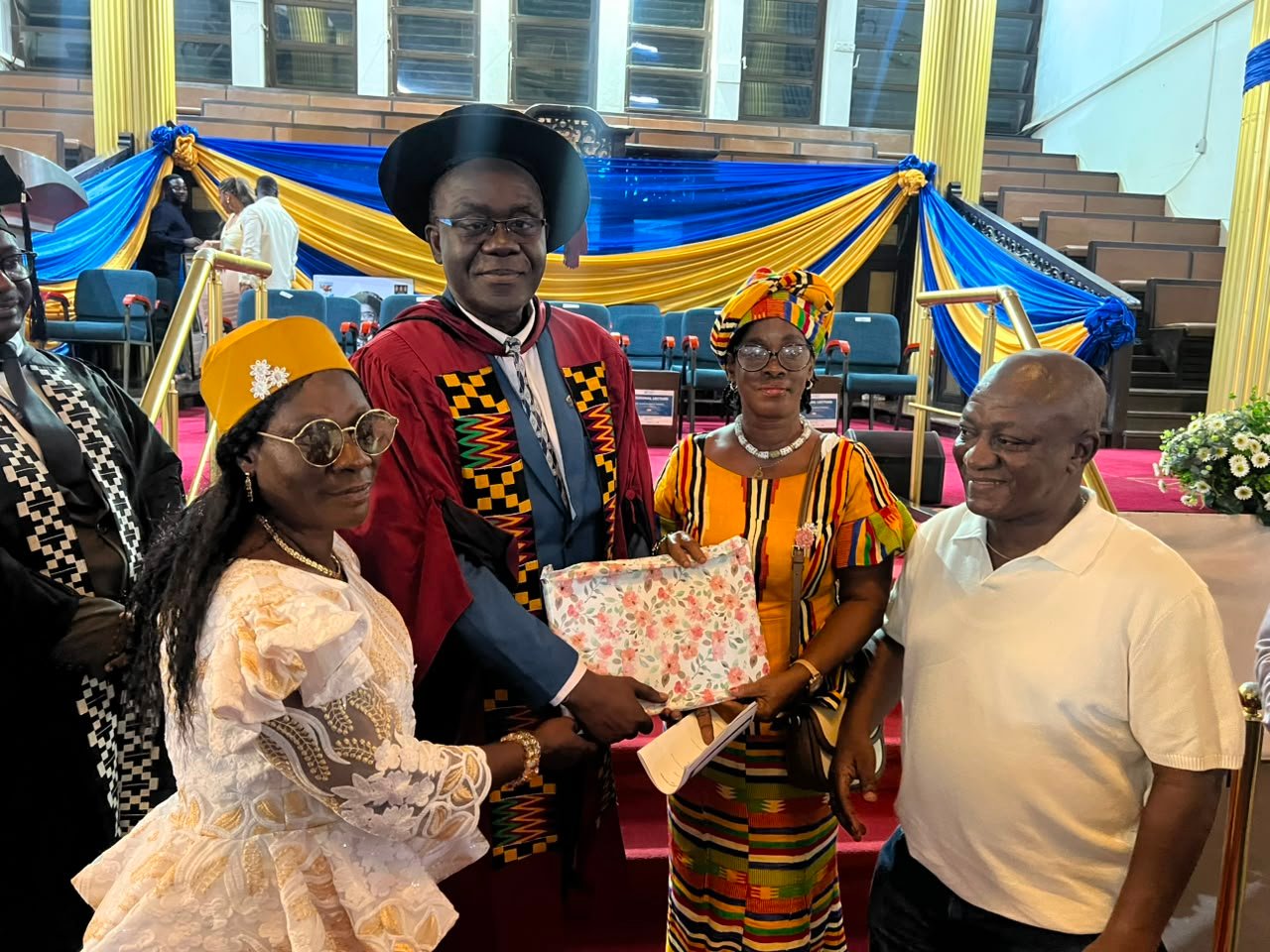
He made the call during his inaugural lecture at the Great Hall of the University of Ghana on Thursday, July 30, 2026 on the theme, “Ghana’s Stewardship Paradox: Rich in Resources, Poor in Governance.”
Prof. Twerefou said Ghana was richly endowed with forests, rivers, fertile lands, fisheries, minerals and biodiversity, but had failed to manage these resources effectively for the benefit of present and future generations.
He said the country’s natural resources had been entrusted to its people as stewards and should be managed responsibly to ensure sustainable development.
According to him, economic development could not be achieved without protecting the environment because every productive activity depended on natural resources.
He cited the destruction of trees around water bodies and pollution caused by illegal mining as examples of poor environmental stewardship, warning that the degradation of rivers and farmlands threatened food production, clean water supply and public health.
“If you pollute all these rivers and spoil all these lands, what are you going to eat and what are you going to drink?” he asked.
Prof. Twerefou stressed that natural resources should be treated as natural capital and called for stronger conservation measures and greater accountability in managing them.
He urged the country to add value to minerals and other natural resources before exporting them, saying value addition would generate more revenue and create greater economic benefits.
The professor advocated the application of the “polluter pays” principle, explaining that those who polluted the environment should bear the full cost of the damage they caused instead of passing it on to society.
He further called for the integration of indigenous knowledge into environmental governance, saying traditional systems of managing natural resources had promoted sustainability and should be built upon.
Prof. Twerefou observed that while Ghana had expanded its environmental laws and institutions over the years, weak enforcement, poor accountability, overlapping mandates and inadequate resources continued to undermine effective environmental governance.
He said sustainable development required stronger institutions, better accountability and policies that recognised the full value of ecosystems while ensuring that today’s use of natural resources did not compromise the welfare of future generations.
Chairperson of the event and Vice Chancellor of the University of Ghana, Professor Nana Aba Appiah Amfo, described the lecture as timely and thought provoking.
She said the lecture demonstrated that natural resources alone did not make nations prosperous, adding that sustainable development depended on strong institutions, sound policies and effective leadership.
Prof. Amfo said forests, rivers, fisheries and biodiversity should be regarded as productive assets rather than inexhaustible gifts of nature because they supported every aspect of the economy.
She noted that environmental degradation was not only an ecological issue but also a development challenge that affected public health, food security, livelihoods and economic productivity.
The Vice Chancellor stressed that passing laws and establishing institutions alone would not solve environmental problems unless they were supported by commitment, accountability and integrity.
She said the lecture highlighted what she described as a shift from “stewardship without bureaucracy” to “bureaucracy without sufficient stewardship,” noting that although Ghana now had more environmental institutions, stewardship had weakened.
Prof. Amfo commended Prof. Twerefou for his contributions to environmental and natural resource economics and praised him for establishing the Governmental Economics Academy Excellence Award to support the next generation of scholars.
She added that the inaugural lecture reflected the University’s commitment to impactful research that informed public policy, strengthened institutions and contributed to addressing national development challenges.
By: Jacob Aggrey


