


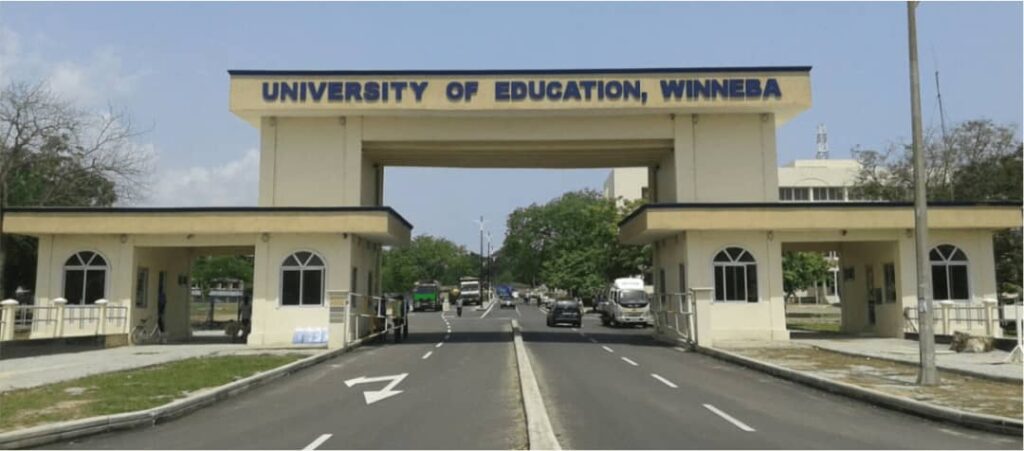
For students at the University of Education, Winneba (UEW), attending an online class, downloading lecture materials or submitting an assignment has become a struggle that often depends on the strength of an internet connection.
Unstable networks and slow internet speeds are disrupting academic activities for some students, making it difficult for them to participate fully in online classes, conduct research, communicate with lecturers and submit assignments on time.
At a time when digital technology has become an important part of university education, students say unreliable internet connectivity is creating an additional academic burden.
Students struggle to attend online classes
Some students say poor connectivity frequently interrupts online lectures, forcing them to reconnect repeatedly or miss portions of lessons.
Ernestina, a student at UEW, described the experience as stressful.
“Joining online classes here at UEW is very stressful because whenever I try joining an online class, I experience breaks in the connection. It makes online learning very difficult.”
For students who depend on virtual classes to keep up with their courses, such interruptions can mean missing explanations, discussions and important information provided by lecturers.
The problem becomes even more serious when classes are conducted entirely online.
Poor network affects assignment submissions
The connectivity challenge also extends beyond virtual lectures.
John, a student from the Business Department, said he once lost marks on an online assignment because of network problems.
“I once lost five marks for submitting my online assignment before the deadline. It was not because I forgot or did not have a data bundle, but because of the poor network.”
His experience highlights a concern among students that internet connectivity can directly affect academic performance.
For students who submit assignments through online platforms, a weak connection can turn a simple academic task into a race against time.
Lecturers face the same challenge
The problem is not limited to students.
Lecturers who depend on digital platforms to teach, communicate with students and distribute academic materials are also affected.
Dr. Elizabeth, a lecturer at UEW, said the difficulties students face in joining online classes could influence how she conducts lessons in the future.
“From next semester, we will not meet online for classes again because students find it difficult to join my class because of the poor network.”
The situation raises concerns about the effectiveness of online learning when students and lecturers cannot depend on stable connectivity.
Students spend more to stay connected
For some students, poor campus connectivity means spending additional money on mobile data.
Others move to different locations in search of stronger network signals just to attend classes, download materials or submit assignments.
For students already managing tuition-related expenses, accommodation, transportation and other academic costs, the additional financial burden of purchasing data or travelling to areas with better connectivity can be significant.
Digital education requires reliable infrastructure
The growing reliance on online platforms means internet connectivity is no longer simply a convenience for university students.
It has become part of the infrastructure required for effective teaching and learning.
Lecture materials, research resources, online assessments, virtual meetings and communication between students and lecturers increasingly depend on digital access.
When that access is unreliable, the consequences can extend beyond inconvenience.
Students may miss classes, delay assignments, struggle to conduct research or lose marks through no fault of their own.
For UEW students, the hope is that the university will take stronger measures to improve connectivity across campus.
As higher education continues to embrace digital learning, ensuring reliable internet access should be treated as an essential part of creating an effective academic environment.
For students at UEW, a stronger internet connection would mean more than faster browsing.
It could mean fewer missed classes, fewer delayed assignments and a fairer opportunity to learn.
DISCLAIMER: The Views, Comments, Opinions, Contributions and Statements made by Readers and Contributors on this platform do not necessarily represent the views or policy of Multimedia Group Limited.
DISCLAIMER: The Views, Comments, Opinions, Contributions and Statements made by Readers and Contributors on this platform do not necessarily represent the views or policy of Multimedia Group Limited.
Source link


