


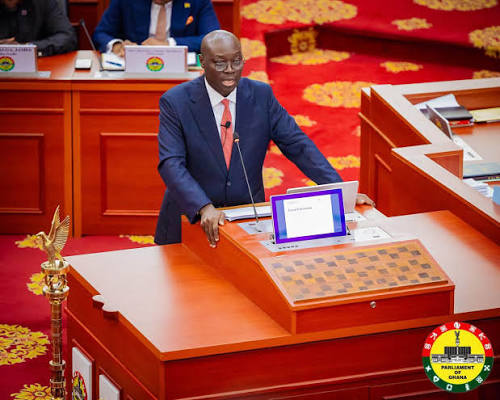
Parliament has passed the Energy Sector Levies (Amendment) Bill, 2026, amending the Energy Sector Levies Act, 2025, in a move the government says is aimed at strengthening revenue mobilisation and addressing widespread abuse within the country’s fuel subsidy regime.
This raises the Energy Sector Shortfall and Debt Repayment Levy on fuel oil from GH¢0.24 per litre to GH¢1.93 per litre, bringing it in line with the rate applied to diesel and marine gas oil.
The amendment increases the Energy Sector Shortfall and Debt Repayment Levy on fuel oil to align it with the rate applied to diesel and marine gas oil. It also extends the Road Fund Levy to fuel oil.
According to the government, the changes are intended to plug significant revenue leakages and curb tax evasion schemes that have undermined the effectiveness of fuel subsidies designed to support industries.
Explaining the rationale behind the amendment in Parliament, Finance Minister Dr Cassiel Ato Forson said some individuals had been exploiting the system by purchasing diesel, disguising it as fuel oil and fraudulently claiming tax exemptions intended for industrial users.
“Some individuals are taking advantage and smuggling, buying fuel, buying diesel and disguising it as fuel oil and collecting the taxes on it. We will continue to give that tax exemption to industries. However, instead of ex-ante, this tax exemption will be ex-post,” he said.
Dr Forson explained that under the new arrangement, companies using fuel oil for industrial purposes would pay the applicable levies upfront at the point of importation and subsequently apply for refunds.
“You have to pay for it as industry and claim the refund. Fuel oil is not used by motorists; it’s used by industry,” he stated.
The Finance Minister stressed that the amendment does not introduce a new tax on petroleum products but rather changes the mechanism through which tax exemptions are granted.
“For emphasis, there will not be a tax increase on petroleum products. What we are saying is that we are equally going to amend the Revenue Administration Act to make the tax refund system relating to industries buying fuel oil move from 90 days to 14 days,” he added.
According to Dr Forson, Ghana lost an estimated US$25 million during the first half of 2026 through abuses within the fuel subsidy regime. He warned that the country stood to lose about GH¢1 billion annually if the loopholes were not closed.
The government believes the amendment will help safeguard public revenue, improve the integrity of the downstream petroleum sector and ensure that fuel subsidies benefit only legitimate industrial users.
DISCLAIMER: The Views, Comments, Opinions, Contributions and Statements made by Readers and Contributors on this platform do not necessarily represent the views or policy of Multimedia Group Limited.
DISCLAIMER: The Views, Comments, Opinions, Contributions and Statements made by Readers and Contributors on this platform do not necessarily represent the views or policy of Multimedia Group Limited.
Source link
