


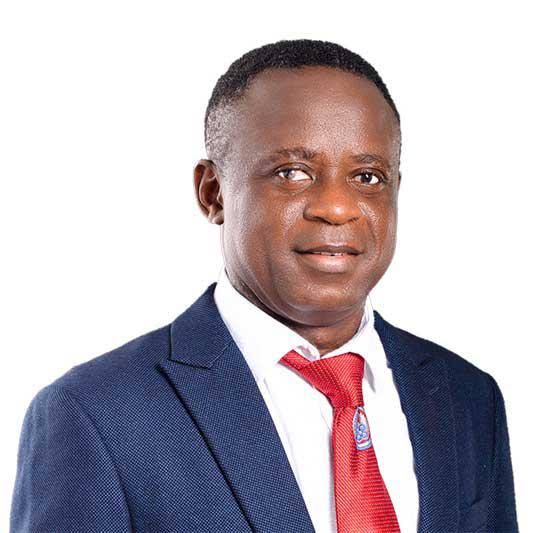
The Acting Director-General of the National Sports Authority (NSA), Prof. Emmanuel Osei Sarpong, has stated that hiring top-tier coaches alone will not solve Ghana’s recurring sports challenges urging a shift in focus toward long-term development and athlete development.
His comments come amid a difficult period for Ghanaian football, with both male and female national teams struggling on the international stage to qualify for or win major tournaments.
Speaking in an interview with Citi Sports, Sarpong emphasized that without long-term planning, the root causes of Ghana’s sports dip in form will remain unresolved.
“Our problem with Ghana sports, not football alone, has been long-term planning, long-term development of athletes,” he said.
The NSA chief’s assessment reflects the recent decline across various national teams.
The Black Maidens, currently competing at the FIFA U-17 Women’s World Cup, sit at the bottom of their group with just one point from two matches.
They trail third-placed Canada and second-placed Norway by two points, and group leaders Brazil by three.
The Maidens will have to secure a victory against Canada in their final group match to keep any hopes of advancing alive.
Meanwhile, the male U-17 team, the Black Starlets, missed out on qualifying for the U-17 Africa Cup of Nations (AFCON), which doubles as the qualification path for the 2027 FIFA U-17 World Cup.
At the senior level, the Black Stars recently suffered back-to-back set-backs, falling 2-0 to Côte d’Ivoire in Bouaké before enduring a disappointing 4-2 defeat against The Gambia.
These collective struggles have intensified public calls for structural reforms within the Ghana Football Association (GFA) and a complete restructure of the nation’s football development framework.
“As we speak now, there is no Ghanaian who is qualified as a fitness trainer, strength and conditioning coach, specifically for football,” he added.
“Why can’t you use that money to develop some coaches in Ghana so that they will become multipliers of their knowledge?”
He advocated for a stronger partnership between the NSA, the Ghana Olympic Committee (GOC), and various sports federations to build a structured talent-identification system.
He pointed to the establishment of the Grassroots Sports Secretariat as a vital first step toward creating a sustainable pipeline.
According to him, talent identification must be backed by consistent investment and structured training.
He proposed a target model of identifying promising athletes at age 12 and nurturing them through a six-year program to prepare them for world class competition by age 18.
DISCLAIMER: The Views, Comments, Opinions, Contributions and Statements made by Readers and Contributors on this platform do not necessarily represent the views or policy of Multimedia Group Limited.
DISCLAIMER: The Views, Comments, Opinions, Contributions and Statements made by Readers and Contributors on this platform do not necessarily represent the views or policy of Multimedia Group Limited.
Source link


