


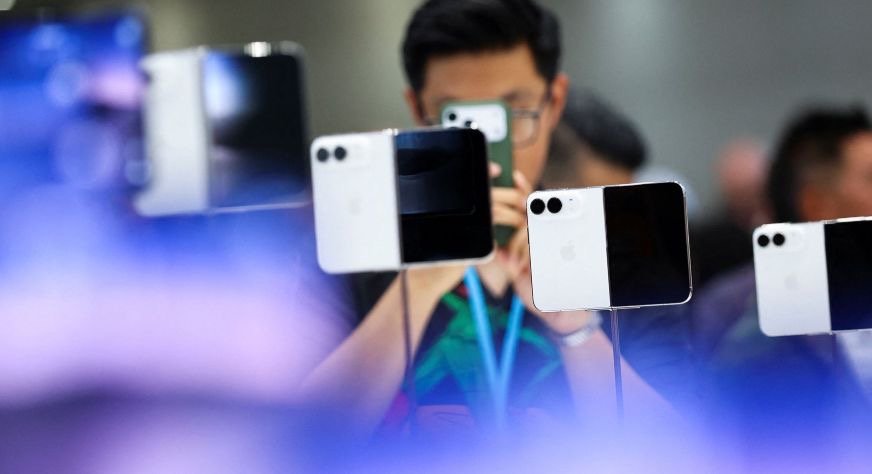
Apple just held its biggest hardware event of the year, unveiling the iPhone 18 Pro, the iPhone 18 Pro Max, and its first-ever folding phone, the iPhone Duo. Within 48 hours, timelines had already split into two camps: “revolutionary” or “just another incremental release.”
But the real story here isn’t Apple’s spec sheet. It’s the pattern behind how Apple builds, and what that pattern quietly teaches about the right and wrong reasons to upgrade anything, phone or otherwise.
The Breakdown
Apple’s approach to its first folding phone tells you almost everything about its playbook. Samsung and Huawei have been refining folding screens for years. Apple waited, watched what broke elsewhere, and arrived with a version engineered to fit tightly into its existing ecosystem rather than to win first-mover bragging rights. The iPhone Duo’s hinge, its opening animation, and its software all feel deliberately smoothed over compared to earlier folding attempts on the market. Apple’s pattern isn’t inventing categories, it’s arriving late and polished.
Put the Duo next to Samsung’s Z Fold 8 or Huawei’s Pura X, though, and the picture gets more complicated. Apple’s foldable is heavier at 254 grams versus Huawei’s 229. It’s locked to eSIM only, while Huawei’s Pura X still carries a physical SIM slot.
It caps multitasking at two apps side-by-side, while the Pura X handles more open at once. And it’s priced well above both rivals, starting north of $1,999. Apple does win on pixel density, and arguably on how tightly the hardware locks into an ecosystem people already live in.
The iPhone 18 Pro and Pro Max, meanwhile, carry the more incremental upgrades: a new mechanical aperture control on the camera, a faster A20 chip, deeper-reading health sensors on the Watch line, and modest battery gains; 35 hours on the Pro, 45 on the Pro Max.
None of that is nothing. But none of it changes daily life for someone who wasn’t already pushing last year’s phone to its limit.
What It Means
Strip away the launch-week noise and a simple principle emerges: hype is not an upgrade trigger. Need is. The signals that should actually move someone toward the iPhone 18 Pro, the Duo, or any new device are practical, not emotional. That is:
- A phone that’s visibly slowed down
- A battery that can no longer survive a day without a power bank
- A charging port or SIM setup that no longer matches where the world has moved
- Repair costs creeping toward the price of a new device
- A security update cliff that leaves you exposed.
Apple’s own camera aperture control is a perfect example: genuinely useful to someone who shoots seriously, invisible to someone who doesn’t know it exists.
There’s also a quieter truth worth naming. Apple has talked about on-device private AI for several product cycles now, and each year the promise resets without much to show for it in daily use. Marketing timelines and delivery timelines are rarely the same thing. It’s worth separating “announced” from “actually working” before it factors into any buying decision.
The Opportunity
For anyone building a career, a brand, or a business around content or technology, this is the leverage point: the same iPhone in two different hands produces two completely different outcomes, and the gap is almost entirely about skill and intent, not spec. That means the smartest investment isn’t chasing Apple’s newest release.
It is mastering the device already in your pocket until it stops being the bottleneck. Once a tool’s capability is genuinely maxed out, upgrading stops being a flex and starts being a multiplier. That’s the moment a new iPhone, or any new tool, pays for itself instead of just looking good in a photo.
The Next Move
Before the next upgrade, Apple’s newest release or anything else, ask one honest question: is this solving a real limitation, or am I just responding to a launch?
If it’s the former, invest with confidence and treat it as the business decision it is.
If it’s the latter, hold on, and let the device you already own finish earning its keep.
The people who build real advantage aren’t the ones with the newest iPhone, they’re the ones who know exactly when a new one is actually worth the money.
Based on #JoyGeekSquad with Samuel Boateng, produced by Prince Sarfo. Catch the full convo here.
