


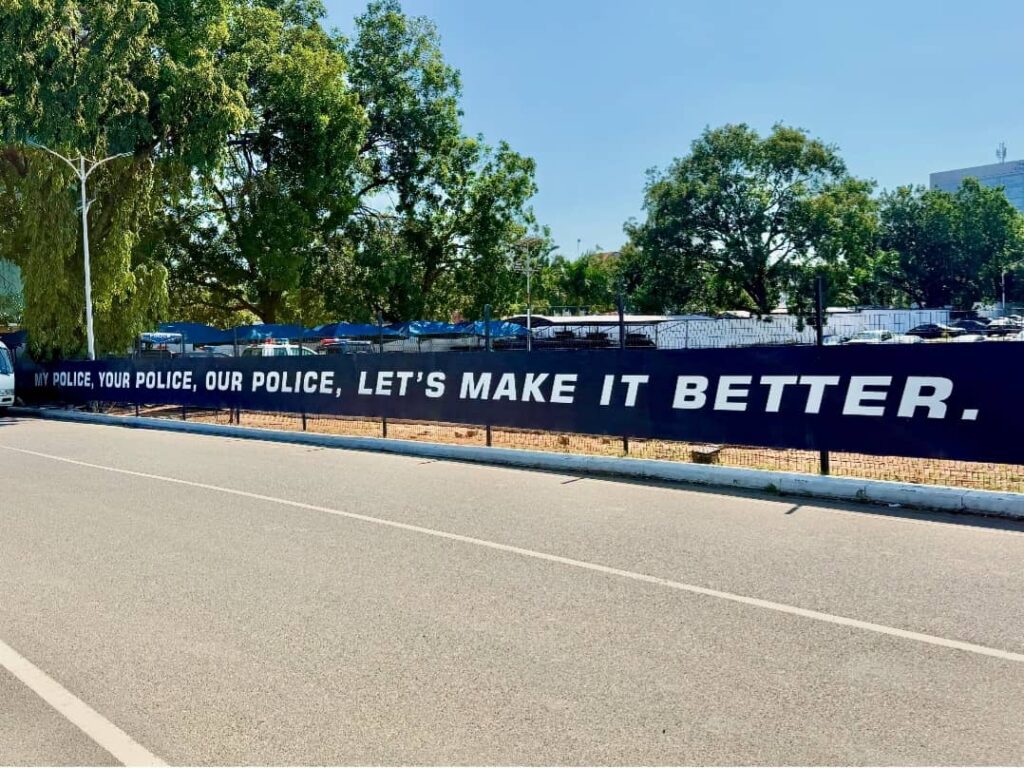
Boldly written on the fence wall of the Joint Operation Centre (JOC) within the premises of the Ghana Police Service Headquarters is a simple but profound inscription: “My Police, Your Police, Our Police, let’s make it better.”

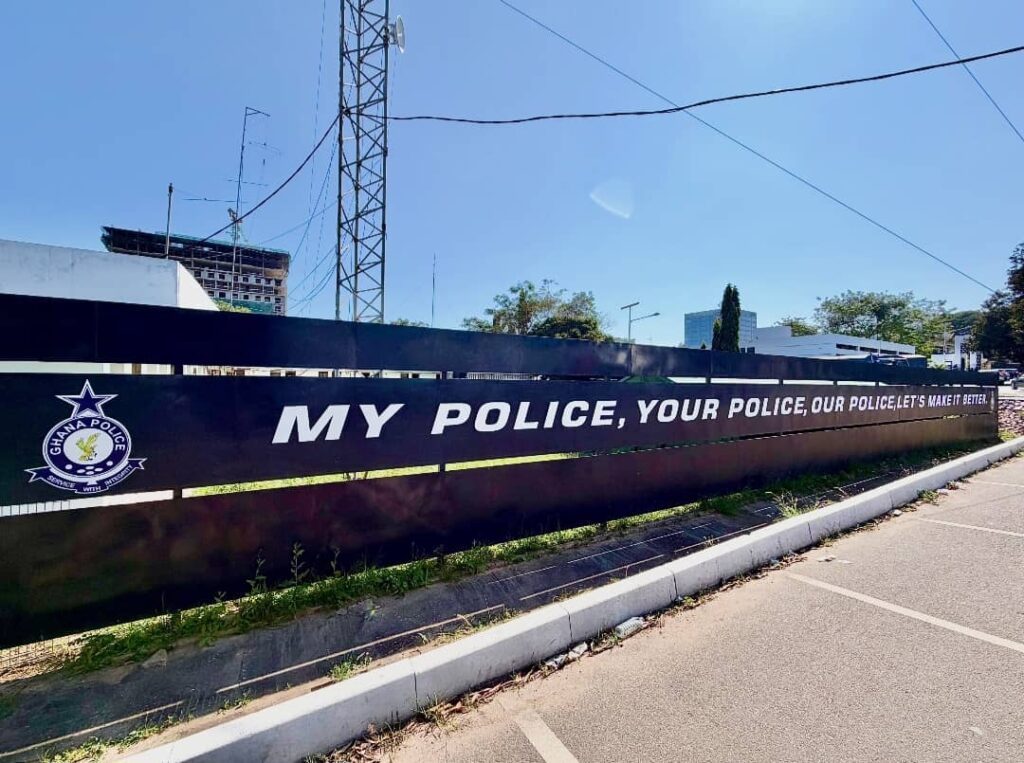
For anyone passing by, it may appear to be an ordinary inscription on a wall.
But beneath those few words lies a powerful truth about policing — the Police belong to the people, serve the people and, ultimately, cannot protect the people without their support.
The Police cannot protect the public without the public. And the public cannot enjoy lasting peace, security and stability without the Police.

Aboso fire incident
That truth came alive in Aboso in the Western Region on August 26, 2026.
As flames engulfed some shops at the Aboso Main Lorry Station, destroying property and threatening lives, Inspector Hance Atubra of the Tarkwa Divisional Headquarters was the first Police officer to arrive at the scene.
He did not stand by and watch. He immediately moved into action, helping people trapped in the affected area and evacuating victims to safety.
In doing so, he demonstrated what the Police uniform should represent — courage, sacrifice and an unwavering commitment to protecting life and property.
The people saw it. And they responded.
Public appreciation
In an extraordinary display of appreciation, members of the public carried Inspector Atubra shoulder-high and sang his praises, celebrating the officer who had risked his own safety to save theirs.
That spontaneous act by the public should not be dismissed as a mere emotional reaction.
It was a powerful statement: when Police officers protect us, we must stand with them.
And the Police Administration responded swiftly.
In less than 24 hours, the Inspector-General of Police (IGP), Mr Christian Tetteh Yohuno, promoted Inspector Atubra to the rank of Chief Inspector in recognition of his courage, quick response and efforts to save life and property.
It was later followed with a decoration at the National Police Headquarters in Accra.
That was more than a promotion. It was a message to the Ghana Police Service that good work will be recognised and rewarded.
But it should also be a message to the public. If we want a Police Service that is courageous, responsive and committed, then we must give officers the support and cooperation they need to do their work.
Citizens must stop treating the Police as an institution to be remembered only when trouble comes.
When criminals strike, we call the Police.
When our property is threatened, we call the Police.
When our lives are in danger, we expect the Police to come running.
But when Police officers are performing their duties, some members of the public turn against them, obstruct their work or, even worse, attack them. This must stop.
There is no justification for attacking a Police officer who is lawfully performing his or her duty.
If an officer acts improperly, there are lawful avenues for redress. Complaints can be made. Conduct can be challenged.
Accountability can and must be demanded.
But violence against Police officers cannot be the answer.
Ghanaians must understand that every attack on a Police officer is an attack on public safety itself.
When officers are assaulted, their authority is undermined. When they are prevented from performing their duties, criminals are emboldened. When attacks become normalised, respect for law and order begins to collapse.
And when law and order collapses, everybody suffers.
The businessman, the farmer, the student, the trader, the driver, the professional and the ordinary family at home — all depend on a functioning security system.
We, therefore, cannot demand security from the Police with one hand and undermine their authority with the other.
We cannot ask the Police to run into danger for us and then turn around and attack them for doing their job.
The public must become active partners in policing.
Give the Police credible information. Cooperate with investigations. Help officers when they need assistance. Respect lawful instructions.
Report suspicious activity. Stand up for officers who are doing the right thing. And when there are genuine concerns about police conduct, use the appropriate channels to demand accountability.
That is what responsible citizenship requires.
Our elders say, “As you advise the cat, you must advise the salted fish as well.”
The Police must also earn and preserve the public’s trust.
Officers must remain professional, disciplined, respectful and faithful to the law.
IGP Yohuno’s approach
That is why the approach of IGP Yohuno deserves commendation.
His leadership is showing that the Police Administration can both reward exceptional service and punish misconduct.
Officers who distinguish themselves through courage and dedication are being recognised, including through special promotions, while those who violate the law or breach professional standards are being disciplined.
That balance is essential. It tells the good officer: your sacrifice matters.
It tells the erring officer: your uniform is not a licence to break the law.
And it tells the public: this is your Police Service, and it must be supported while being held accountable.
Inspector Atubra’s experience is therefore bigger than one fire incident.
The residents of Aboso showed what public appreciation can look like when citizens recognise a Police officer who has served them well.
The IGP showed what institutional appreciation can look like by rewarding that officer within hours.
Now the rest of the country must show what public support for policing can look like.
Let us stop attacking those who protect us.
Let us stop treating Police officers as enemies.
Let us stop cheering when officers are humiliated or assaulted.
Instead, let us support officers who are doing their work diligently, cooperate with them and demand accountability through lawful means when necessary.
The Police have a duty to protect Ghana.
We, the public, have a duty to help them do it.
The inscription on the JOC wall should therefore be more than words.
Perhaps the real question is not whether we have a Police Service. We do.
The question is whether all of us — Police and public alike — are prepared to make it better.
The answer must be emphatic yes.
Because after all, it is my Police, Your Police and everyone’s Police.
DISCLAIMER: The Views, Comments, Opinions, Contributions and Statements made by Readers and Contributors on this platform do not necessarily represent the views or policy of Multimedia Group Limited.
DISCLAIMER: The Views, Comments, Opinions, Contributions and Statements made by Readers and Contributors on this platform do not necessarily represent the views or policy of Multimedia Group Limited.
Source link


