


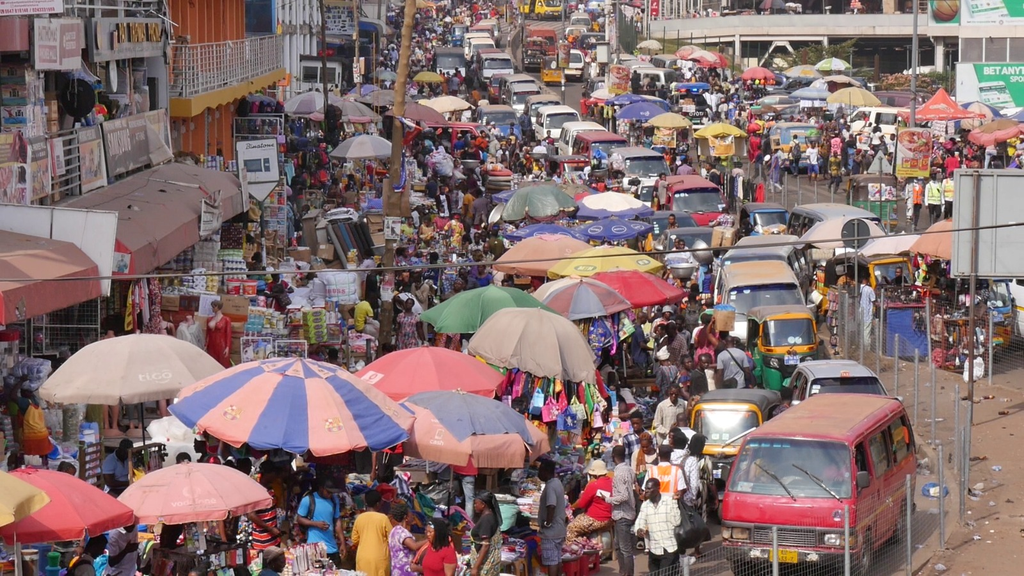
The Kumasi Metropolitan Assembly (KMA) has announced plans to extend its daily toll and market fee collection to night-time businesses and weekends, effective October this year.
The move was disclosed during the Assembly’s annual fee-fixing resolution consultative meeting with stakeholders to review its current rates and discuss proposed fees for the 2027 fiscal year.
The Principal Budget Analyst for the KMA, Mr. Eric Nunoo, explained that the fee-fixing exercise is done annually in consultation with ratepayers and business operators, based on a guideline issued by the Ministry of Local Government, Chieftaincy and Religious Affairs.
According to him, the Ministry provides upper and lower limits for all fees, and the Assembly is mandated to operate within those limits, with any upward adjustment done gradually.
“Today we met here first of all to let them know what we are operating with, that is, the 2026 fees, and also what we intend to charge in 2027. We do this based on a guideline that gives us what we call the upper limits and the lower limits, and we are supposed to abide by that,” he said.
He said the engagement was to solicit views from stakeholders before finalizing a single document that will guide the Assembly’s revenue mobilization in the ensuing year.
Addressing concerns over new areas of collection, Mr. Nunoo clarified that while the Assembly collects annual licenses and daily tolls from traders, transport operators and those who use market spaces and car parks, a large segment of night-time operators have not been captured.
“We have what we call the license, which is annual, and we have the daily costs and the fees where the people selling on the streets and all that we do daily collection. Everybody who enters the market, those who are parking their cars, they pay something to the Assembly daily. But we also have a lot of people who do their work in the evenings, the nights, where we are not taking anything from them,” he noted.
He said the Assembly will enforce collection of what he described as “night tolls” to ensure equity and boost development.
“When you are doing business, you should also contribute your quota to government, to KMA, so that we can do the necessary development for you. This is something that we are going to enforce to ensure everybody that works in the night also pays something to the Assembly from the month of October,” he added.
On weekend collection, he said the Assembly has observed that significant commercial activities and waste generation occur on weekends, particularly in markets, yet revenue collection is limited to weekdays. The Assembly will therefore deploy revenue officers to markets and other business centres during weekends to ensure that all traders pay the appropriate tolls to support sanitation and other development activities.
“Those who come to the markets and do their business during the weekends, we are going to have our officers come and take the necessary fees because if you look at KMA, you can’t talk about KMA and you don’t mention sanitation and some of the waste that is generated mostly comes during the weekend,” he explained.
He appealed to all ratepayers within the metropolis to cooperate with revenue collectors when they approach them.
Meanwhile, some of the participants at the meeting called for reductions in some of the proposed fees for 2027 presented by the Assembly’s budget department.
The participants, who included market leaders, transport union executives and representatives of business associations, argued that while they appreciate the need for the Assembly to increase its Internally Generated Fund (IGF), some of the proposed increments are too high and could affect their businesses.
They appealed to the Assembly to be considerate in fixing the new rates, especially for market tolls, property rates and business operating permits, to avoid overburdening traders and small businesses.
Responding to their concerns, the Presiding Member of the Kumasi Metropolitan Assembly, Patrick Kwame Frimpong, assured stakeholders that all issues raised will be considered during the General Assembly meeting before final approval.
According to him, all the new fees are proposals and will be subjected to debate by Assembly Members.
“The fees we have presented are still proposals. The Assembly Members will debate them after this stakeholder engagement before any approval is given,” he said.
Mr. Frimpong added that the relevant sub-committees will continue to engage the leadership of various associations and unions when necessary to ensure consensus building.
He explained that stakeholder engagement is a mandatory requirement in the fee-fixing process to ensure transparency and inclusive decision-making, and therefore the views of all ratepayers are crucial.
“We will not impose any fee on our people. We will continue to dialogue with you until we reach a common ground that will be in the best interest of Kumasi,” he noted.
He urged stakeholders to support the KMA to boost its IGF in order to accelerate development in the Metropolis, stressing that development largely depends on internally generated funds.
DISCLAIMER: The Views, Comments, Opinions, Contributions and Statements made by Readers and Contributors on this platform do not necessarily represent the views or policy of Multimedia Group Limited.
DISCLAIMER: The Views, Comments, Opinions, Contributions and Statements made by Readers and Contributors on this platform do not necessarily represent the views or policy of Multimedia Group Limited.
Source link


