


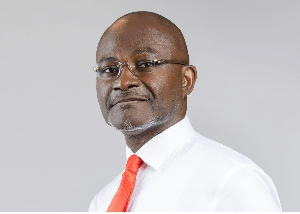

In a troubling display that has left many party faithfuls dismayed, NPP flagbearer hopeful Kennedy Agyapong has launched a barrage of scathing and unprovoked insults against former Vice President, Dr Mahamudu Bawumia over a comment he did not even make.
What makes the episode particularly disturbing is the fact that the statement which provoked Kennedy Agyapong’s blistering attack did not originate from Dr Bawumia but from the Ashanti Regional Chairman of the New Patriotic Party, Bernard Antwi Boasiako, popularly known as Chairman Wontumi.
Speaking to NPP delegates in the Ashanti Region, Chairman Wontumi observed that the party has historically retained its first-time presidential candidates, with the lone exception of the late Professor Albert Adu Boahen, whom he claimed was not retained due to health challenges a claim that has appeared in some publications linked to close associates of the late statesman.
Rather than direct his disagreement at the actual source of the statement, Kennedy Agyapong inexplicably attributed the comment to Dr Bawumia and proceeded to unleash a torrent of personal attacks, branding the former Vice President a liar and hurling other unprintable insults at him.
“I have never seen a liar like our former flagbearer before,” Kennedy Agyapong declared, angrily accusing Dr Bawumia of making claims he never uttered.
This conduct has since sparked widespread backlash on social media, with many Ghanaians questioning how a man seeking the highest office of the land could fail to verify basic facts before launching such vicious attacks against a fellow party member and contender.
Beyond the factual error lies a deeper concern: this episode reflects a worrying lack of emotional intelligence, restraint and thoroughness—qualities that are indispensable for presidential leadership.
Leadership is not measured by how loudly one attacks colleagues but by the ability to exercise judgment, composure, and fairness, especially under pressure.
Launching scathing personal attacks based on unfounded allegations that later prove false is not a show of strength; it is a sign of weakness. It raises serious questions about temperament, decision-making, and readiness for national leadership.
Many within and outside the NPP are now asking: if this is how a presidential aspirant reacts within his own party without verification, without restraint—how would he handle the far more complex and sensitive responsibilities of the presidency?
For a party that prides itself on discipline, intellect, and democratic values, this incident has become more than a campaign misstep.
It is a moment of reflection on the character, emotional maturity, and leadership credentials required of anyone aspiring to lead Ghana.


