


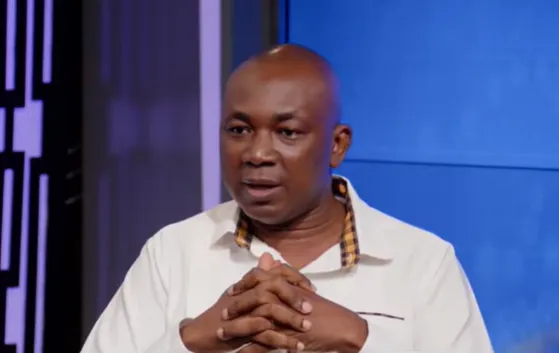
Economist and Professor of Finance, Prof. Godfred Bokpin, has called for greater transparency, broader consultation and a clearly defined role for private-sector participation in Ghana’s electricity distribution sector.
He warned that the persistent weaknesses within the energy sector continue to pose a significant threat to the country’s fiscal stability.
Speaking on JoyNews’ Newsfile on Saturday, Prof. Bokpin said many of the problems currently confronting the Electricity Company of Ghana (ECG), including high distribution losses, weak revenue collection, outstanding obligations to power producers and the financial burden placed on the state, pre-date Ghana’s current IMF-supported programme.
He nevertheless acknowledged that the IMF programme has contributed to greater transparency in the management of the energy sector and has helped improve the operation of mechanisms designed to ensure that available revenues are distributed across the electricity value chain.
According to him, the fundamental issues identified under the IMF programme are not new.
“The issues that have been identified as the root causes have been with us for years, for decades, even before this IMF-supported programme,” he said.
Prof. Bokpin argued that the focus should therefore not simply be on criticising the data being used to assess the sector’s financial position.
Instead, the country should use the greater availability of information under the programme to measure whether meaningful progress is being made.
Prof. Bokpin said one of the important benefits of the IMF-supported reforms has been improved transparency regarding the scale of Ghana’s energy-sector liabilities and losses.
He said the figures being presented on the amount that needs to be paid and the financial projections should not be dismissed or used to discredit the country’s electricity sector.
Rather, he said, the data should help policymakers and the public understand the extent of the problem and assess whether reforms are producing results.
“What we should rather be seeing now as the effect of the IMF-supported programme is that there is a lot of transparency today in terms of even the extent of the losses going forward and the progress that we have made,” Prof. Bokpin said.
He pointed specifically to the cash waterfall mechanism, which is intended to ensure that revenues generated within the electricity supply chain are allocated according to an agreed priority structure.
Prof. Bokpin said the mechanism is now functioning to some degree, describing this as one area where the IMF programme could be credited with making a difference.
“Today, the cash waterfall mechanism is working to some extent. You can credit that to the IMF programme because we know what was happening with the cash waterfall mechanism before,” he said.
Despite some progress, Prof. Bokpin warned that the financial burden of the energy sector remains extremely significant.
He said government’s additional budgetary interventions to support the energy sector consume fiscal resources on a scale that should concern policymakers, particularly at a time when Ghana is under pressure to allocate limited funds to other critical areas.
“If you look at the fiscal space that the energy sector alone takes, the extra-budgetary allocation that we have to make to cover the energy sector also exceeds the combined budgetary allocation to the Ministry of Health, Food and Agriculture, Education,” he said.
The economist said this raises a fundamental question about whether Ghana can continue to finance the sector through state resources while simultaneously meeting its development needs in other areas.
He questioned whether the country had demonstrated the capacity to implement the necessary reforms without external pressure.
“Are we able to implement this on our own? We have not. Over the decades, we have not,” he said.
Prof. Bokpin also stressed that reducing losses across the electricity value chain will require substantial investment.
He said Ghana cannot expect to significantly reduce generation, transmission and distribution losses without investing in infrastructure and improving operational efficiency.
“There’s no way we can reduce the level of losses from generation, transmission to distribution without a certain level of investment,” he said.
The challenge, he explained, is determining where that investment should come from.
If government is expected to finance the required investments entirely from the public purse, the resources available for other sectors could be squeezed further.
The economist therefore urged policymakers to confront the investment gap directly and determine how the necessary capital can be mobilised while ensuring that the sector becomes more efficient.
He noted that the Ministry of Finance has increased allocations towards the energy sector in recent years, particularly over the past four to five years, but argued that additional funding must be accompanied by demonstrable efficiency improvements.
Prof. Bokpin’s intervention centred on the proposed involvement of the private sector in ECG and the wider electricity distribution system.
He said government needs to communicate clearly to the Ghanaian public exactly what form of private-sector participation it intends to pursue.
He cautioned against framing the reform simply as “letting go” of ECG, arguing that private-sector participation can take several different forms.
“There are various forms of private-sector participation. Which form are they going for?” he asked.
According to Prof. Bokpin, one possible model could involve ECG retaining its position as a holding company, while private companies are brought in to manage specific distribution zones.
Under such an arrangement, private operators could be responsible for distributing electricity and collecting payments from consumers, while making payments to ECG under an agreed structure.
He said such a model would allow the private sector to contribute expertise and capital without necessarily transferring control of the entire electricity value chain to private investors.
“ECG probably is going to be a holding company. There’s going to be maybe four or three or so different private-sector companies,” he suggested.
He stressed, however, that the precise structure must be made clear to the public before implementation.
Prof. Bokpin also pointed to Ghana’s previous experience with private-sector participation in electricity distribution as an important source of lessons for the current reform process.
He said there had been an improvement in revenue collection when a private operator previously became involved in the management of aspects of ECG’s operations.
He argued that Ghana should learn from that experience without necessarily replicating the previous arrangement in exactly the same form.
“We know that there was some level of improvement when EDS took over immediately with collection and all of that. This doesn’t have to take exactly that route,” he said.
For Prof. Bokpin, the key issue is not whether private-sector participation should happen in principle, but how it should be structured, regulated and communicated.
He called for greater transparency and consultation to ensure that the reform has public understanding and support.
Prof. Bokpin also stressed that the current energy-sector reform agenda should not be treated as the responsibility of one political party.
He noted that both Ghana’s major political parties have been involved in decisions relating to private-sector participation and energy-sector reforms.
He said the IMF programme was negotiated under the previous New Patriotic Party administration, which agreed to reforms involving the energy sector, while the current National Democratic Congress administration has inherited the programme and also recognises the need for private-sector involvement.
According to him, this shared political history should create an opportunity for consensus rather than partisan confrontation.
He argued that both administrations have recognised that reforms are necessary to address losses in generation, transmission and distribution.
For that reason, he believes there should be a broader national consultation on the proposed changes, including clear disclosure of the government’s intended model.
Beyond ECG, Prof. Bokpin placed the energy-sector crisis within the wider problem of inefficiency among Ghana’s state-owned enterprises.
He said government’s policy-coordination reforms are largely aimed at addressing inefficiencies within state-owned enterprises, which he argued have imposed a considerable cost on the economy over the years.
“Over the last 15, 20 years, between 2.5% to almost 3.2% of our GDP is lost to the inefficiencies of state-owned enterprises alone, including ECG and then Cocoa Board and the rest of them,” he said.
The figure, if sustained, represents a substantial economic cost and illustrates why reforms to state-owned enterprises have become a central component of Ghana’s efforts to restore fiscal stability.
Prof. Bokpin warned that failure to address these structural problems could leave Ghana trapped in a cycle in which inefficiencies accumulate until the country once again requires external financial assistance.
“If we go back to business as usual, it’s just a matter of time and we have to resort to the IMF and the World Bank for another level of intervention,” he cautioned.
Prof. Bokpin also drew attention to the government’s commitment under its policy framework to conclude the process for private-sector participation by June 2027.
He suggested that the reform agenda had previously been affected by political considerations, including the electoral cycle, but argued that Ghana could no longer afford prolonged delays.
He said previous administrations had also set reform targets for the energy sector, but implementation had not always matched the stated objectives.
The economist therefore urged government to maintain momentum and provide clarity on the next steps.
For him, the central issue is not whether Ghana should continue with the existing model indefinitely, but how it can implement reforms that deliver sustainable improvements in efficiency, investment and revenue collection.
Prof. Bokpin’s central warning was that the consequences of failing to reform the electricity sector will ultimately be felt by ordinary consumers.
He argued that Ghana cannot continue operating the sector inefficiently, financing its deficits through public resources and expecting consumers to absorb the consequences through electricity tariffs and other charges.
“We cannot continue as business as usual, the way we have done things, because really, the consumer will continue to pay and pay and pay and will not get far,” he said.
DISCLAIMER: The Views, Comments, Opinions, Contributions and Statements made by Readers and Contributors on this platform do not necessarily represent the views or policy of Multimedia Group Limited.
DISCLAIMER: The Views, Comments, Opinions, Contributions and Statements made by Readers and Contributors on this platform do not necessarily represent the views or policy of Multimedia Group Limited.
Source link
