


The “Anatomy” of the Health Sector
A background in medicine is not needed to know the pulse and heartbeat of Ghana’s health delivery. The strengths, weaknesses, opportunities and threats facing the health sector are evident. Ghana is endowed with 12 medical schools and 150 accredited nursing and midwifery training institutions (according to the current online directory of the Nursing and Midwifery Council of Ghana), yielding a cohort of medical personnel, some of whom deny themselves of greener pastures abroad to serve Ghana, for better or for worse.
The health sector is the primus inter pares among other State systems, especially in terms of coherence, co-ordination, data collection, financing and policy design.
The preamble to the Constitution of the World Health Organization (WHO,1946) defines health as “a state of complete physical, mental and social well-being and not merely the absence of disease or infirmity.” Derived from this multilayered articulation, the architecture of Ghana’s health system is quintessentially pluralistic and decentralized, consisting of public, private, faith-based and specialist providers, supported by government policy, regulation, financing and health information systems, organised broadly around primary, secondary and tertiary levels of care. Health care delivery is rolled out by population groups (e.g., reproductive, maternal, newborn, child and adolescent health), clinical specialties or areas of disease management, and in-patient and out-patient services.
In recent times, the Government instituted the concept of health kiosks in strategically located points where the populace can obtain basic health information, screening, preventive services, and sometimes simple treatments or referrals, usually closer to where they live or work than a conventional clinic or hospital. They are generally intended to bring basic healthcare closer to communities, particularly where access to formal health facilities is limited.
Healthcare policy setting is led by the Ministry of Health, while policy implementation is steered by the Ghana Health Service. Inter-agency and inter-institutional collaboration with other ministries are common; for example, the School Health and Education Programme, School Feeding Programmes led by the Ministry of Education. The Ghana Health Service is also an integral part of the community gender-based violence referral and justice system. The Domestic Violence and Victim Support Unit for example, issues medical forms to victims and survivors of violence for medical attention and examinations at designated medical centres for purposes of collecting and preserving evidentiary data.
Sector policy and practice are guided by the Ministry’s Health Medium Term Strategic Plan (HMTSP, 2026-2029), which sets out key priorities, programmes, and interventions required to strengthen the health system, improve access to quality care, and accelerate progress towards Universal Health Coverage by 2030. The HMTSP anchors other policy frameworks, such as Ghana Health Financing Strategy (2023-2030), Ghana Health Supply Master Plan (2025-2029) and National Healthcare Quality Strategy (2024-2030).
In 1992, Ghana introduced the cash and carry health financing system, building on the user-fee and cost-recovery reforms introduced in 1985 as a part of the then notoriously famous Structural Adjustment Programme. This system required patients to pay for healthcare, particularly medicines, at the point of service and remained a major feature of Ghana’s health financing system until the introduction of the National Health Insurance Scheme in the early 2000s. According to the Ministry of Health (2026), over 20 million people are currently enrolled onto the scheme. Although the private sector is an alternative source of health insurance (mainly for the middle and upper class), significant segments of the population remain uninsured.
Healthcare as a Fundamental Human Right
Historical and constitutional antecedents
Following the entry into force of the UN Charter in 1945, world leaders elaborated on the human rights commitments of the Charter through the Universal Declaration of 1948 and two International Covenants – the International Covenant on Civil and Political Rights (1966) and the International Covenant on Economic, Social and Cultural Rights (1966). The latter two were born out of a geopolitical ideological divide in which some Western States (e.g., the United States of America, Western Europe) regarded the need to prioritize civil and political rights as foundational to development, and another bloc (e.g., former Soviet Union, Eastern Europe) were of the view that economic, social and cultural rights were indispensable to the very existence of society. In essence, these positions were reflective of the geopolitical contours of the Cold War.
Historically, it appears Ghana has followed the trajectory of the Western bloc. The 1969, 1979 and 1992 Constitutions visibly treat civil and political rights as fundamental pillars of human rights, democracy and good governance. For example, under the 1992 Constitution, the dedicated chapter (Chapter V) on Fundamental Human Rights and Freedoms deal with due process; emergency powers; protection from slavery and forced labour; equality and freedom from discrimination; protection of privacy of home and property; women’s rights and property rights of spouses; children’s rights, rights of persons with disabilities, administrative justice, economic rights and general freedoms such as the right to lawful assembly, free speech, movement, expression, religion and conscience. Save provisions on “Rights of the Sick” (Article 30), Chapter V does not provide an express right to health. The said Article 30 states: “A person who by reason of sickness or any other cause is unable to give his consent shall not be deprived by any other person of medical treatment, education or any other social or economic benefit by reason only of religious or other beliefs.” This provision woefully falls short of a human rights guarantee on the right to health.
Cursory reference to “the right to good health care” is however contained in Article 34(2) of the Directive Principles of State Policy (DPSP), which constitute a set of national standards that “guide all citizens, Parliament, the President, the Judiciary, the Council of State, the Cabinet, political parties and other bodies and persons in applying or interpreting [the] Constitution or any other law and in taking and implementing any policy decisions, for the establishment of a just and free society” (Article 34 (1)).
“The President shall report to Parliament at least once a year on all steps taken to ensure the realization of the policy objectives contained in [the] Chapter; and, in particular, the realization of basic human rights, a healthy economy, the right to work, the right to good health care and the right to education” (Article 34(2)). This is the provision that the President of Ghana relies on to present the annual State of the Nation address to Parliament.
Directive Principles of State Policy or Principles of State Policy are known to exist in the Constitutions of many countries of the common law tradition, although it is unclear how and why this is not the case for the protagonist of the common law – Britain. To date, 43 countries of the Commonwealth contain such provisions in their Constitutions.[1] Acts or omissions in respect of the Directive Principles of State Policy under the 1999 Constitution of Nigeria are not justiciable (cannot be challenged in any court of law)), (Section 6 (6)(c). In contrast, the Constitution of Ghana is silent on the issue of justiciability of its DPSP. This has led to public interest litigation in the courts. In NPP v Attorney-General [1996-97], SCGLR p729, the Supreme Court held that DPSP are not independently enforceable, citing them as (1) objectives for Government and legislative programmes; and (2) guides to judicial interpretation, save in connection with an independently enforceable constitutional right example, Article 37(2)(a) on participation in development processes and Article 21 related to freedom of association, movement, expression, conscience, religion, etc.
A further advancement was made in the case of Ghana Lotto Operators Association v National Lottery Authority [2006-2007], SCGLR p1106, in which the court held that the DPSP create a presumption of justiciability. Among this reasoning was the fact that Article 34 expressly directs the Judiciary to use the DPSP in applying and interpreting the Constitution; therefore, challenging the assertion that the principles have no legal relevance merely because they are described as a “directive.”
These court decisions have been reinforced by a steady stream of academic material which reiterate Chapter VI as being prima facie justiciable, while recognizing that particular provisions may not necessarily lend themselves to judicial enforcement. It is however unclear if “health” can be categorically classified as a justiciable human right, given the absence of such an express provision in Chapter V.
Regional and global norms and standards
In terms of relevance to Ghana, the African Charter on Human and Peoples’ Rights (adopted in 1981, entered into force in 1986) is the first normative regional instrument to fully translate the WHO definition of health into a fundamental human right. Article 16 provides:
- Every individual shall have the right to enjoy the best attainable state of physical and mental health.
- States parties to the present Charter shall take the necessary measures to protect the health of their people and to ensure that they receive medical attention when they are sick.
The African Charter is far ahead of Europe’s earlier Convention for the Protection of Human Rights and Fundamental Freedoms of 1950, as well as the [Inter] American Convention on Human Rights: “Pact of San José, Costa Rica” which do not contain express provisions on the right to health. It is unclear whether the treatment of healthcare in the respective consequential and overarching treaties of these two regional blocs was a consequence of the ideological divide discussed above.
Nevertheless, it is certain that Africa was “non-aligned” in this polarizing divide between civil and political rights on the one hand and economic, social and cultural rights on the other. This position has permeated a number of other African human rights instruments such as the Protocol to the African Charter on Human and Peoples’ Rights on the Rights of Women in Africa (popularly known as the Maputo Protocol, 2003) and the African Charter on the Rights and Welfare of the Child, 1990.
The former provides the most comprehensive provisions on sexual and reproductive health, guaranteeing women under Article 14: a) The right to control their fertility; b) The right to decide whether to have children, the number of children and the spacing of children; c) The right to choose any method of contraception; d) The right to self-protection and to be protected against sexually transmitted infections, including HIV/AIDS; e) The right to be informed on one’s health status and on the health status of one’s partner, particularly if affected with sexually transmitted infections, including HIV/AIDS, in accordance with internationally recognized standards and best practices; f) The right to have family planning education. States Parties are to take all appropriate measures to: a) Provide adequate, affordable and accessible health services, including information, education and communication programmes to women, especially those in rural areas. b) Establish and strengthen existing pre-natal, delivery and post-natal health and nutritional services for women during pregnancy and while they are breast-feeding; c) Protect the reproductive rights of women by authorizing medical abortion in cases of sexual assault, rape, incest, and where the continued pregnancy endangers the mental and physical health of the mother or the life of the mother or the foetus.
Under the African Charter on the Rights and Welfare of the Child, the obligations of States are: (a) to reduce infant and child mortality rate; (b) to ensure the provision of necessary medical assistance and health care to all children with emphasis on the development of primary health care; (c) to ensure the provision of adequate nutrition and safe drinking water; (d) to combat disease and malnutrition within the framework of primary health care through the application of appropriate technology; (e) to ensure appropriate health care for expectant and nursing mothers; (f) to develop preventive health care and family life education and provision of service; (g) to integrate basic health service programmes in national development plans; (h) to ensure that all sectors of the society, in particular parents, children, community leaders and community workers are informed and supported in the use of basic knowledge of child health and nutrition, the advantages of breastfeeding, hygiene and environmental sanitation and the prevention of domestic and other accidents; (i) to ensure the meaningful participation of non-governmental organizations, local communities and the beneficiary population in the planning and management of basic service programme for children; (j) to support through technical and financial means, the mobilization of local community resources in the development of primary health care for children (Article 14).
These provisions comprehensively elaborate and “Africanise” those of the International Covenant on Economic, Social and Cultural Rights (1966), the Convention on the Elimination of All Forms of Discrimination Against Women (1979) and the Convention on the Rights of the Child (1989).
Health Delivery Challenges and Home-Grown Solutions
Ghana’s health delivery challenges are documented through both anecdotal and official channels. The shortage of doctors and basic health supplies such as personal protective equipment (PPEs), beds, oxygen, generators and diverse forms of medical negligence and malfeasance against human beings have become chronic. Official sources note that by 2024, the doctor to population ratio in Ghana was 22 doctors per 1,000 population which is equivalent to approximately one doctor to every 4,545 people. Furthermore, in 2023, Ghana recorded an average of 54.85 hospital beds per 1,000 population, a drop from 59 in 2022.
The World Economic Forum’s Global Gender Gap Report highlights the continuing challenge of maternal mortality in Ghana, reporting a maternal mortality ratio of 243 maternal deaths per 100,000 live births. This remains substantially above SDG Target 3.1, which calls for a reduction in the global maternal mortality ratio to fewer than 70 deaths per 100,000 live births by 2030. The burden is also unevenly distributed across the country. Available regional data indicate significant disparities in maternal mortality, with Greater Accra, Bono, Ashanti, Western North, Northern, Volta and Upper East among the regions recording particularly concerning outcomes.
Relatedly, The World Bank Group’s 10th Economic Update on Ghana – Reset for Growth: Sustaining Macroeconomic Recovery and Unlocking Transport for Transformation provides valuable information on Ghana’s road network, which, according to the report, by 2025 spanned approximately 94,000 km, with an estimated 47 percent in good condition, 32 percent in fair condition, and 21 percent in poor condition, 73 percent unpaved and 60 percent of feeder roads in poor to fair condition. Instructively, it notes that the estimated cost of fatalities and serious injuries resulting from poor road networks represented double the actual total expenditure envelope of the Ministry of Health and more than two-thirds of the actual spending on education.
A comprehensive gender analysis would reveal that poor road networks produce adverse impacts on the time that women and girls spend in search for water and firewood; endanger the lives and safety of girls and boys who walk to school; stifle the ability of pregnant women to reach a health care facility, especially in times of emergency and worsen the safety and health of petty traders who sell on the margins of roads under construction. The amount of dust they and surrounding communities inhale on a daily basis should concern all Ghanaians.
So also is the practice of using tax payers’ monies to fly politicians abroad for treatment, while other Ghanaians contend with the “unhealthy” health system. This is not good enough. Ghana is a signatory to the above mentioned global and regional (African) human rights instruments. It also possesses the financial and human resources to address the basic challenges facing the sector. The whole purpose of the educational reforms of the late 1980s was to ensure that Ghana would build its human resource capacity to build systems and infrastructure to address the pressing needs of various sectors of the economy. As part of the youth employment drive, opportunities should be created for the youth to manufacture and supply hospital beds, PPEs and oxygen. After all, if Ghana produces liquefied petroleum gas, bottled water and iron rods, why not oxygen, hospital beds and PPEs?
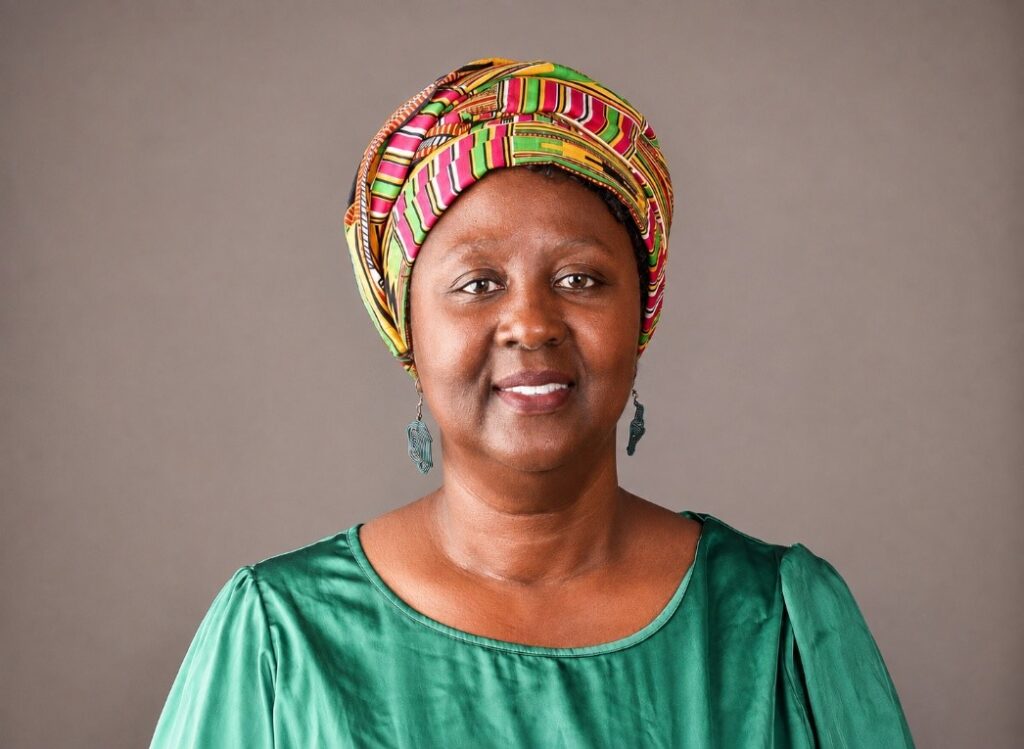
Author, Beatrice Akua Duncan (PhD) is the Executive Director, Gender Data Ghana.
DISCLAIMER: The Views, Comments, Opinions, Contributions and Statements made by Readers and Contributors on this platform do not necessarily represent the views or policy of Multimedia Group Limited.
DISCLAIMER: The Views, Comments, Opinions, Contributions and Statements made by Readers and Contributors on this platform do not necessarily represent the views or policy of Multimedia Group Limited.
Source link
