


Ghana must move beyond establishing a national research fund to ensure sustained financing for scientific research and innovation, the Acting Administrator of the Ghana National Research Fund, Prof Abigail Opoku-Mensah, has said.
She warned that the passage of legislation alone would not guarantee the funding researchers need to develop solutions to the country’s economic, environmental and social challenges.
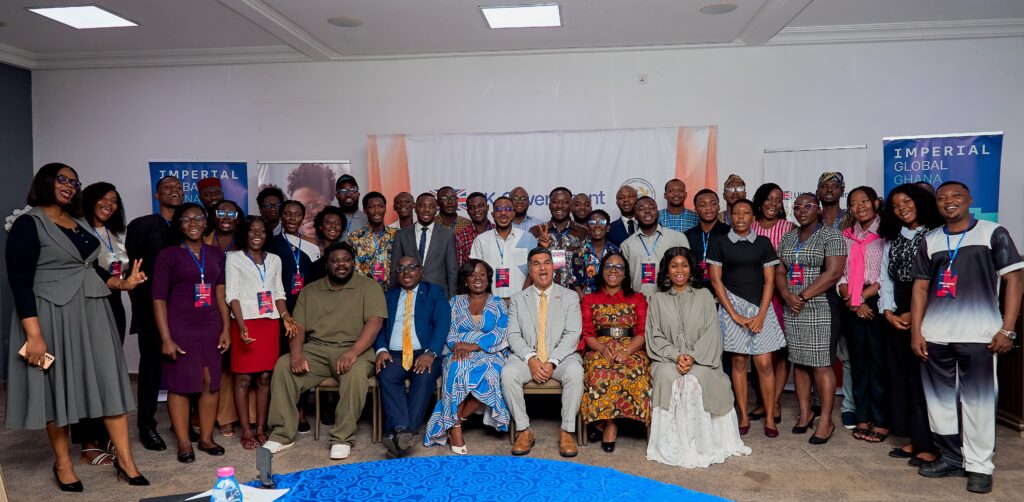
“A law alone does not automatically translate into an operational fund,” she told journalists and content creators at the ongoing 5 day- UK Media Excellence for Emerging Technologies in Accra, highlighting the delays between the enactment of the Ghana National Research Fund Act in 2020 and the inauguration of the Fund’s governing board in June 2025.
The Fund was established to strengthen domestic support for research and reduce Ghana’s dependence on grants from foreign development partners.
Prof Opoku-Mensah said Ghanaian universities and public research institutions had contributed to innovation and human capital development for decades, but research funding remained fragmented and heavily dependent on external support.
Although international partnerships had produced valuable research, she said, relying too heavily on foreign grants exposed the country to changes in donor priorities.
“What happens if a shift in the donor’s policy requires them to pull out?” she asked, arguing that Ghana must mobilise more domestic resources to sustain its research and innovation ambitions.
Funding gap, five priorities for research
Prof Opoku-Mensah said Ghana, like many African countries, remained below the African Union’s target of investing at least 1% of gross domestic product in research and development.
She said successive governments had taken steps towards establishing a national research fund following calls from academia and industry, culminating in the passage of the Ghana National Research Fund Act, 2020 (Act 1056).
According to her, the government provided GH¢50 million in seed funding to establish the Fund. President John Dramani Mahama subsequently announced an allocation of GH¢100 million when he formally launched it on 16 June 2025.
The Fund is also working with the Ministry of Finance to implement the statutory quarterly disbursement of 0.5% of national revenue, as provided for under the Act.
Prof Opoku-Mensah said the secretariat and the systems required to operate the Fund were being developed with support from the Foreign, Commonwealth and Development Office (FCDO) and the South African National Research Fund.
The effectiveness of these arrangements will be important in determining whether the Fund can provide researchers with reliable financing over time.
The Fund has adopted a five-year Research and Innovation Strategy covering 2026 to 2030, with priorities including research talent development, competitive funding, industry partnerships, policy support, sustainable financing and strong governance.
The strategy identifies five national research missions, food systems; health innovation and biodiversity; climate and environmental sustainability; digital and industrial transformation; and governance, policy and social systems.
Prof Opoku-Mensah said two pilot funding calls had already been launched through international co-funding arrangements, including collaboration with Canada’s International Development Research Centre. The initiatives cover areas such as artificial intelligence, health and disruptive technologies.
Two additional national funding calls focused on solutions to the Sustainable Development Goals were expected to open before the end of 2026.
The strategy is intended to direct research towards national priorities, although its impact will depend on the availability of funding and the successful implementation of the proposed programmes.
Call for better science reporting
Prof Opoku-Mensah also urged journalists to explain research findings and technological developments in language that ordinary Ghanaians could understand.
She said research in areas such as artificial intelligence, climate and environmental risks, biomedical innovation and the circular economy had direct implications for people’s lives and should not remain confined to academic publications and specialist discussions.
The Ghana National Research Fund Act includes the promotion of knowledge and technology transfer for the benefit of Ghanaians among its objectives.
Prof Opoku-Mensah said journalists had a role in ensuring that scientific knowledge reached the public and helped people understand and adopt useful innovations.
“Act 1056 gave us the road, and the launch in June gave us a vehicle,” she said. “Whether we arrive depends on whether Ghanaians understand, value and adopt technological innovation.”
She said researchers, government, industry, young people and the media would need to work together to make the Fund’s ambitions translate into practical benefits.
For Ghana, the challenge now is to turn the institutional framework and funding commitments into sustained support for researchers and innovations that address the country’s needs.
DISCLAIMER: The Views, Comments, Opinions, Contributions and Statements made by Readers and Contributors on this platform do not necessarily represent the views or policy of Multimedia Group Limited.
DISCLAIMER: The Views, Comments, Opinions, Contributions and Statements made by Readers and Contributors on this platform do not necessarily represent the views or policy of Multimedia Group Limited.
Source link


