


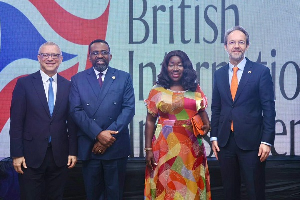

British International Investment (BII), the UK’s development finance institution and impact investor, has concluded a high-level leadership visit to Ghana from January 29–30, 2026.
The visit deepened collaboration with government and private-sector partners and highlighted BII’s future investment priorities aimed at driving sustainable and inclusive economic growth.
The BII Board delegation, led by Chief Executive Officer Leslie Maasdorp, met with government authorities, investors, and private-sector partners to strengthen collaboration and assess progress across BII and Growth Investment Partners (GIP) Ghana-supported businesses.
The delegation was particularly inspired by visits to five investee companies. At Maa Grace Garments International, the Board learned how the company leveraged GIP’s investment to become one of Ghana’s largest garment manufacturers and is now expanding to employ an additional 400 local women and men to increase production of garments that are 100 percent export-oriented.
The delegation also engaged with pension funds, private equity firms, and development finance institutions to discuss local capital mobilisation.
A high-level networking reception held at the British High Commissioner’s Residence brought together senior government officials, investors, and development partners, including the Minister of Trade, Agribusiness and Industry, Honourable Elizabeth Ofosu-Adjare, and the Governor of the Bank of Ghana, Dr Johnson Asiama.
Speaking about the visit, the British High Commissioner, Dr Christian Rogg, said, “Inclusive and sustainable growth is at the heart of the UK’s partnership with Ghana. This visit strengthens our shared commitment to boosting investment, improving the business environment, and supporting Ghana’s economic transformation as we advance a modern, forward-looking UK–Ghana partnership.”
Leslie Maasdorp, Chief Executive Officer of BII, added, “Ghana is a vital partner for British International Investment. We remain committed to supporting long-term economic resilience and helping Ghanaian businesses grow and compete globally.”
BII’s investments in Ghana currently support over 15,000 jobs across key sectors, including manufacturing, food security, energy, digital connectivity, and SME finance. In 2024, BII-backed businesses contributed more than US$3 million in taxes to the Ghanaian economy.
A core pillar of BII’s work is GIP Ghana, its flagship platform aimed at narrowing the country’s SME financing gap. By the end of 2025, GIP had invested in 15 SMEs, supporting over 3,400 jobs.


