


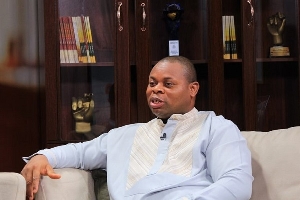

President of IMANI Africa, Franklin Cudjoe, has warned that Ghana’s worsening transport challenges are imposing a heavy but largely invisible cost on the economy, arguing that slow mobility is reversing the very forces that once powered global economic growth.
In a Facebook post on January 18, 2026, Franklin Cudjoe traced civilisation’s progress to advances in transport, from the invention of the wheel to modern rail, aviation and shipping.
“The history of economic power has simply been the history of moving people and goods bulkier and faster,” he said, adding that in Ghana today, the wheels that revolutionised civilisations seem to have ground to a halt.
Franklin Cudjoe cited the concept of Marchetti’s Constant, which suggests that humans naturally budget about one hour a day for commuting, to illustrate the scale of Ghana’s transport inefficiency.
Many Ghanaians are spending more time on roads than at work – Dr Agyekum-Obeng
“What is Ghana’s economy when it can take 1.5 hours to commute from Amasaman to Madina, just 19 kilometres apart?” he asked, describing such delays as a massive, invisible tax on the Gross Domestic Product.
According to him, the daily struggle begins as early as 3:30 a.m. for thousands of workers who leave home long before dawn to beat traffic.
“They aren’t early risers by choice; they are refugees trying to escape the traffic jam,” Cudjoe said, noting that by 6:00 a.m., major routes including Madina–Accra, Tema–Accra, Nsawam–Accra and Kasoa–Accra are already heavily congested.
He argued that prolonged commuting times leave workers physically and mentally exhausted before the workday begins, undermining productivity and contributing to poor health outcomes.
“The ‘faster wheel’ of the Industrial Revolution was meant to liberate human labour; in Ghana, the ‘slow wheel’ has enslaved it,” he said, linking chronic stress from traffic to rising cases of hypertension, heart disease and stroke, citing data from the Births and Deaths Registry.
Accra’s traffic to blame for public transport crisis – GPRTU
Cudjoe also highlighted what he described as ‘logistics purgatory,’ pointing to stalled road projects and the near collapse of Ghana’s rail system.
He noted that about 95 percent of freight and passenger movement occurs by road, creating a vicious cycle of road damage, slower speeds and higher transport costs.
“Every hour a truck carrying tomatoes from the north breaks down, the price of those tomatoes rises,” he said.
He called for urgent reforms to support Ghana’s 24-Hour Economy agenda, including shifting freight transport to rail, introducing dedicated bus lanes, modernising trotros in collaboration with transport unions, and prioritising the completion of stalled road projects.
“The wheel was invented to move us forward, it is time we made it turn again in Ghana,” he stressed.
Read the full post below:

MRA/EB
One year on: Watch what some Ghanaians are saying about ORAL


