


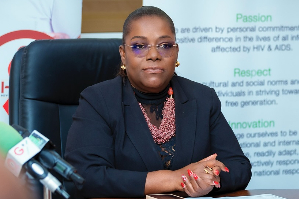

Nana Oye Bampoe Addo, Deputy Chief of Staff in charge of Administration, has called for a more deliberate and structured engagement with the African diaspora.
She described the diaspora as an integral extension of Ghana’s political, economic and intellectual space, rather than a symbolic “17th Region.”
Speaking at the ongoing Diaspora Summit, she said Ghana’s history had never been confined to its physical borders, noting that the ideas, skills, capital and values carried by Ghanaians and people of African descent across the world had shaped the nation in ways that statistics could not fully capture.
Oye said the Summit was compelling Ghana and Africa to confront deep-rooted structural distortions in their economies, many of which were inherited from colonial systems designed around raw material exports and dependence on imported finished goods.
She said more than 70 per cent of what Ghana consumed was imported, with billions of euros spent annually on food imports such as rice, poultry, sugar and vegetable oil, as well as hundreds of millions on essential medicines. This pattern, she said, drained foreign exchange, suppressed domestic production and limited job creation for the youth.
According to her, the challenge was not accidental but embedded in a resilient colonial economic design that continued to expose Ghana and other African countries to global price shocks and external vulnerabilities.
Oye stressed that reversing this legacy required a fundamental restructuring of the economy towards value addition, industrial production and export competitiveness, with the diaspora playing a central role in that transformation.
She noted that while remittances from abroad had helped stabilise incomes and consumption, consumption without production only deepened dependency and undermined sustainable growth.
She said Africa’s shared history of suffering, resilience and human ingenuity demonstrated that African civilisation could neither be erased nor silenced, adding that the global African family—from the continent to the Americas and beyond—had consistently shown the strength to push forward a transformation agenda.
She said the Summit was not only about memory and historical redress, but also about reimagining production systems, investment flows and partnerships that could deliver jobs and prosperity for young people.
Augustus Goosie Obuadum Tanoh, Presidential Advisor on Ghana’s 24-Hour Economy and Accelerated Export Development, said the government’s flagship economic reorganisation programme was designed to tackle these structural weaknesses.
He explained that the 24-Hour Economy Programme sought to organise production around integrated value chains in strategic sectors, linking agriculture to processing through agro-industrial partnerships supported by logistics hubs, reliable energy and export platforms.
Tanoh said many productive assets in the country—factories, warehouses, ports, hospitals, banks and markets—were operating below capacity due to fragmented and inefficient systems that created bottlenecks between production, processing, logistics and markets.
He said the new programme addressed these gaps by ensuring that services such as health, finance and growth industries operated efficiently across time, in recognition of the fact that global markets function continuously and that value chains are increasingly time-sensitive.
He noted that the diaspora’s experience in industrialised economies placed it at the heart of Ghana’s transformation agenda, as many diaspora professionals understood how value chains functioned, how exports were financed, how standards were enforced and how markets were accessed.
According to him, the challenge was to channel diaspora skills, capital and networks into investment, processing and export-oriented enterprises, rather than limiting engagement to consumption-driven remittance flows.
Tanoh said Africa’s combined GDP of about 3.4 trillion dollars and a regional market of hundreds of millions of people presented vast opportunities if approached collectively, with the diaspora playing a decisive role as what Ghana now describes as its 17th Region.
He noted that agro-processing facilities currently operated at only 30 to 40 per cent of capacity, while innovation hubs and production markets linked to large consumer bases could unlock significant value if properly financed and integrated.
He said the government had already taken steps to lower barriers to engagement, including the introduction of a visa-on-arrival policy for Africans and people of African descent, strengthened investment facilitation through the Ghana Investment Promotion Centre, improved access to land, regulatory reforms and the development of industrial infrastructure.
These measures, he said, were aimed at building a predictable and competitive enterprise ecosystem capable of attracting long-term investment.


