


Ghanaian rapper and entrepreneur D-Black has expressed shock that only 16 of more than 700 radio and television stations pay music royalties to the Ghana Music Rights Organisation (GHAMRO).
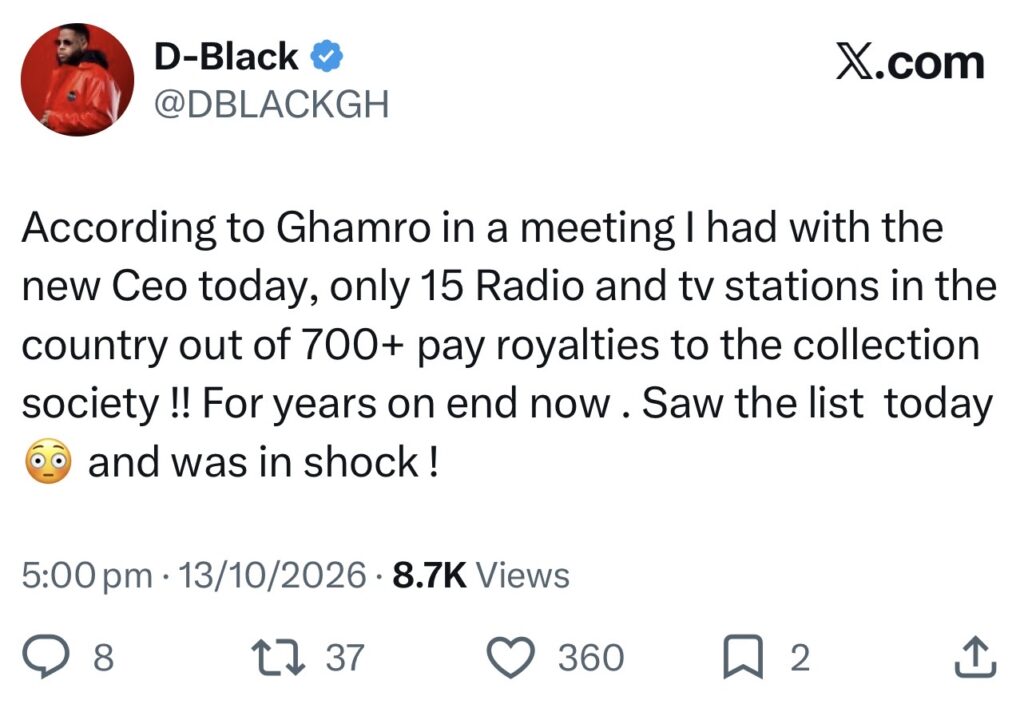
In an X post on Tuesday, 13th October 2026, D-Black said he learnt about the low compliance rate during a meeting with the new Chief Executive Officer of the Collective Management Organisation.
“According to GHAMRO in a meeting I had with the new CEO today, only 15 [sic] Radio and tv stations in the country out of 700+ pay royalties to the collection society !! For years on end now . Saw the list today and was in shock !”

In a separate post, he called on industry stakeholders to unite and mount pressure on the government to enforce laws that would compel radio and television stations to comply with their music royalty obligations.
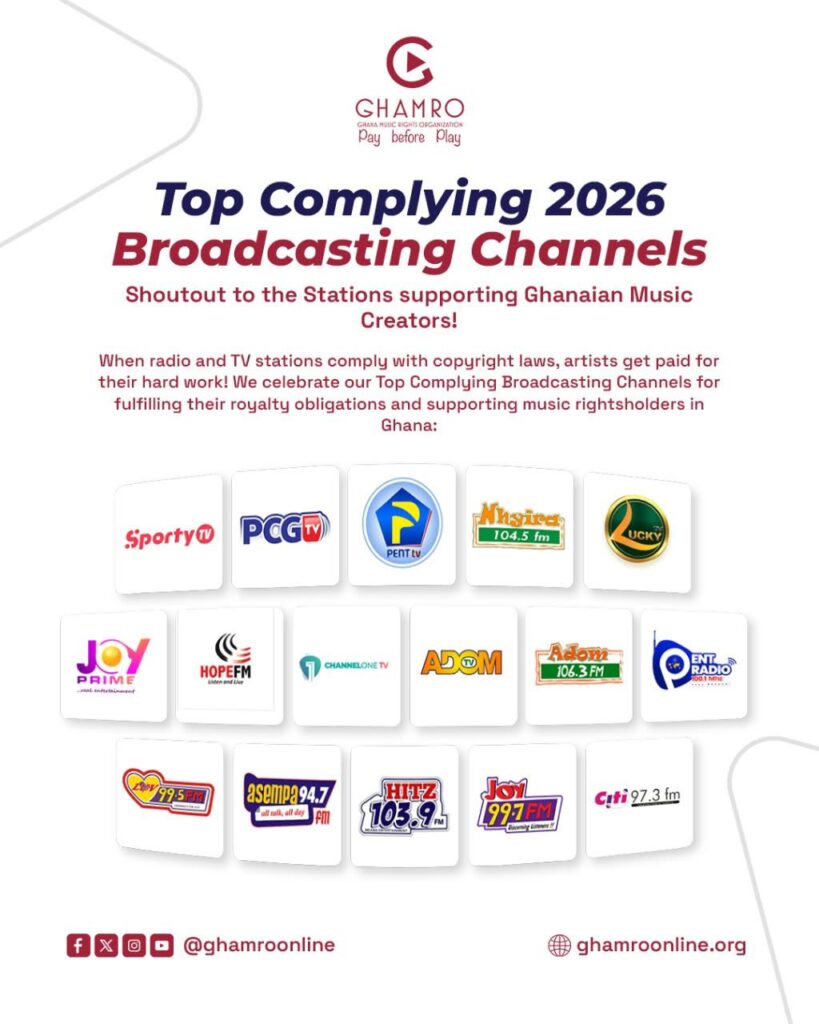
The stations identified as paying royalties through GHAMRO are Joy FM, Hitz FM, Asempa FM, Adom TV, Adom FM, Luv FM, Nhyira FM, Joy Prime, Pent Radio, Pent TV, Citi FM, Channel One TV, PCG TV and Lucky TV.

According to GHAMRO’s CEO, Jackson Brefo, the state broadcaster, Ghana Broadcasting Corporation (GBC), has still not paid its music royalties despite losing a court case in 2018 over its failure to meet its obligations.
However, the responsibility to pay music royalties extends beyond radio and television stations. According to GHAMRO’s official website, businesses and establishments that use music commercially or play it publicly may be required to obtain a music licence under Section 36 of Ghana’s copyright law.
GHAMRO’s list of music users includes live music performers and event centres, mobile disc jockeys (DJs), pubs and bars, malls and shops, restaurants, nightclubs, banks, transport operators, churches, local eateries, filling stations, lounges, digital streaming platforms, telecommunications companies, cinemas, barbering shops and beauty salons.
The organisation also identifies radio and television broadcasters as music users required to obtain licences for the use of music. Its licensing framework covers music used for commercial purposes or public performance through broadcasting or communication.
GHAMRO’s mandate is to license music users, collect royalties and distribute the proceeds to music rights holders, including composers, lyricists, arrangers, performers and publishers. The organisation operates under Ghana’s copyright framework to help ensure that creators are compensated when their works are used in ways covered by copyright.
In recent developments, GHAMRO has introduced measures aimed at improving transparency and royalty administration. In July 2026, it announced a distribution of GH¢1,433,571.43 in royalties, covering background music, digital mechanical, digital performance and live performance royalties.
The organisation also introduced personalised royalty statements to provide beneficiaries with details of the periods and revenue sources contributing to their payments, alongside the use of digital rights management systems to support royalty collection and distribution.
Despite these developments, compliance by music users remains a challenge, with D-Black calling for stronger enforcement to ensure that broadcasters meet their obligations and music creators receive royalties for the use of their works.
DISCLAIMER: The Views, Comments, Opinions, Contributions and Statements made by Readers and Contributors on this platform do not necessarily represent the views or policy of Multimedia Group Limited.
DISCLAIMER: The Views, Comments, Opinions, Contributions and Statements made by Readers and Contributors on this platform do not necessarily represent the views or policy of Multimedia Group Limited.
Source link


