


![Could this be a de-Googlers dream phone? [Video]](https://i1.wp.com/pressinformant.com/wp-content/uploads/2026/04/could-this-be-a-de-googlers-dream-phone-video.webp?w=1200&resize=1200,600&ssl=1 "Could this be a de-Googlers dream phone? [Video]")
The Punkt MC03 emerges as a bold contender in the niche market of privacy-focused smartphones, positioning itself as a comprehensive solution for individuals seeking modern technology untethered from Google’s extensive data ecosystem. This device promises a deliberate break from the mainstream, offering a meticulously crafted experience for those wary of pervasive tracking and data collection. However, as with any specialized offering, a crucial question arises: for whom is this device truly intended, and does it deliver on its ambitious privacy promises without significant compromise? The market is ripe for alternatives, but the execution of a truly “de-Googled” experience is fraught with challenges, and the MC03 attempts to navigate these complexities with a unique approach.
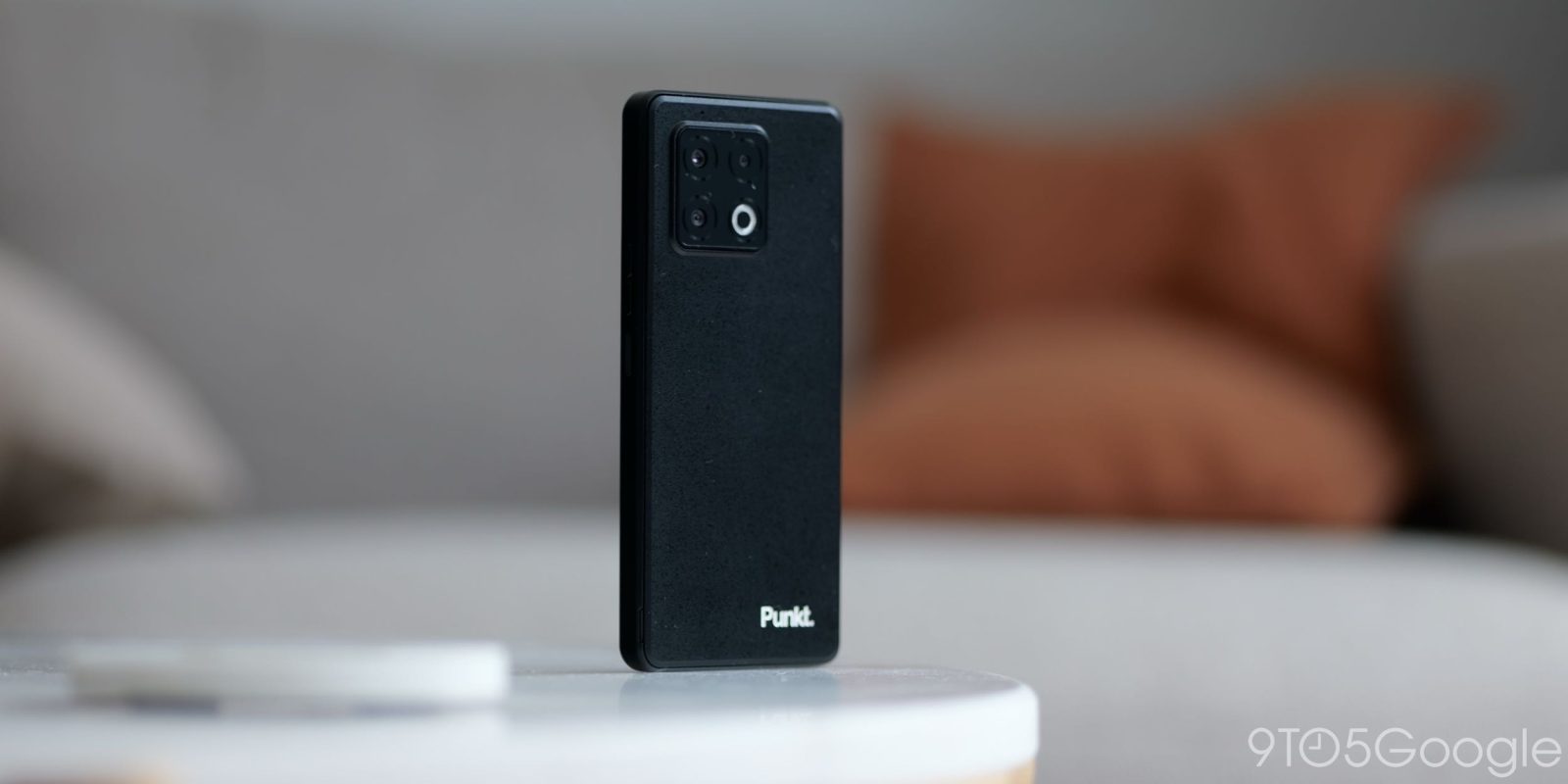
Hardware: Crafting a Private Device
The Punkt MC03 immediately distinguishes itself with a design philosophy that prioritizes discretion and durability over flashy aesthetics. It presents itself as a simple, unassuming black box, a deliberate choice that paradoxically might make it more noticeable in a sea of increasingly elaborate smartphone designs. While a “regular” smartphone in a common form factor might blend in more seamlessly, the MC03’s minimalist industrial design speaks to a user who values function and robustness. This isn’t a device that screams for attention; rather, it aims to be a reliable, long-lasting tool. The attention to detail in its physical construction suggests a commitment to longevity, a refreshing departure from the planned obsolescence often seen in consumer electronics.
Robustness and Repairability: Built for the Long Haul
The MC03’s robust feel in the hand is not merely superficial; it extends to thoughtful design choices aimed at maximizing its lifespan. A standout feature is the removable backplate, which, while requiring a “little bit of work” rather than a quick hot-swap, provides access to a user-repairable battery. This 5,200mAh cell is generously sized, promising excellent endurance, but its true value lies in the ability for users to replace it without specialized tools or professional assistance. This is a significant boon for both environmental sustainability and user empowerment, pushing back against the trend of sealed devices. The option to easily swap out a failing battery ensures the phone can serve its owner for many years, aligning with the philosophy of conscious consumption.
Beyond the battery, the removable backplate also grants access to a microSD card slot, supporting up to a massive 1TB of external storage. This feature, while not universally needed given the generous 256GB of onboard storage, is a welcome addition for privacy advocates. It allows users to maintain complete control over their data, avoiding reliance on potentially insecure cloud services and providing ample space for media, documents, and encrypted files. For those who prioritize data sovereignty, expandable storage is an essential component.
Disappointments and Design Trade-offs
Despite its strengths, the Punkt MC03’s hardware package is not without its perplexing omissions. The most glaring for a device marketed on privacy and utility is the absence of a 3.5mm headphone jack. In an era where audio quality and secure communication are increasingly important, forcing users into the Bluetooth ecosystem feels like a significant oversight. Bluetooth, by its very nature, introduces additional layers of complexity, potential vulnerabilities, and tracking vectors that privacy-conscious users often seek to avoid. For many in the privacy community, a wired connection remains the gold standard for its simplicity, security, and often superior audio fidelity. This decision, seemingly a concession to modern design trends, stands in stark contrast to the phone’s core ethos.
The display, a 120Hz OLED panel, is a solid inclusion that ensures a pleasant visual experience. While it won’t rival the brightest or most color-accurate screens found on contemporary flagship phones, it offers a level of quality comparable to older premium devices like the Pixel 7a or 8a. For a privacy-focused phone, where the primary use case isn’t necessarily multimedia consumption or gaming, this is an entirely acceptable and competent display.
Powering the device is a MediaTek Dimensity 7300 chip. While providing “absolutely fine” performance for daily tasks, this choice raises questions regarding long-term software support. MediaTek chips are notoriously less open and often lack the robust community support seen with Qualcomm Snapdragon processors. Critically, prominent privacy-focused ROMs like GrapheneOS currently do not support MediaTek devices, and as of early 2026, have no plans to. This limits the user’s future options for alternative privacy-hardened operating systems, potentially tying them to Punkt’s own software development cycle. Whether this was a conscious decision to control the software stack or simply a cost-saving measure remains unclear, but it’s a vital consideration for the target audience.
The camera system, featuring “modest sensors,” is described as sufficient for basic needs, performing on par with most budget phones and some mid-rangers. For a device where privacy and utility are paramount, an industry-leading camera is not expected, and its ability to “get the job done” aligns with the phone’s overall practical approach. Expectations were tempered, and the camera generally met them without significant disappointment.
Software: ApostrophyOS and the Paradox of Paid Privacy
The Punkt MC03’s true differentiator, and indeed its most controversial aspect, lies in its software experience: ApostrophyOS. Based on Android 15, which was nearly two years old at the time of the review, the OS presents a split interface designed to compartmentalize digital life. This delay in Android version, while potentially not a “hindrance whatsoever” for some, immediately raises concerns about timely security patches and access to the latest Android features and underlying security improvements.
ApostrophyOS: Vault, Wild Web, and Security Concerns
ApostrophyOS divides the user experience into two distinct environments: the “Vault” and the “Wild Web.” The “Wild Web” functions as a standard Android homescreen, complete with apps, an app drawer, and widgets, providing a familiar environment. The “Vault,” conversely, is conceptualized as a “clean room” for sensitive interactions. While the review notes a lack of detailed information on its specific security mechanisms, the intent is clear: to offer a highly secure, siloed space for critical applications and data. Switching between these two spaces is designed to be seamless, a simple swipe gesture after unlocking the phone. This dual-sided approach is aesthetically pleasing and offers a clear organizational benefit for managing privacy levels.
However, the “out-of-the-box” security of ApostrophyOS, crucial for a privacy-focused device, proves to be concerning. The test unit was reportedly on the May 2025 security patch, and no updates were observed during the testing period. For a device that commands a premium for its security promises, being behind on patches by a significant margin is a critical flaw. Timely security updates are the bedrock of digital privacy, and their absence undermines the core value proposition.
The pre-installed application suite is minimal, primarily comprising AOSP (Android Open Source Project) essentials like Phone, Messaging, Gallery, and Contacts. Notably, the Proton suite of apps (Proton Mail, ProtonVPN, etc.) plays a key role, a sensible choice given Proton’s strong reputation in the privacy community. Vanadium, a hardened web browser based on Chromium, is pre-installed, mirroring GrapheneOS’s choice for secure browsing. Curiously, Punkt also includes its own app store, which is described as “completely barren,” offering only a handful of “business-like” applications. This necessitates users to rely on alternative app sources like Aurora Store or F-Droid for a functional smartphone experience, adding a layer of friction.
For users who require Google applications but still wish to mitigate Google’s data collection, ApostrophyOS offers the option to install a sandboxed version of Google Play Services. This allows for granular control over what data Google can access, a feature widely lauded in privacy-centric custom ROMs like GrapheneOS.
The “Ledger” function, somewhat inexplicably labeled “Carbon Reduction,” allows users to monitor and adjust data access and power usage. However, its utility is limited by a lack of detailed statistics, making it only marginally more effective than standard Android app controls and the privacy dashboard. This missed opportunity could have been a powerful tool for transparency and user control.
The Subscription Model: A Faustian Bargain for Privacy?
The most significant and potentially polarizing aspect of the Punkt MC03’s software is its subscription model. After an initial free year, users are required to pay $10 per month to maintain access to the full ApostrophyOS experience. Failure to pay results in the phone reverting to a generic “open source Android build,” with all proprietary ApostrophyOS features becoming unavailable.
This “privacy-as-a-service” model is highly problematic. It effectively holds users hostage to a recurring fee for what many consider a fundamental digital right. It creates an economic barrier to sustained privacy, especially when robust, free, and actively maintained alternatives like GrapheneOS exist for other devices. The irony deepens when considering the onboarding process: to acquire a device designed to protect one’s identity, users are compelled to provide personal and payment information to Punkt, creating the very “paper trail” that the truly paranoid seek to avoid. This contradiction fundamentally undermines the MC03’s core mission for a segment of its potential user base.
The Conundrum of the MC03: Who is it For?
The Punkt MC03 represents a fascinating, if flawed, attempt to address the growing demand for privacy in the smartphone market. As the reviewer’s first experience with a dedicated privacy-focused smartphone, it offers a competent technical package. However, the critical question of its target audience remains largely unanswered.
For users deeply committed to digital privacy, the MC03 presents a paradox. While its hardware offers commendable features like repairability, a large battery, and expandable storage, the lack of a headphone jack and the choice of a MediaTek chip (limiting alternative ROM support) are significant drawbacks. More critically, the software experience, plagued by outdated security patches and a mandatory subscription model, severely undermines its appeal.
A more compelling and cost-effective alternative for many privacy advocates would be to acquire a readily available, often older, Google Pixel device (such as the Pixel 7 or 7a) and install GrapheneOS. This approach offers superior, actively maintained security, free software support, and a more robust privacy-hardened Android experience, often at a lower initial cost. Given that ApostrophyOS is essentially a fork of GrapheneOS, users of the MC03 are paying a premium and a monthly subscription for what amounts to a less updated and more restricted version of a free, community-driven project, along with some “shinier tweaks” and the bundled Proton services.
For those whose primary goal is a complete digital detox and an absolute break from smartphone complexities, a “dumbphone” might be a more logical and consistent choice. Such devices, by their very nature, minimize data collection and digital footprint without the inherent compromises or costs associated with a full-featured smartphone attempting to be “privacy-first.”
The Punkt MC03 forces a philosophical debate: should privacy be a paid privilege, or a fundamental right accessible without recurring fees? While some might argue that paying for a curated, secure experience is preferable to unknowingly surrendering personal data to “free” platforms, the MC03’s model adds a significant financial burden that many privacy-conscious users might find unjustifiable, especially when technically superior and financially lighter alternatives exist. The onboarding process, which necessitates sharing personal payment information with Punkt to safeguard one’s identity, only compounds this irony.
Ultimately, while the Punkt MC03 demonstrates a laudable ambition to provide a privacy-centric smartphone, its execution is marred by critical flaws in software maintenance and a contentious subscription model. For the discerning “de-Googler,” there are indeed better options available that offer more robust privacy, superior long-term support, and greater financial accessibility without necessarily bleeding them dry over time. The dream of a truly private phone remains elusive if it comes with such significant caveats.


FTC: We use income earning auto affiliate links. More.
