


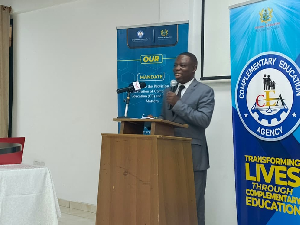

Daniel Kwesi Ashiamah, the Acting Executive Director of the Complementary Education Agency (CEA), reaffirmed the government’s commitment to improving informal education and significantly reducing illiteracy in Ghana.
Speaking at a three-day workshop held at the University of Development Studies Guest House in Accra, Ashiamah addressed all the Regional Directors of the CEA, urging them to collaborate and unite for the common goal of enhancing education across the country.
During his speech, Ashiamah emphasized the importance of informal education in fostering literacy and empowering communities across Ghana.
“We must come together as one to tackle the challenges of illiteracy and improve informal education in every region of Ghana,” he said.
“The Mahama administration has already taken significant steps under the Reset Ghana program to equip the Complementary Education Agency with the resources needed to address these critical issues.”
Ashiamah’s remarks came as part of a wider effort to strengthen informal education nationwide, which he believes is essential for the development of both individuals and the nation as a whole.
The CEA is tasked with supporting non-formal education programs, including adult literacy initiatives, vocational training, and community-based education solutions.
President John Mahama’s administration has long prioritized education as a key pillar for national development.
As part of the Reset Ghana initiative, the government has increased its focus on ensuring accessible, quality education for all Ghanaians, particularly those who are often left behind by the formal education system.
“We recognize that informal education is just as critical as formal schooling in shaping the future of our country,” Ashiamah added. “Through our collective efforts, we aim to make Ghana a more literate and informed society, where no one is left behind.”
The workshop provided an opportunity for the Regional Directors to exchange ideas, share best practices, and plan the way forward for the agency’s initiatives.
Ashiamah called for greater unity and collaboration, encouraging all stakeholders to contribute towards the achievement of the agency’s goals.
“We cannot afford to work in isolation,” he said.
“The success of this mission depends on our collective efforts and our shared vision for a literate and empowered Ghana.”


