


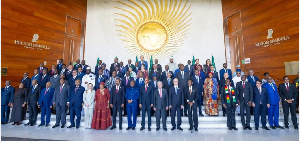

The African Continental Free Trade Area (AfCFTA) has received a boost with the inauguration of the African Union (AU) Committee of Heads of State and Government on the implementation of the agreement.
The announcement was made at the 39th Ordinary Session of the AU Assembly and marks a step towards accelerating the transition from negotiations to full-scale implementation.
“Business as usual does not deliver the results we seek,” President William Ruto of Kenya, Chair of the Committee, said, urging unflinching support to realise the transformative promise of the AfCFTA and ensure tangible outcomes for all.
The Committee comprises leaders from Ghana, Mauritius, Botswana, South Africa, the Democratic Republic of Congo, Burundi and Côte d’Ivoire.
It is mandated to provide strategic political leadership, sustain momentum and ensure measurable trade and investment outcomes for African citizens and businesses.
The AfCFTA, the world’s largest free trade area by number of participating countries, brings together Member States of the AU into a single liberalised market for goods, services and investment.
Since entering its operational phase in 2019, progress has included the conclusion of negotiations on key legal instruments, the launch of the Guided Trade Initiative and the establishment of institutional mechanisms to support implementation.
The Committee will monitor progress across the continent’s five regions and sustain political support for the intra-African trade pact.
Mr Wamkele Mene, Secretary-General of the AfCFTA, welcomed the establishment of the Committee and underscored the importance of sustained leadership and timely operationalisation.
He said that amid global economic upheavals, the AfCFTA remained the continent’s only bankable opportunity to activate a continent-wide market, boost industrial capacity and reduce external vulnerabilities.
The Committee at its inaugural meeting welcomed the report of the AfCFTA Champion, Mr Issoufou Mahamadou, former President of Niger, and acknowledged his role in leading the agreement’s transition from negotiations to implementation.
It also underscored the need for deeper engagement with African Development Finance Institutions.


