


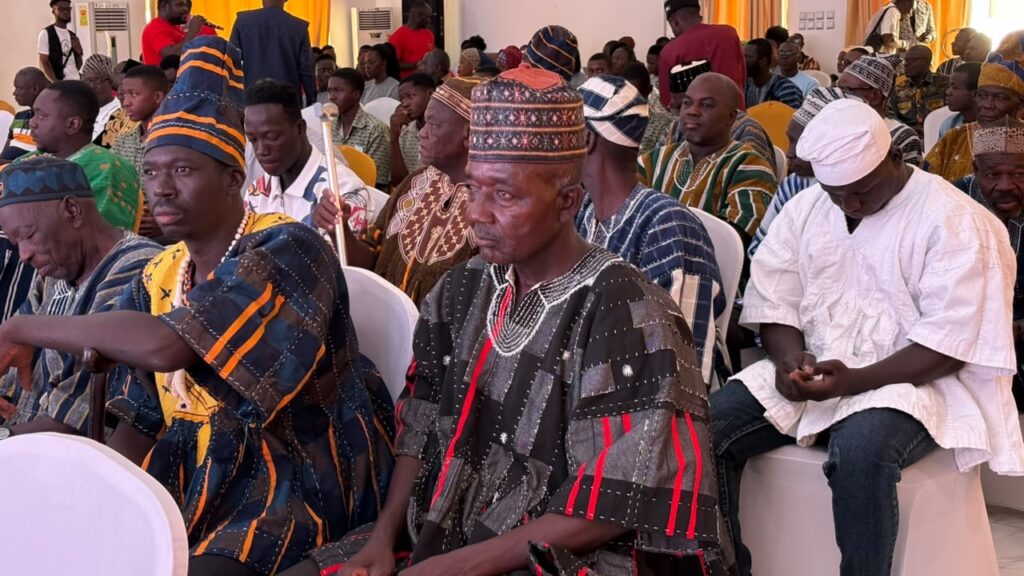
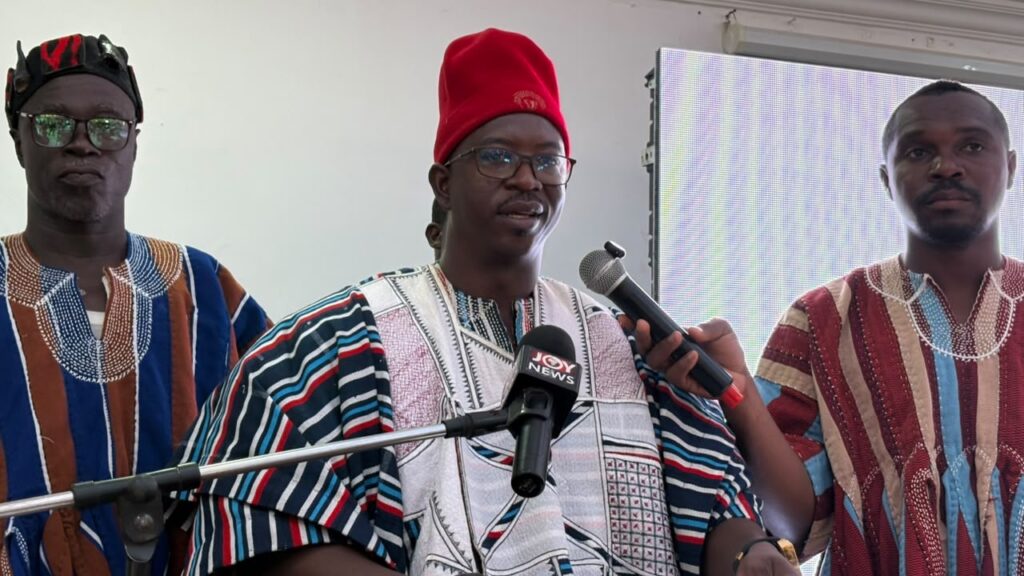
The Paramount Chief of the Jirapa Traditional Area, Naa Di-Naa Donlabong III, has called on citizens and natives of Jirapa in the diaspora to take greater responsibility for the development of their communities rather than relying solely on central government support.
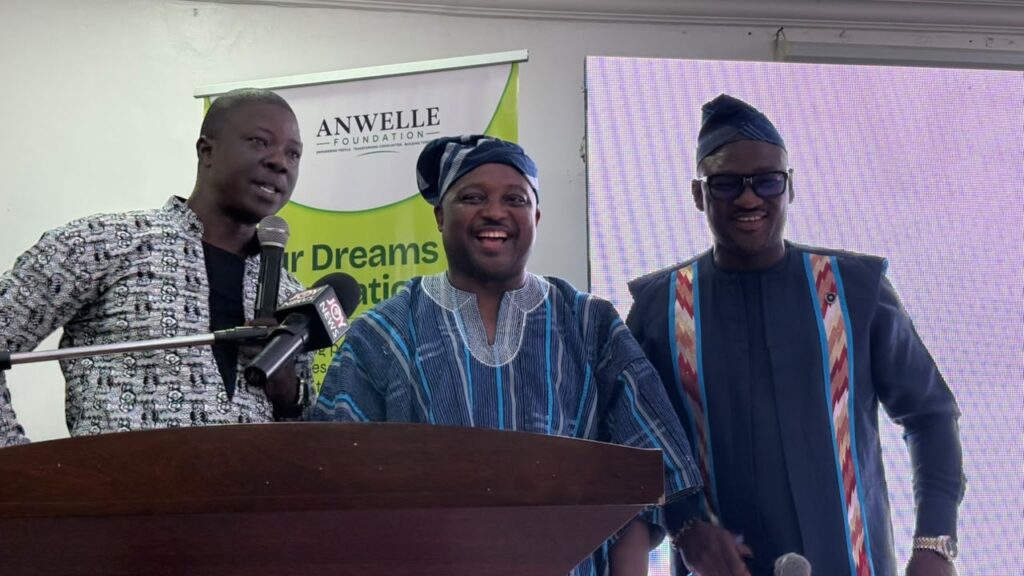
He made the call at the official launch of the Anwelle Foundation in Jirapa, where he challenged citizens to move away from a culture of entitlement and consider what they could personally contribute to transforming their hometowns.
“Development does not always have to begin from Accra. It can begin here. It can begin from a young man who refuses to give up on his community; it can begin from a woman farmer, a teacher, a student, a philanthropist, or from the traditional palace. And sometimes, it can begin with nothing more than a decision to care,” the Paramount Chief declared.
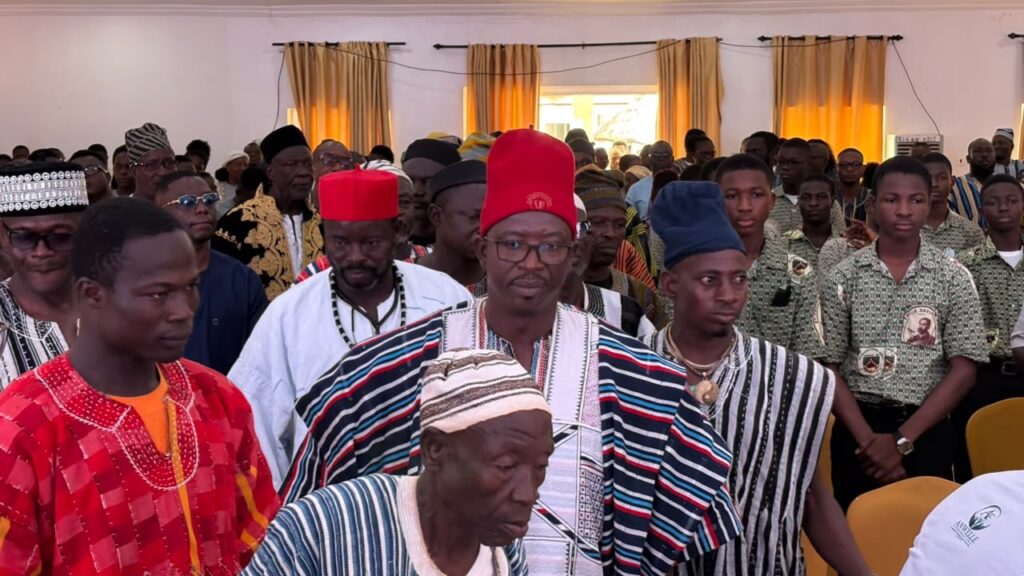
The event brought together traditional authorities, government officials, diplomats, academics and civil society actors to unveil the foundation’s mission of addressing resource gaps through interventions in education, youth empowerment, sustainable livelihoods and rural development.

Naa Di-Naa Donlabong III also addressed public interest in his recent conferment of a chieftaincy title on social media influencer Parrot Mouth, who was enskinned as the Jirapa Development Social Media Influencer Chief (Jirapa Baalong Mwin-Yel-No Naa).
Dismissing suggestions that the move amounted to a dilution of traditional customs, the Paramount Chief said traditional leadership must embrace modern communication tools to promote the town’s opportunities and tell its own story.
“The palace must not become disconnected from the tools of the modern world. A story about Jirapa can travel across the world before the Traditional Council has finished its meeting.
“We cannot complain that the world is not hearing about Jirapa and, at the same time, reject those who have the capacity to make the world listen to us,” he emphasised.
He urged sons and daughters of Jirapa living across the globe to return home with their capital, academic qualifications, networks and technical expertise to help build a competitive local economy.
Foundation’s mission
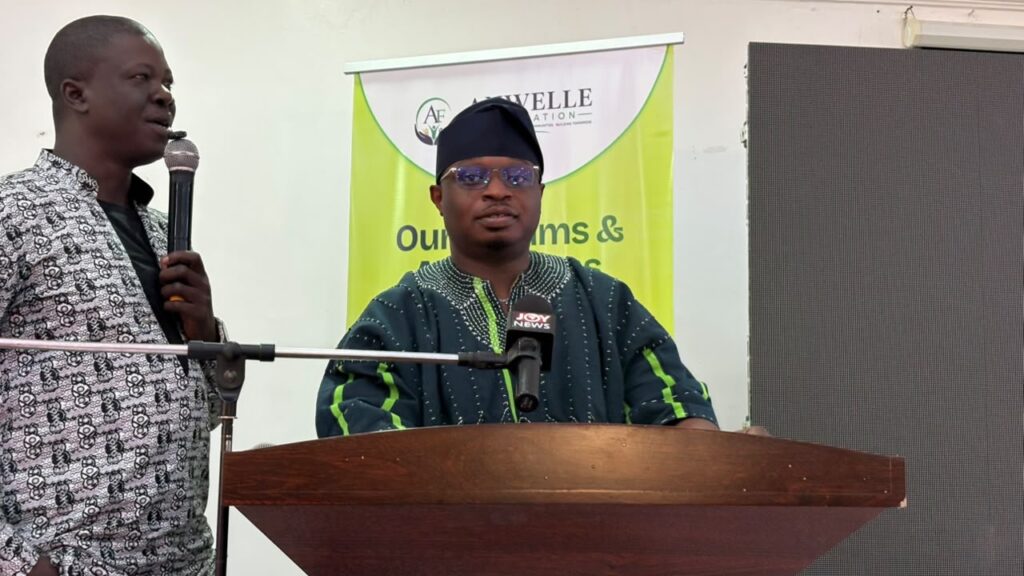
Founder and Chief Executive Officer of the Anwelle Foundation, Frank Anwelle, said his motivation for establishing the foundation was rooted in personal experience and concerns about the arbitrary nature of access to educational support in rural Ghana.
“At a critical moment in my life, someone saw potential in me and opened a door. But support was largely a matter of chance. Sometimes, scholarships exist, but the brilliant student in the village never hears about it.
“The Anwelle Foundation exists to close that gap. Help should not be hidden; opportunities should not be accidental,” Mr Anwelle said.
Before its formal launch, the foundation had already provided emergency relief to students displaced by the Jirapa Senior High School dormitory fire, distributed sewing machines to vocational trainees and drilled boreholes to provide access to clean drinking water.
Abdul Karim Hakim, a Level 400 BSc Computer Science student at the University for Development Studies (UDS), shared his experience of receiving support from the foundation.
Mr Hakim, a native of Walewale, said Anwelle met him in 2022 while he was working as an apartment security guard in Dansoman, Accra, to raise funds for his tertiary education.
He said the foundation subsequently assumed full financial responsibility for his university tuition, accommodation and living expenses throughout his four years of study.
Youth employment initiative
As part of its plans, the foundation announced a youth-centred automotive apprenticeship partnership with industry operator Johani Annie.
Under the initiative, selected young people from Jirapa will undergo specialised technical training at automotive branches in Tamale, Sunyani and Accra.
The foundation will subsequently establish a modern auto workshop in Jirapa to employ the trainees locally.
Calls for community support
The launch attracted international diplomatic participation, led by the Presidential Envoy for Trade, Investments and Special Duties of the Republic of Liberia, Daniel N. Kolubah, for whom Mr Anwelle serves as Special Aide for Ghana.
Mr Kolubah urged African leaders and organisations to move beyond bureaucratic declarations and focus on measurable community impact.
“The true measure of leadership lies not only in what we achieve for ourselves, but also in the opportunities that we create and the lives that we positively impact. Let this foundation be defined not by the number of programmes it announces, but by the lives it transforms,” Mr Kolubah said.
The Upper West Regional Minister, Charles Lwanga Puozuing, commended the initiative and supported it with a personal donation of GH₵20,000.
He called on local actors to develop integrated agricultural value chains covering production, processing, storage and market linkages to make farming more attractive to young people.
Mr Puozuing, however, cautioned residents against placing excessive demands on the fledgling foundation, warning that such pressure could undermine its ability to operate sustainably.
“When one person undertakes to help, we shouldn’t break the fellow’s back. In Jirapa, we are over 200,000 natives. If one person comes to support and our demand seems to quadruple because there is an Anwelle Foundation, the foundation will collapse before we get the necessary impact,” the Minister warned.
Leader of the People’s National Convention (PNC) and Bimoba Youth Chief, Bernard Anbataayela Mornah, contributed GH₵5,000 to the foundation and cautioned political actors against viewing youth-led development initiatives through partisan lenses or undermining them through the “Pull Him Down” (PHD) syndrome.
In his acceptance address, Board Chairman of the Anwelle Foundation, Prof Williams Angko, said the name Anwelle translates from the local dialect as “no one should be left behind”.
He pledged that the governing board would uphold strict standards of transparency, non-partisanship and merit-based assistance.
“The board will ensure that every resource entrusted to us is used transparently and reaches those in need—not those who are related to us. Everybody is our relative,” Prof Angko affirmed.
Closing the event, Chairman of the occasion, Prof Osumanu Issaka Kanton, said the success of the ceremony would ultimately be measured by sustained action on the ground.
He called on the municipal assembly, traditional councils and development partners to collaborate actively with the foundation to tackle rural poverty systematically.
DISCLAIMER: The Views, Comments, Opinions, Contributions and Statements made by Readers and Contributors on this platform do not necessarily represent the views or policy of Multimedia Group Limited.
DISCLAIMER: The Views, Comments, Opinions, Contributions and Statements made by Readers and Contributors on this platform do not necessarily represent the views or policy of Multimedia Group Limited.
Source link


