


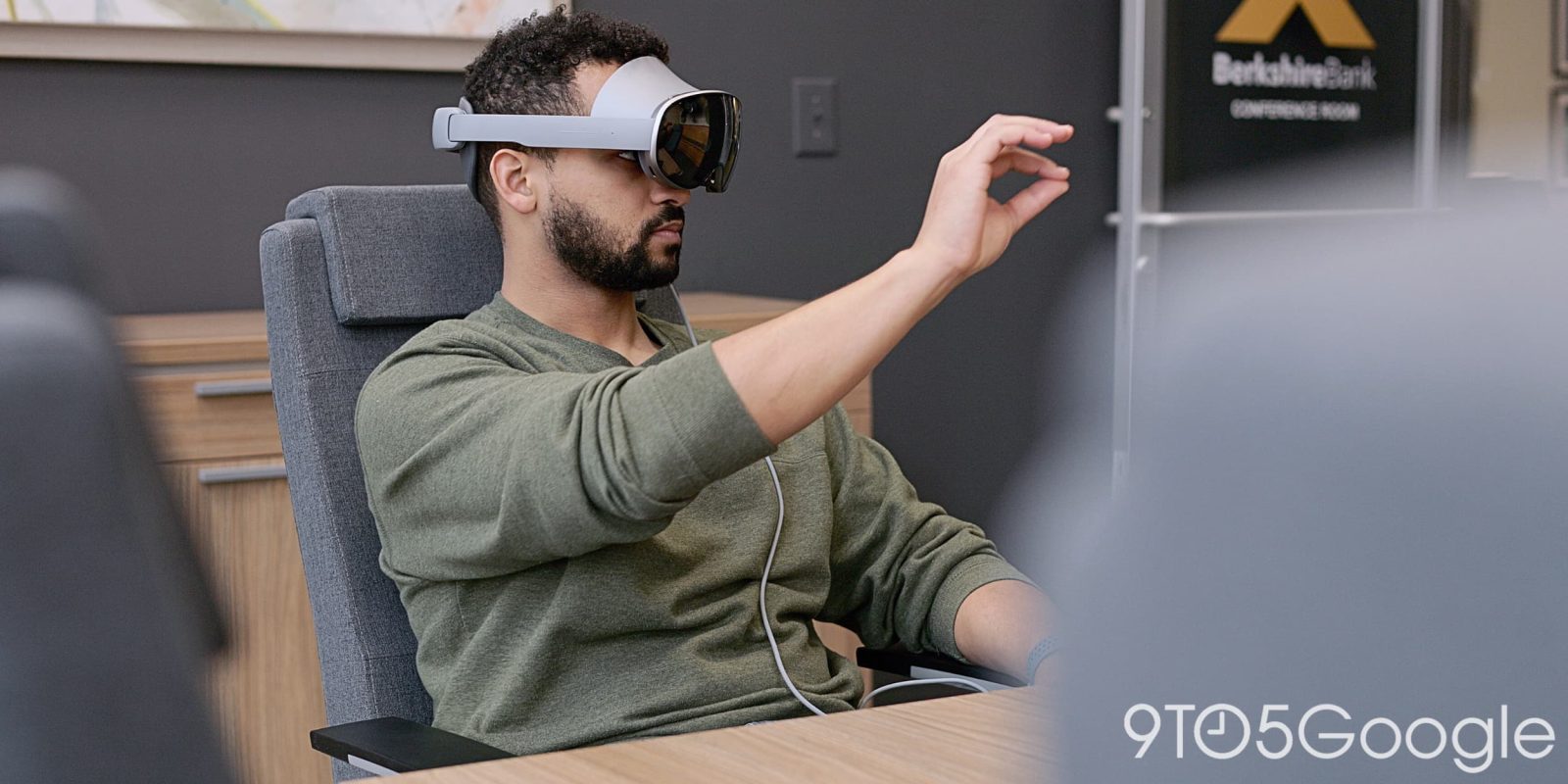
A significant and ongoing bug within the Android XR platform has severely hampered the performance of Samsung’s highly anticipated Galaxy XR headsets, rendering them, by many user accounts, “functionally useless.” Google has officially acknowledged the critical issue and has declared its resolution an “absolute top priority,” aiming to deploy a patch as swiftly as possible to restore functionality and user confidence in the nascent extended reality ecosystem.
The burgeoning field of extended reality (XR), encompassing virtual reality (VR), augmented reality (AR), and mixed reality (MR), represents a frontier for technological innovation, with major players like Google, Samsung, and Qualcomm investing heavily. Android XR, Google’s dedicated operating system for these immersive devices, is intended to provide a robust and versatile foundation. However, the recent emergence of a debilitating performance bug has cast a shadow over this vision, particularly impacting Samsung’s entry into the high-stakes XR hardware market.
User feedback has painted a grim picture, highlighting a widespread and severe degradation in the user experience. This critical flaw not only impedes the enjoyment of content but fundamentally undermines the core purpose of an immersive device, which relies heavily on seamless interaction and high fidelity. Google’s prompt and public response underscores the gravity of the situation, recognizing the potential long-term damage to the platform’s reputation and the broader adoption of Android XR devices.
The Crippling Android XR Bug: A Deep Dive into Performance Failures
The reports detailing the performance woes of the Samsung Galaxy XR headsets have been alarmingly consistent and widespread. Users describe an experience far removed from the smooth, responsive interaction expected from a premium XR device, signaling a fundamental instability at the operating system level. This isn’t merely a minor glitch; it’s a systemic failure impacting the very usability of the hardware.
User Reports: A Symphony of Frustration
Owners of Samsung Galaxy XR headsets have taken to various online forums, most notably Reddit communities dedicated to Galaxy XR and Android XR, to voice their profound disappointment and frustration. Threads like “Buyer Beware” on r/Galaxy_XR have become central hubs for users to document their experiences. The consensus is clear: the headsets are operating far below acceptable standards. Users report that framerates within applications and the general user interface (UI) plummet to an unplayable crawl. This leads to severe motion sickness for some, a complete break in immersion for others, and a general feeling of exasperation.
Beyond sluggish performance, the problem escalates to outright device instability. Many users report frequent and unpredictable freezing, where the entire headset becomes unresponsive, necessitating a hard reset. As one particularly exasperated user vividly described the situation on Reddit, their expensive new device has been rendered “functionally useless.” This sentiment is echoed by many others who find themselves unable to effectively engage with content, navigate menus, or even complete basic setup procedures without encountering significant hitches or total system lock-ups. The promise of an immersive, cutting-edge experience quickly devolves into a frustrating battle against software inadequacies, severely diminishing the value proposition of these advanced devices.
Unmasking the Culprit: The Memory Leak Hypothesis
While Google’s official statement confirms awareness of the “issue” without delving into specifics, the user community has been proactive in diagnosing the potential root cause. Through observation and technical analysis, many users and developers within the Android XR community have independently pinpointed a memory leak as the most likely culprit behind the severe performance degradation. A memory leak occurs when a computer program or operating system repeatedly requests memory from the operating system but fails to release it back when it’s no longer needed. Over time, this unreleased memory accumulates, eventually consuming all available system resources.
In the context of an XR headset, which demands immense computational power for real-time rendering, sensor processing, and interactive experiences, a memory leak is particularly catastrophic. As the available memory dwindles, the system is forced to swap data more frequently, leading to the observed framerate drops and UI sluggishness. Eventually, with no memory left to allocate, applications crash, or the entire system freezes. This technical explanation aligns perfectly with the symptoms reported by users, providing a clearer understanding of why the Galaxy XR headsets are struggling so profoundly. Identifying the memory leak as the probable cause is a crucial step towards developing an effective and lasting solution.
Google’s Swift Acknowledgment and Prioritization
In the face of mounting user complaints and growing concerns within the tech community, Google has demonstrated a commendable level of transparency and responsiveness. The company’s official acknowledgment of the bug and its commitment to a rapid resolution are critical in maintaining trust and stabilizing the nascent Android XR platform.
Official Confirmation from Google
The confirmation came from Grace, a Community Engagement Manager at Google, who directly addressed the user concerns on Reddit. Her statement was clear and empathetic: “Hey everyone, I’ve been following the comments here and I want to acknowledge your concerns. It is clear that the current experience is not meeting expectations, and I fully understand your frustration.” This direct communication is vital, as it validates the users’ experiences and assures them that their feedback is being heard at a high level within Google. Grace further emphasized the company’s commitment, stating, “The team is fully aware of this issue and we have made getting a patch out to everyone our absolute top priority. I will post an update as soon as we have a concrete timeline for the fix. Thanks for your patience while we get this sorted out.”
This declaration of “absolute top priority” signals Google’s understanding of the severe impact this bug has on its partners and early adopters. While a concrete timeline for the fix is still pending, the assurance that a dedicated team is working intensively on the problem offers a glimmer of hope for affected users. Such proactive communication is crucial, especially for a new and complex platform like Android XR, where initial impressions can significantly influence long-term success and market adoption. It demonstrates Google’s commitment not just to the technology, but to the user experience and the health of its developer ecosystem.
The Urgency of a Fix for the XR Ecosystem
The urgency with which Google is approaching this fix is not merely about placating frustrated customers; it’s about safeguarding the future of Android XR itself. In a highly competitive market where Apple Vision Pro and Meta’s Quest lineup are formidable rivals, a stable and performant operating system is non-negotiable. Early bugs, especially those that render devices “functionally useless,” can severely damage a platform’s reputation before it even has a chance to gain widespread traction. Developers, who are crucial for building a vibrant app ecosystem, are hesitant to invest time and resources into platforms plagued by fundamental stability issues.
For Google, establishing Android XR as a viable open platform for various hardware manufacturers is a strategic imperative. A bug of this magnitude, particularly affecting a flagship device like Samsung’s Galaxy XR, risks deterring other potential hardware partners and stifling innovation. By making the fix an “absolute top priority,” Google is signaling its commitment to providing a reliable foundation, which is essential for fostering developer confidence and encouraging broader hardware adoption. The swift resolution of this issue will be a crucial test of Google’s ability to manage and mature its XR ambitions, demonstrating its dedication to delivering a stable and compelling extended reality experience.
The Broader Implications for Samsung Galaxy XR and the Android XR Platform
The performance issues stemming from the Android XR bug extend far beyond individual user frustration, touching upon Samsung’s strategic market entry and the overarching viability of Google’s open XR platform vision.
Samsung’s Stake in the XR Future
Samsung, a global leader in consumer electronics, has long harbored ambitions in the immersive technology space. The Galaxy XR headset represents a significant step in this direction, positioning Samsung as a key hardware partner for Google’s Android XR platform, alongside a close collaboration with Qualcomm for the underlying chip technology. This partnership is designed to challenge the integrated ecosystems of Apple and Meta by offering a more open and potentially more diverse hardware landscape. For Samsung, the Galaxy XR is not just another product; it’s a strategic investment in a future computing paradigm, aiming to capture a significant share of what is projected to be a multi-billion dollar market.
The current bug, however, puts Samsung in a precarious position. As an early adopter and a major launch partner for Android XR, the functionality issues directly reflect on the quality and reliability of Samsung’s hardware, even if the root cause lies in Google’s software. This could lead to a significant blow to consumer confidence, potentially impacting initial sales and long-term market perception. A shaky launch could also undermine the critical momentum needed to establish the Galaxy XR as a compelling alternative in a competitive market. Samsung’s reputation for premium, reliable devices is at stake, making a swift and effective resolution of this Android XR bug paramount for their XR strategy.
The Vision of Android XR: Challenges and Opportunities
Android XR is Google’s answer to building an open, scalable operating system for extended reality devices, much like Android dominates the smartphone market. This platform aims to provide a common framework for diverse hardware manufacturers, fostering competition and innovation. However, the current bug highlights the inherent challenges in building and maintaining a complex OS for such demanding hardware. The immersive nature of XR means that software stability and performance are not just desirable features but absolute necessities; even minor stutters can induce motion sickness or break immersion, ruining the user experience entirely.
Compared to the tightly controlled and vertically integrated ecosystems of Apple Vision Pro and Meta Quest, Android XR offers the opportunity for greater hardware variety and developer freedom. Yet, this open approach also requires meticulous coordination and stringent quality control across various partners. The memory leak bug serves as a stark reminder that the foundational software must be impeccably stable to support the ambitious visions of its hardware partners. Overcoming this hurdle will be crucial for Android XR to prove its viability as a robust platform, capable of attracting a broad developer base and ultimately competing effectively in the rapidly evolving XR landscape. The successful resolution will not only restore faith but also solidify Google’s commitment to creating a powerful and dependable ecosystem for the next generation of computing.
Technical Aspects of XR Performance and Software Stability
The nature of extended reality experiences places unique and stringent demands on software performance and stability, making issues like the Android XR memory leak particularly damaging.
Why Stability is Paramount in Immersive Experiences
In traditional computing, a momentary lag or application freeze, while annoying, rarely has physical repercussions. In extended reality, the stakes are significantly higher. XR headsets work by tricking the brain into believing it is in a different environment, or that virtual objects are present in the real world. This illusion is incredibly fragile. Any disruption—a sudden drop in frame rate, a UI stutter, or a complete freeze—can instantly shatter the sense of presence and immersion. Worse, it can induce severe motion sickness, a common and highly unpleasant side effect when visual input doesn’t match vestibular feedback. This makes the user experience not just frustrating but physically discomforting, effectively making the device unusable for many.
For XR to achieve mainstream adoption, it must offer consistently smooth and stable experiences. Users expect the virtual world to be as responsive, if not more so, than the real world. When the underlying operating system fails to provide this stability, the entire value proposition of an XR device collapses. The immediate and visceral negative reaction to poor performance in XR underscores why robust software engineering, meticulous optimization, and rigorous testing are not just good practices but fundamental requirements for any successful immersive platform. Google’s prompt action indicates a recognition of this critical difference between traditional and immersive computing environments.
The Complexities of XR Development and Optimization
Developing for extended reality is inherently more complex than for smartphones or PCs, and optimizing performance is an ongoing challenge. XR applications require rendering high-resolution 3D graphics at extremely high and consistent frame rates (often 90Hz or even 120Hz) across a wide field of view, all while processing real-time sensor data from cameras, gyroscopes, and accelerometers. This immense computational load demands highly efficient software and hardware integration. The underlying operating system, Android XR in this case, plays a pivotal role in managing these resources effectively, scheduling tasks, and preventing bottlenecks.
Memory management is particularly critical in such environments. Unlike a phone where background apps might occasionally consume excess memory without immediately impacting the foreground experience, an XR headset needs every byte and every CPU cycle optimized for the primary immersive task. A memory leak, even a subtle one, can quickly escalate into a debilitating problem as system resources are progressively depleted. Debugging such issues is often intricate, requiring deep dives into kernel-level operations and careful profiling of memory usage across the entire system stack. The fact that Google has identified this as a “top priority” suggests that the issue is not trivial but fundamental to the platform’s ability to deliver on its promise of high-fidelity, stable immersive experiences.
Looking Ahead: The Path to Resolution and User Trust
While the current situation is challenging for Galaxy XR owners, Google’s commitment to a fix provides a clear direction forward, with the hope of restoring both device functionality and user confidence.
What to Expect from the Upcoming Patch
Given that the problem is widely attributed to a memory leak, the upcoming patch from Google will primarily focus on addressing this core issue. A fix for a memory leak typically involves identifying the specific code segments that are failing to release allocated memory and implementing corrections to ensure proper memory deallocation. This could involve updates to core Android XR system services, specific drivers, or even framework components that applications interact with. Beyond the memory leak itself, the patch might also include other performance optimizations or minor bug fixes that have been identified during the investigation process. Users can expect to receive this patch as an over-the-air (OTA) update directly to their Galaxy XR headsets, likely after a period of internal testing by Google and potentially Samsung to ensure stability and compatibility.
The key expectation from this patch is not just a temporary workaround but a comprehensive solution that permanently resolves the memory management issue. Users will be looking for a noticeable and sustained improvement in performance, with smooth framerates, responsive UI, and the elimination of freezes and crashes. The success of this patch will be measured by its ability to transform the “functionally useless” devices into the high-performance XR platforms they were designed to be, thereby fulfilling the initial promise made to early adopters. Google’s transparent communication about the timeline, once available, will also be crucial in managing user expectations during this critical period.
Rebuilding Confidence and Ensuring Future Stability
The way Google handles this critical bug will significantly shape user and developer trust in the Android XR platform moving forward. A swift, effective, and well-communicated resolution can turn a negative incident into a testament to Google’s commitment to its ecosystem. Conversely, a delayed or incomplete fix could have lasting repercussions, eroding confidence and making it harder to attract new users and developers. Rebuilding confidence will involve not just delivering the patch but also demonstrating a proactive approach to quality assurance and robust testing for future updates and hardware iterations.
For a nascent technology like XR, every user experience is a foundational building block for future adoption. Ensuring future stability will require Google to implement more rigorous testing protocols, potentially including broader public betas or more intensive internal stress tests, especially for core system components. The incident serves as a valuable, albeit painful, lesson in the importance of software reliability in performance-critical, immersive environments. By successfully navigating this challenge, Google has the opportunity to reinforce its position as a reliable platform provider, essential for driving the innovation and widespread acceptance of Android XR and its partner devices like the Samsung Galaxy XR into the mainstream.
Conclusion:
The widespread reports of Samsung Galaxy XR headsets being rendered “functionally useless” by a severe Android XR bug, primarily attributed to a memory leak, highlight the critical importance of software stability in the burgeoning extended reality market. Google’s prompt acknowledgment of the issue and its declaration of a fix as an “absolute top priority” are crucial steps in addressing user frustrations and safeguarding the future of the Android XR platform. While the absence of a concrete timeline for the patch leaves users in limbo, the commitment from a Community Engagement Manager at Google offers reassurance that a dedicated team is actively working towards a resolution. The successful deployment of this patch is not only vital for restoring the functionality of current Galaxy XR headsets but also for reinforcing Google’s reputation as a reliable platform provider, encouraging developer investment, and ensuring the long-term viability and competitiveness of Android XR in the fiercely contested immersive technology landscape. The industry and users alike will be closely watching for Google to deliver on its promise and transform these struggling devices into the groundbreaking XR experiences they were meant to be.
Follow Ben: Twitter/X, Threads, Bluesky, and Instagram


FTC: We use income earning auto affiliate links. More.
