


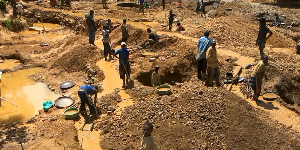
 FMI has expressed alarm over the continued destruction of rivers and forest reserves
Christian think tank organization, the Frimpong-Manso Institute (FMI), has called for urgent and decisive action to end what it describes as growing impunity surrounding illegal small-scale mining, popularly known as galamsey.
This was stated in a press release issued on February 24, 2026, by Rev Prof Paul Frimpong-Manso, President of the Institute, and Dr George Manful, Thematic Chair for Environment and Sustainability.
The institute expressed alarm over the continued destruction of rivers, farmlands, and forest reserves, particularly in hotspot areas across the Ashanti and Western Regions.
According to FMI, illegal mining activities are threatening water security, public health, and livelihoods, while a recurring “raid-return” cycle has undermined enforcement efforts.
“Illegal small-scale mining (‘galamsey’) continues to devastate rivers, farmlands and forest reserves, threatening water security, public health and livelihoods in hotspot areas across the Ashanti and Western Regions.
FMI also noted that the “raid – return cycle in which galamsey operators re- emerge, soon after enforcement actions often more organized, amplifies integrity failures including bribery and protection rackets. Raid without integrity reforms simply reset the cycle: raid today, return tomorrow.”
The institute warned that Ghana must not normalise environmental crime at the expense of communities, stressing that “communities cannot drink gold.”
FMI is calling for visible prosecutions, consistent sanctions and the dismantling of networks that profit from environmental destruction.
It also urged reforms to strengthen the Community Mining Programme, noting that its implementation has been uneven and weakened by governance and capacity gaps.
“The Community Mining Programme created to formalise small-scale mining, reduce galamsey, and provide regulated, community-linked mining opportunities within licensed concessions needs strengthening. Its implementation has been uneven and often weakened by governance and capacity gaps,” it added.
As part of its proposals, the institute outlined a coordinated national compact to tackle the systemic drivers of galamsey.
These include credible investigations and transparency measures, community stewardship through safe reporting mechanisms, youth employment alternatives in reclamation and sustainable agriculture, intensified water and public health monitoring, and faster prosecutions with asset forfeiture to disrupt illegal supply chains.
The institute further urged government and security agencies to sustain enforcement efforts with integrity safeguards and publish legal outcomes, while calling on the judiciary to prioritise environmental crime cases.
Traditional authorities were also encouraged to enforce community prohibitions and reject benefits linked to illegal mining.
“Ghana’s natural heritage is not disposable. Impunity must end, and the networks enabling environmental destruction must be exposed, prosecuted, and dismantled,” the statement concluded.
ID/AE
Watch the first episode of JUST TALK PODCAST: Unpacking the ‘Kayamata craze’ ruining lives
