


History often remembers Shirley Graham Du Bois as the wife of W.E.B. Du Bois. But she was never just that. Today, March 27, 2026 marks 49 years since her passing.
Long before her name became permanently linked to one of the most influential intellectuals of the twentieth century, Shirley Graham Du Bois had already established herself as a formidable force in her own right. She was a writer, a composer, a playwright, and a political thinker whose work engaged deeply with questions of race, identity, and liberation.Yet, like many women in history, her story has often been told in relation to someone else.
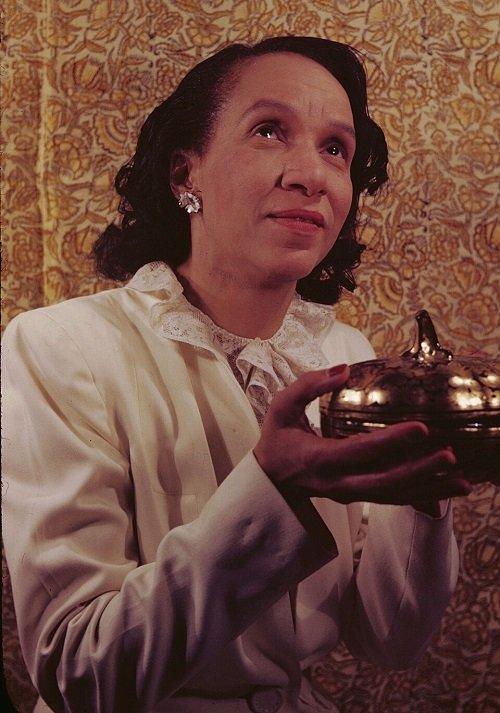
It is a familiar pattern. Proximity to greatness becomes a substitute for recognition. But in Shirley’s case, that framing does her a disservice. She was not adjacent to history. She was actively shaping it.
Before she ever became Mrs. Du Bois, she was Shirley Graham. A woman navigating and challenging the cultural and political landscapes of her time. Her work in theatre and music was not simply artistic expression. It was a deliberate intervention. Through her plays and compositions, she explored Black life with urgency and depth, insisting on narratives that were often ignored or suppressed.
Art, for her, was not separate from activism. It was one of its most powerful forms. She understood that culture could move people in ways that politics alone could not. And so she used it, strategically and unapologetically, to advance a broader vision of Black dignity and self-definition. She did not wait to be invited into conversations. She created them.
What makes her story even more compelling is not only who she was, but the choices she made. At a time when Africa was still emerging from the shadows of colonial rule, when many in the diaspora viewed the continent through distance or uncertainty, Shirley Graham Du Bois made a deliberate decision to align her life with Africa’s future.
Together with her husband, and within the wider vision of leaders such as Kwame Nkrumah, she saw in Ghana something far greater than geography. She saw possibility. Ghana, newly independent and filled with ambition, represented a bold experiment in Black self-governance and cultural renewal. It was a place where history could be rewritten by those who lived it. For Shirley Graham Du Bois, this was not symbolic. It was personal. Ghana was not where she ended up. It was where she believed the future was.
In choosing Ghana, she became part of a broader movement that connected Africa to its diaspora in a deeply intentional way. Intellectuals, artists, and activists were reimagining identity, belonging, and purpose across borders.
Within this space, she lived, worked, and contributed to a growing cultural and intellectual energy that defined Ghana in its early post-independence years. And then, as life would have it, she remained. Today, she rests in Ghana. A country she chose at a defining moment in history.
At the W.E.B. Du Bois Memorial Centre for Pan-African Culture, her story lives on. Visitors walk the grounds, observe the mausoleum, and encounter the legacy of W.E.B. Du Bois in ways that are both educational and reflective.
As the institution mandated to manage, preserve, and transform this historic site, the W.E.B. Du Bois Museum Foundation carries a responsibility that goes beyond conservation. It is a responsibility to tell the full story, while advancing a vision to transform the Centre into a world-class museum, research, and cultural complex that reflects the global significance of both W.E.B. Du Bois and Shirley Graham Du Bois.
And within that story, Shirley Graham Du Bois must be seen. She chose Ghana. She lived here. She rests here. Yet how often do we remember her not as an extension of someone else’s legacy, but as a force in her own right?
In our efforts to honour great men, history has sometimes asked women to stand just slightly out of frame. Their contributions remain, but their visibility fades. Shirley’s story challenges that pattern. It asks us to reconsider how we remember, how we tell stories, and how we assign significance. Because to remember her fully is not to diminish anyone else. It is to complete the story.
There is also something deeply relevant about her decision to choose Ghana. In a time where conversations about identity, belonging, and diaspora continue to evolve, her life offers a perspective that feels both historical and immediate. She did not approach Africa as an abstract idea or a distant origin. She approached it as a living, evolving space. A place where she could belong, contribute, and help shape the future.
That distinction matters. It reframes Ghana not simply as a place of heritage, but as a place of purpose. It reinforces the idea that the relationship between Africa and its diaspora is not static. It is dynamic, intentional, and continually being shaped by those who choose it.
Shirley Graham Du Bois chose it. To remember her is not simply an act of tribute. It is an act of recognition. It is to acknowledge a woman who understood, perhaps earlier than many, that Africa was not only a point of origin, but a place of possibility. It is to recognise her as a cultural force, a political thinker, and a Pan-Africanist whose life extended far beyond any single title.
And it is to ask ourselves whether we have told her story with the fullness it deserves. The question is no longer who Shirley Graham Du Bois was. History has already answered that. The question now is whether we are prepared to remember her as she truly was. Not in the shadow of another name, but in the clarity of her own. Because she did not simply accompany history. She helped shape it. And she chose Ghana as the place to do so.
By: Terry Mingle
PR and Communications Specialist
W.E.B. Du Bois Museum Foundation
Email: terry.mingle@webdbmf.org


