


This blog is managed by the content creator and not GhanaWeb, its affiliates, or employees. Advertising on this blog requires a minimum of GH₵50 a week. Contact the blog owner with any queries.
Neo Report Blog of Wednesday, 3 December 2025
Source: Obeng Samuel
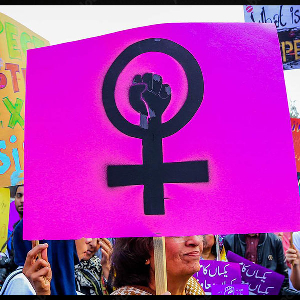
In 1792, Mary Wollstonecraft wrote in ‘A Vindication of the Rights of Woman’:
“Contending for the rights of woman, my main argument is built on this simple principle, that if she be not prepared by education to become the companion of man, she will stop the progress of knowledge and virtue; for truth must be common to all, or it will be inefficacious with respect to its influence on general practice.”
You would assume that in the 21st century, this foundational argument is settled history. That every girl, everywhere, has uncontested access to education. That the world agrees unlocking human potential, irrespective of gender, is a universal good.
Yet here we are, 233 years later, and this truth remains urgent.
According to statistics from the United Nations, 133 million girls are out of school globally as of 2025. This is not by choice. Throughout history, and in many places still, families facing poverty have been forced to make calculations based on gender. Where a son might be educated to become a doctor, engineer, or teacher, a daughter was historically seen as ineligible for such investment. Her potential was confined, not by ability, but by a system that deemed her undervalued.
This created a devastating cycle. A poor family with sons might educate them, gain income, and break the chain of poverty. A poor family with only daughters, however, was often left in continuous hardship. Denied education, women could not become doctors, architects, or engineers; they were seen not as individuals with potential, but as production machines. The consequence is a profound structural failure that has hampered entire communities and nations.
Two centuries after Wollstonecraft asked: “How can woman be expected to cooperate unless she know why she ought to be virtuous? Unless freedom strengthen her reason till she comprehend her duty?” we still hear that advocates for women’s empowerment are pushing a disruptive ‘gender agenda.’
But how can a society expect to prosper when it deliberately sidelines half its intellect and potential?
The barriers girls face, whether cultural norms, economic pressures, or direct discrimination, are not benign traditions. They are active constraints on human capital and national development.
So, when you say we are “making too much noise,” consider this: would you tell your daughter or sister, looking into her eyes, that it is too much of an ask for her to desire to be educated? That her aspiration to be a doctor, an engineer, or a teacher is an exaggeration? That she should minimise her achievements?
This is why the advocacy continues. Because 233 years after a foundational argument for women’s education was published, the right of every girl to learn is still contested.
We do not make noise. We work to fulfil an argument left incomplete 233 years ago. Wollstonecraft identified the principle; our task is to dismantle the barriers that still prevent its realisation. This is the unfinished mandate of progress, and our collective responsibility to see it through.
Collectively, we can support girls to access education and ensure that no woman is left behind.
estherrockson20@gmail.com
+233 (0) 548 39 38 39
