


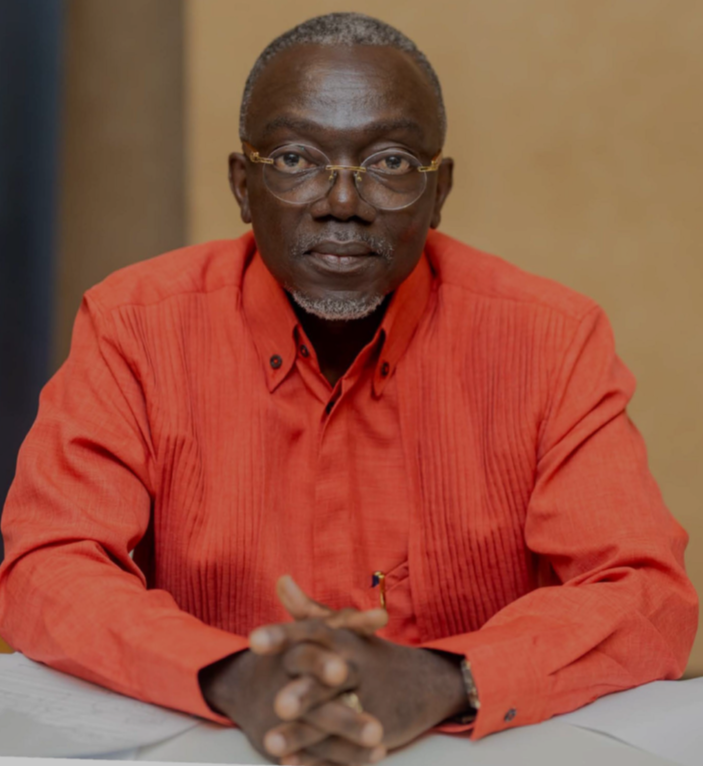
Professor Douglas Boateng – Chartered Director UK • Chartered Engineer UK • Fellow Institute of Directors UK • Fellow Ghana Institution of Engineering
From Elmina to Robben Island, Africa holds some of humanity’s most precious history. The tourism money is real. The uncomfortable question is how much of it ever reaches the monuments that earn it.
By Ing. Prof. Douglas Boateng, Chartered Director UK | Chartered Engineer UK | Fellow, Institute of Directors UK | Fellow, Ghana Institution of Engineering | Governance, Industrialisation and Supply Chain Strategist | Founder, Boardroom Governance Summit | Founder and Scriber, NyansaKasa (Words of Wisdom)
There is something quietly contradictory about a continent that holds some of humanity’s most extraordinary historical treasures yet so often struggles to maintain the places that preserve them.
Many of us have queued outside museums in London, Paris and Washington. We have photographed Roman ruins, paid admission to walk through centuries of other people’s history, hired the guides, booked the hotels and bought the souvenirs. Then we return home, where our own history sometimes waits behind a rusting gate, beneath a leaking roof or beside an abandoned visitor centre, and we wonder why tourism revenue remains below its potential.
Perhaps the problem is not that Africa lacks heritage. Perhaps it is that we have not yet fully grasped the economic, educational and generational value of what we already possess.
NyansaKasa: “A nation that neglects its history may eventually discover that others understand the value of its past better than it does.”
The World Will Pay To Understand Our History
Ghana holds some of the most significant sites associated with the transatlantic slave trade. Cape Coast Castle, Elmina Castle and the chain of coastal forts are not ordinary attractions. They are places of profound human memory, binding Africa, the Americas, Europe and the Caribbean through one of history’s darkest chapters. They deserve exceptional care, not because visitors pay to enter, but because we owe it to those who suffered within their walls.
Yet in May 2024, the Ghana Museums and Monuments Board acknowledged publicly that inadequate funding was undermining its ability to conserve artefacts and monuments and to run educational programmes. That admission should concern every Ghanaian, particularly when set beside the wider tourism economy. Ghana reported tourism receipts of about US$4.8 billion in 2024, and international arrivals reached 1.31 million in 2025. Those figures cover all tourism, not heritage alone, but the money plainly exists. The question is how much of it returns to the monuments that help draw visitors in the first place.
NyansaKasa: “A nation that celebrates tourism receipts while neglecting the monuments attracting visitors is quietly consuming its own future earnings.”
Imagine instead a properly integrated heritage corridor linking Accra, Cape Coast, Elmina and Kumasi, with trained guides, thoughtful interpretation and reliable transport. The visitor would no longer simply buy a ticket but enter an economy in which guides, hoteliers, craftsmen and conservators all earn, and the monument itself receives the funding it needs to survive.
Robben Island: Both The Opportunity And The Warning
South Africa offers a telling illustration. Robben Island, once a symbol of imprisonment and repression, is now a globally recognised place of remembrance and learning. In the 2023/24 financial year, the museum recorded roughly 247,530 visitors and reported a surplus of R32.1 million. Its management nevertheless warned that conservation funding remained insufficient, while ferry capacity and harsh weather continued to constrain operations.
The lesson is instructive. Even a world-famous destination can struggle when operating revenue, infrastructure and conservation needs are not properly aligned. Attracting visitors is only half the task; the other half is ensuring that the revenue they bring sustains the place they came to see. The same question applies to every heritage authority on the continent: how much money is generated, how much is retained for conservation, and who is accountable for the difference?
Following The Money
In Ghana, responsibility is shared. The Museums and Monuments Board is the principal custodian of national monuments, while the Ghana Tourism Authority administers tourism development under the Tourism Act of 2011. That Act also established a Tourism Development Fund, financed largely through a 1 percent levy paid by patrons of specified tourism enterprises and intended for promotion, infrastructure and capacity building.
The existence of a fund, however, is not proof that heritage is adequately financed. It is reasonable, and in the public interest, to ask how much the Fund collects each year, how much is disbursed, and what share reaches conservation rather than marketing or administration. Such questions are not accusations. They are the ordinary disciplines of good governance.
International support cannot fill the gap. UNESCO’s World Heritage Fund has a budget of roughly US$7.3 million for 2026 to 2027, for the entire world. Ghana’s own UNESCO profile records cumulative approved international assistance of about US$316,794 across 12 requests. Recognition from abroad is welcome; responsibility remains at home.
NyansaKasa: “When money is collected in the name of tourism, wisdom asks how much reaches the historical assets that make tourism possible.”
Others Understand The Economics Of Memory
Rome has turned ancient stone into an enduring attraction, and Britain has built an admirable ecosystem of heritage charities, membership schemes and conservation expertise. Closer to home, Egypt shows that African antiquity can compete with the best in the world; Morocco has invested patiently in its historic medinas, and Great Zimbabwe stands as eloquent testimony to sophisticated precolonial civilisation.
The wider prize is considerable. UN Tourism estimates that Africa received 73.9 million international arrivals and US$42.6 billion in international tourism receipts in 2024. The number of African properties on the World Heritage List rose from 93 in 2018 to 108 by May 2025. Yet inscription is not a business model. It recognises outstanding universal value; it does not supply a maintenance budget, good roads or trained conservators.
Ghana’s Asante Traditional Buildings make the point vividly. UNESCO describes them as the last surviving examples of a distinctive architectural tradition of the great Asante civilisation, and it also records the threats they face from humidity, termites, heavy rainfall and changing materials. It would be a sad irony if future generations had to study photographs of structures their ancestors built because the originals were allowed to fade. Conservation here is itself an industry, sustaining craftsmen and apprentices in endangered building skills.
NyansaKasa: “UNESCO recognition may place a monument on the world’s map, but only disciplined stewardship can keep it standing.”
Remembrance Before Revenue
There is, however, an ethical boundary that must never be crossed. Slave castles, former prisons and genocide memorials must never become entertainment products. Their first purpose is remembrance, education, dignity and truth, and revenue must serve those purposes rather than overwhelm them. At Cape Coast and Elmina, the stories of enslaved Africans deserve scholarly accuracy and respectful visitor management; at Robben Island, the struggle against apartheid must remain central; at Rwanda’s memorials, remembrance must always come before commerce. The aim is not to sell suffering, but to ensure its lessons remain accessible, preserved and financially sustainable.
A Practical Path Forward
The solution begins by treating heritage as a national asset with a distinct public purpose. Every country should keep an up-to-date inventory of its heritage sites, recording their condition, legal protection, conservation needs and funding requirements, and should adopt a ten-year investment plan that prioritises sites at greatest risk of irreversible loss. Funding should be predictable rather than dependent on occasional announcements or donor enthusiasm, and where the law allows, a defined share of site income should be ringfenced for maintenance and interpretation.
Private partners can deliver visitor facilities while qualified conservators retain control over heritage integrity. Neighbouring communities must share in the benefits, for heritage cannot be sustained where local people see only tourists arriving and money leaving. And a child from Kumasi should not grow up knowing more about European castles than about the Asante heritage around her own home.
The arithmetic is encouraging. A single site welcoming 250,000 paying visitors a year at an average of GHS 100 would generate some GHS 25 million in gross admissions before costs, and considerably more for the surrounding economy. Yet such projections must never justify overcrowding or insensitive commercialisation. A heritage asset should not be forced to destroy itself in order to finance its survival.
Our diaspora, too, is far more than a tourism market. It can be a partner in restoration through carefully governed heritage endowments with transparent accounts. Governments, likewise, should publish annual heritage preservation accounts setting out revenue generated, funds disbursed, conservation completed and the condition of nationally significant sites.
Heritage Is Borrowed From The Unborn
A monument is not merely something inherited from those who came before us. It is something entrusted, for a short while, to those alive today. The slave castles belong to the memory of humanity, the Asante buildings to generations not yet born, Robben Island to the conscience of South Africa and the world, and Great Zimbabwe to a story of African achievement that must never again be casually dismissed. Money can build a replica; it cannot manufacture the original centuries. That is why maintenance must precede marketing, and accountability must accompany funding.
NyansaKasa: “A generation that inherits history without preserving it may leave its descendants wealthy in stories but bankrupt in evidence.”
The world is increasingly curious about African history, ancestry, creativity and civilisation. Preservation is therefore not a discretionary expense. It is education, identity, employment, cultural diplomacy and, in some cases, a debt owed to those whose voices were silenced long before we were born.
When our grandchildren ask what became of the treasures entrusted to our generation, we should hope to show them what we preserved rather than explain what we allowed to disappear. For the most expensive heritage site is not the one that costs millions to restore. It is the one we neglected until no amount of money could bring it back.
ABOUT THE AUTHOR
Ing. Professor Douglas Boateng is a pioneering international industrial, manufacturing and production systems engineer, governance strategist and Pan-African thought leader whose work continues to influence boardroom thinking, supply chain transformation and industrialisation strategy across the continent and beyond. As Africa’s first appointed Professor Extraordinaire in Supply Chain Management, he has long championed the integration of procurement, value chain development, industrialisation and governance into national and continental development agendas. An International Chartered Director and Chartered Engineer, he has received numerous lifetime achievement awards and authored several authoritative books. He is the scribe of the globally acclaimed NyansaKasa (Words of Wisdom). His work rests on the conviction that Africa’s transformation — and the protection of its children — will come through deliberate action, strong institutions and leaders willing to build for generations they will never meet.
© 2026 Ing. Prof. Douglas K. Boateng. All rights reserved.
DISCLAIMER: The Views, Comments, Opinions, Contributions and Statements made by Readers and Contributors on this platform do not necessarily represent the views or policy of Multimedia Group Limited.
DISCLAIMER: The Views, Comments, Opinions, Contributions and Statements made by Readers and Contributors on this platform do not necessarily represent the views or policy of Multimedia Group Limited.
Source link
