


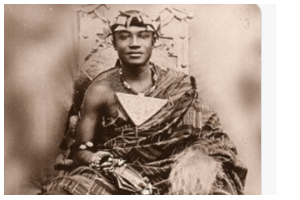
 Osei Tutu I weakened Denkyira’s power
Osei Tutu I, the founder of the Ashanti Empire, is widely celebrated not only as a unifier of the Asante states but also as a strategist who challenged the powerful Denkyira kingdom to secure independence for his people.
An article by Black Past stated, “Having learned about politics from Akwamu, and with their military and political support, Tutu took the throne of the Ashanti Empire in 1701. Under Tutu’s leadership the Ashanti conquered Denkyira’s dependencies and other neighbouring states, making it the most powerful state in the region. Okomfo Anokye, Tutu’s principle.”
He also helped to create a centralised state for the Akan people.
“Before Tutu became ruler, the Akan-speaking people were already moving toward creating a centralised state. Nearly all the chiefs of the Amantoo (the region of Akan-speaking peoples) belonged to the same clan, so the idea of a union of people was already instilled.
Meet the Asantehene who was installed at age 1696097324
“Tutu took advantage of this sense of union and convinced the various chiefs that the Golden Stool was the soul, power, and energy of the Ashanti people. With the stool he controlled, Tutu was able to infuse a sense of nationality within the Empire and thus more easily incorporated the various Akan-speaking groups. The Golden Stool remains the symbol of Ashanti unity today,” the post further stated.
Here is a brief profile of him
Born around 1660, Osei Tutu I was the nephew of Obiri Yeboa, the ruler of Kwaman, now Kumasi.
From an early age, he recognised that the fragmented Asante states could not withstand Denkyira domination.
By studying the political and military strategies of neighbouring powers like the Akwamu and Denkyira themselves, he prepared his people for what would become a historic confrontation.
From Osei Kofi to Kwaku Duah: All the kings from Asante Kingdom from 1700s to today
Alongside his spiritual advisor Okomfo Anokye, he introduced the Golden Stool, said to have descended from the heavens onto his lap.
This symbol of divine authority united the Ashanti people and strengthened their resolve against the Denkyira’s influence.
In 1701 at the Battle of Feyiase. Osei Tutu led the Ashanti forces to a decisive victory over the Denkyira, ending their dominance in the region.
This triumph not only liberated the Ashanti from external control but also laid the foundation for a unified and powerful Ashanti Empire.
Following the Denkyira defeat, Osei Tutu established Kumasi as the capital, instituted the Odwira Festival to reinforce unity, and expanded the empire’s territory and influence.
His strategies against the Denkyira exemplified his military genius and political foresight, ensuring the Ashanti could resist future threats.
Osei Tutu died in battle against the Akyem around 1717, but his legacy as a unifier and strategist who overcame the Denkyira lives on.
JKB/EB
Meanwhile, watch some videos from the NPP’s 2025 Constitution Amendment
