


By Dorcas Zenabu Seidu
Why breastfeeding and breast cancer are one story, and why women and men must both read it
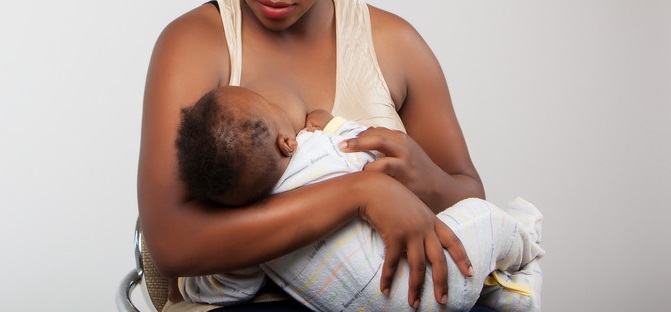
In the first hour of life, a mother’s breast delivers colostrum, the baby’s first vaccine. Over the next six months it can supply everything a child needs. It is one of the most powerful public health tools we have. It is also the site of the cancer most often diagnosed in Ghanaian women, and, surprisingly, one that men can get too. This is one organ and one story: how we nurture it, how we protect it, and why we must keep checking it.
Nurture it: the first hour and the first six months
WHO and UNICEF recommend starting breastfeeding within one hour of birth, the Golden Hour. Skin-to-skin contact steadies the newborn’s temperature and breathing and helps the mother’s womb contract, lowering the risk of postpartum bleeding. Colostrum coats the baby’s gut with antibodies, so delaying it is a missed dose of the strongest immune protection the child will ever get from this source. WHO estimates that close to 400,000 deaths in children under five could be prevented each year if infants were exclusively breastfed for six months and breastfed on to two years. Mothers gain too: every 12 months of breastfeeding lowers breast cancer risk by about 4.3%, and breastfeeding is linked to lower cardiovascular risk. For families, it removes the cost of formula, which in many homes rivals the rent. Formula remains a vital option when breastfeeding is truly not possible, but routine use without clean water and sterilisation raises the risk of infection.
Make it possible: families, workplaces and policy
Support has not kept pace with the science. The extended-family help that once carried new mothers has thinned, and many return to work long before six months. The ILO sets a floor of just 14 weeks of maternity leave and the global average is about 17–18 weeks, which ends well short of the six months WHO recommends. That standard is a labour compromise, not a clinical target. We need at least six months of paid leave, lactation rooms and paid express breaks, crèches near the workplace, and supportive managers. Employers who do this report lower turnover and absenteeism. We must also say plainly that the breast’s first purpose is to feed a child, not to belong to a husband or to modesty. And when a mother does not survive childbirth, a prepared system matters: pasteurised donor milk first, a screened wet nurse next, safe formula with real support last, with skin-to-skin care from a caregiver throughout.
The same organ, a different battle
Everything above assumes the breast is healthy. In 2022, Ghana recorded 5,026 new cases of breast cancer and 2,369 deaths, nearly one death for every two diagnoses. Breast cancer makes up about three in every ten cancers in Ghanaian women, and the average age at diagnosis is 49, some thirteen years younger than in Caucasian populations. Reports differ, from about 70% to over 80%, but most women arrive with advanced disease. These are mothers in the middle of raising children and holding households together. A country cannot claim to invest in the next generation while neglecting the organ that feeds it. When a mother is lost to late diagnosis, a baby may lose milk, closeness, and protection. The link runs both ways: breastfeeding lowers risk, but it is protection, not immunity, and a lump that persists in a lactating breast must never be dismissed as “too much milk.”
The plot twist: men have breasts too
Breast cancer is not only a women’s disease. About 0.5–1% of breast cancers occur in men, and a leading Ghanaian specialist puts the local figure at 1–3%. Few men know this, so a small lump behind the nipple may be ignored for months. With so little breast tissue, the cancer reaches the chest wall sooner, and men are often diagnosed later. Risk factors include age, family history, BRCA2 and BRCA1 gene changes, Klinefelter syndrome, obesity, liver disease, and heavy alcohol use. Men are also partners: a man who knows the signs can notice a change in his wife, urge her to be checked, and stand by her through treatment.
Know the signs, the risks, and the myths
Early breast cancer often has no symptoms, which is why checking matters. When there are signs, they include:
- A new lump or thickening in the breast or armpit, usually painless
- A change in the size or shape of the breast
- Dimpling, puckering, or thickened “orange-peel” skin; redness or scaling
- A nipple turning inward, or bloodstained nipple discharge
Pain is not the test. About half of breast cancers occur in women with no risk factor beyond being female and growing older, so having no family history is no reassurance. Risk rises with age, family history, inherited gene changes, obesity, alcohol, tobacco, inactivity, and long-term postmenopausal hormones. Nothing guarantees prevention, but a healthy weight, regular activity, less alcohol, no smoking, and breastfeeding all help. Screening does not stop cancer from forming; it stops it being found late. Four myths to retire:
- Myth: “It is witchcraft or a curse.” Fact: It is a disease of abnormal cells. Faith can walk beside treatment, never replace it.
- Myth: “It is a death sentence.” Fact: It is treatable, and most effectively when found early.
- Myth: “No pain, no problem,” or “No family history, no risk.” Fact: Lumps are often painless, and most women diagnosed have no known family history.
- Myth: “Only women get it.” Fact: Men do too, and any male breast lump needs examination.
Check yourself, then keep checking
Self-examination is about breast awareness: knowing your normal so you notice change early. Do it once a month, about a week after your period, or on a fixed date if you no longer have periods, or are pregnant or breastfeeding.
- Look in a mirror with your arms down, raised, and hands on your hips, for changes in size, shape, skin, or nipple.
- Feel, standing or lying down, pressing the pads of three fingers in small circles over the whole breast, from collarbone to bra line and armpit to breastbone.
- Check the nipple by gently squeezing it for discharge. Men use the same method around the nipple.
Self-examination builds awareness; it does not replace professional checks. Guidance shared in Ghana’s awareness campaigns advises a clinical breast examination every three years under 35 and every year from 35, and a baseline mammogram from 40, earlier with a strong family history. A clear result today says nothing about next year, so keep checking. Most lumps turn out not to be cancer, but only a trained health worker can tell. Go early, and not to a prayer camp or herbalist first.
A shared commitment
Protecting the breast, as a source of life and as a part of the body that can fall ill, take action at every level:
- Families: share the load so mothers can nurse, drop the myths about breast “ownership,” encourage every woman and man to be checked, and stand beside anyone who is diagnosed.
- Communities: normalise public nursing, support human milk banking, and end the stigma and the witchcraft narrative surrounding breast cancer that keep people from seeking care.
- Employers: provide lactation rooms, paid breaks, and nearby crèches, and add breast screening to staff wellness programmes.
- Health Facilities: Inculcate breast cancer awareness and examination into routine service delivery. Make this critical service accessible all year-round and not just a one-month celebration
- Health Authorities: Set up a national cancer data repository to make information readily available and show a clear picture of our cancer situation.
- Governments: legislate at least six months of paid maternity leave, with meaningful paternity leave, and make breast screening, diagnosis, and treatment accessible and affordable.
Three things to do this week as we wrap up the Pick October:
(1) examine yourself;
(2) book your clinical breast examination if one is due;
(3) tell one person, man or woman, what you have read.
- The breast nurtures the future. Let us make sure it lives to see that future.
Sources: WHO (Breast cancer; Infant and young child feeding); GLOBOCAN 2022, IARC (Ghana); Victora et al., The Lancet, 2016; Collaborative Group on Hormonal Factors in Breast Cancer, The Lancet, 2002; ILO Maternity Protection Convention No. 183; Ghanaian Times, Graphic Online, and Citi Newsroom reports on breast cancer in Ghana (2025); Breast Care International.
Dorcas Zenabu Seidu, Program Manager, Public Health Nursing – ODNMS, GHS #asisterthinkingoutloud
DISCLAIMER: The Views, Comments, Opinions, Contributions and Statements made by Readers and Contributors on this platform do not necessarily represent the views or policy of Multimedia Group Limited.
DISCLAIMER: The Views, Comments, Opinions, Contributions and Statements made by Readers and Contributors on this platform do not necessarily represent the views or policy of Multimedia Group Limited.
Source link
