


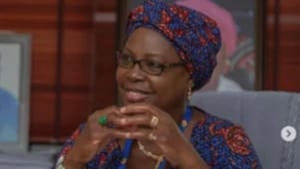
 Member of Parliament for the Salaga South Constituency, Zuwera Mohammed Ibrahimiah
The Member of Parliament for the Salaga South Constituency, Zuwera Mohammed Ibrahimiah, has criticised what she described as attempts by the Minority to undermine the establishment of a 24-Hour Economy Authority.
Speaking on the floor of Parliament during consideration of a report on the proposed 24-hour economy authority, Zuwera said she was deeply disappointed by suggestions from the Minority that there was no need for such an authority.
She recalled that during the Eighth Parliament, the Minority strongly promoted the Free Senior High School (Free SHS) policy, yet for four years, Parliament was repeatedly told that a bill was “on its way,” only for it never to be presented.
According to her, she was surprised by claims from a colleague that the Free SHS programme was blocked within three months by an NPP government.
She argued that the implementation of Free SHS at the time was chaotic, marked by demonstrations, strike actions and shortages of food items such as gari and palm oil.
Why you don’t feel the 3.8% inflation in your pocket
She stressed that such challenges arise when programmes are rolled out without clear policy direction and adequate planning, adding that running a country through rushed policies is not a three-month exercise and should not be celebrated.
Zuwera further stated that since the NDC government assumed office on January 7, 2025, there has been no strike action, no complaints about food shortages for SHS students and no demonstrations.
She attributed this to what she described as good governance, which prioritises careful policy formulation and long-term sustainability over propaganda that compromises the future of children.
She also highlighted the distinction between export promotion and export development, describing them as two separate concepts.
She explained that the 24-hour economy policy focuses on productivity, competitiveness and inclusive growth.
Referring to President John Dramani Mahama’s vision, she noted that Ghana aims to “consume what we produce” while exporting value-added goods rather than raw materials.
Sharing a personal reflection, Zuwera said she felt proud as a Ghanaian on her way to work, adding that her only regret was not seeing a particular news item earlier; otherwise, she said, she would have come to Parliament wearing her fugu.
She cited President Mahama’s recent visit to Zambia, where he arrived dressed in a finely made Ghanaian fugu, describing it as a clear example of exporting finished Ghanaian products.
According to her, Zambia’s decision to adopt the Ghanaian fugu demonstrates the export of developed, value-added local products.
Meanwhile, watch the excitement, divisions over Agradaa’s reduced sentence>
