


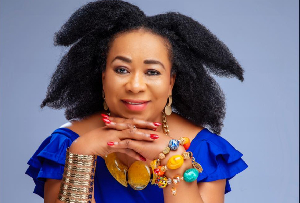

The culture of artistes paying, even if it is just a small token, to DJs and media houses, popularly known as payola, will never die, according to veteran Gospel musician Stella Aba Seal.
In an interview with Kafui Dey, which went live on February 27, 2026, the seasoned singer recalled how music promotion worked in the early days.
When asked how artistes used to push their songs back then, she explained that there was only one major platform, GBC, which everyone relied on.
“Only one TV station. We all competed for the same space,” she said.
Speaking further on payola, Stella Aba Seal noted that the system has changed over the years.
She explained that in the past, when an artiste’s song was played on GBC, the station paid royalties every three months.
She added that TV3 also used to pay artistes who appeared on its ‘Music Music’ show, but according to her, that is no longer the case.
Stop Using Your Husbands’ Names For Showbiz
“Payola is a culture that will never die. In our time, when we gave our music to GBC, at the end of every three months, they gave us money. GBC used to pay us royalties of that sort.
“Even when TV3 started and we went there to do ‘Music Music’ or whatever, they rather paid us. But now everything has changed,” she said.
‘Shake It To the Max’ hitmaker Moliy also shared a similar perspective in a 2025 interview with US-based media outlet, Revolt TV.
She stated that working as an independent artiste in Ghana often requires paying for visibility, whether through media outlets or through influencers.
“Even the content I was creating, I made it in a way where I could do it myself anywhere. It didn’t need professional help or for it to be professionally shot. I didn’t need to pay anyone.
“I made it easy for myself because being independent or working in Ghana, or I guess anywhere else, if you want to collaborate or be seen, most of it is payola,” Moliy stated.
Watch the Stella Seal interview below:
‘Payola’ is a culture that will never DIE – Stella Abba Seal
Full video here https://t.co/o25q66DGln #KafuiDeyInterviews pic.twitter.com/nATYtfDdJM
— Kafui Dey (@KafuiDey) March 1, 2026
Meanwhile, watch GhanaWeb’s exposé on the ‘dark side of Kayamata’ and its devastating impact

AK/AE


