


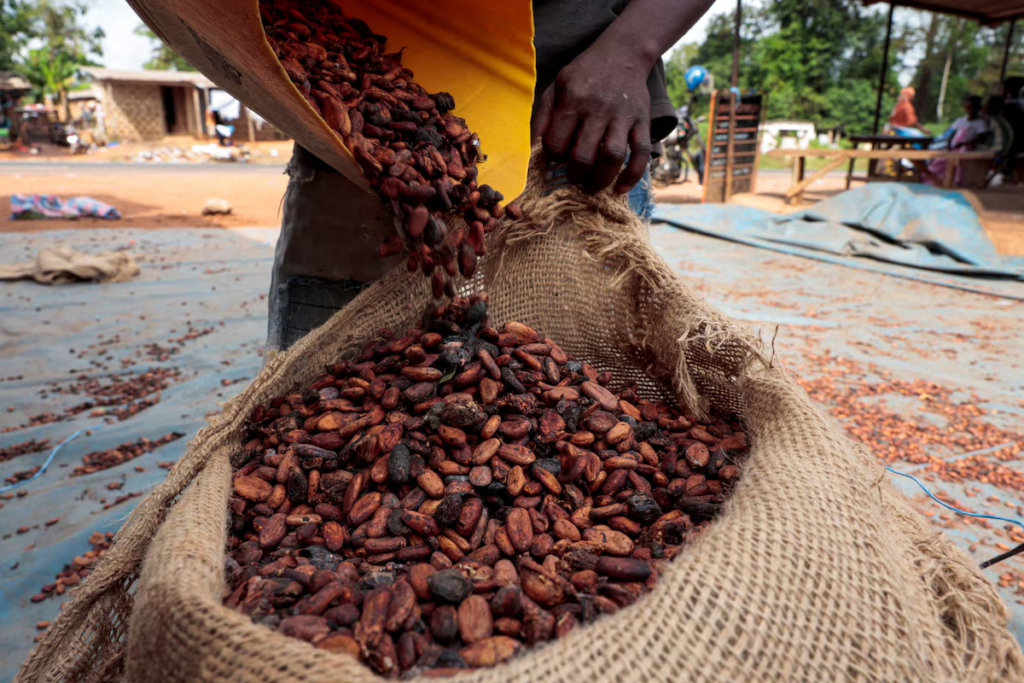
Ghana’s fight against illegal mining has rightly become a national priority. Across the country, cocoa farms have been destroyed, rivers polluted, forests degraded, and rural livelihoods threatened by the activities of illegal miners. As one of the pillars of Ghana’s economy, the cocoa sector cannot survive if productive farms continue to disappear under the excavators of galamsey operators.
It is therefore understandable that the Government has introduced stronger legal measures through the new COCOBOD Act to protect cocoa lands. Among these measures are Clauses 81 and 110, which regulate the conversion of cocoa farms and prescribe criminal sanctions for non-compliance.
Government has consistently maintained that these provisions are intended to prevent the destruction of cocoa farms for illegal mining and other unlawful activities. Few Ghanaians would dispute this objective.
However, good intentions alone do not make good laws.
The critical question is whether the law, in pursuing this legitimate objective, extends beyond what is necessary to address the problem it seeks to solve.
Government has sought to reassure the public that Clause 81 does not impose an outright ban on the conversion of cocoa farms. Rather, farmers who wish to convert cocoa farms to another agricultural crop or land use are required to obtain prior approval from the Minister.
At first glance, this appears to be a reasonable safeguard. Yet public policy should be judged not only by its intentions or its wording, but also by how it will operate in practice. It is here that Clause 81 raises important questions of accessibility, proportionality and fairness.
The reality of Ghana’s cocoa sector must inform any policy governing land use. More than 90 percent of cocoa production comes from smallholder farmers, most of whom cultivate less than five acres. Many are elderly, have limited or no formal education, and live in remote communities with limited access to public institutions and administrative services.
For these farmers, obtaining ministerial approval before making a lawful decision about their own land is unlikely to be a straightforward administrative process. It may require travelling long distances, navigating unfamiliar procedures, preparing formal applications, and waiting for decisions from a centralized authority. These are significant hurdles for farmers whose expertise lies in producing cocoa, not navigating government bureaucracy.
The concern becomes even more profound when Clause 81 is read together with Clause 110, which reportedly makes it a criminal offence for a farmer to convert a cocoa farm to another crop or land use without complying with the requirements of the Act.
This fundamentally changes the nature of the debate.
The issue is no longer simply about obtaining administrative approval. It is about the possibility that a smallholder farmer who decides to replace an ageing or unproductive cocoa farm with another legitimate agricultural enterprise could face criminal liability for failing to secure ministerial authorization.
Such a consequence raises serious legal, constitutional and public policy concerns.
Criminal law is generally reserved for conduct that causes significant public harm. Illegal mining, environmental destruction and the unlawful clearing of cocoa farms for mining activities clearly warrant strong criminal sanctions. However, should a farmer who wishes to cultivate coconut, rubber, cashew or another legitimate crop on privately owned land be exposed to criminal prosecution merely because an administrative approval was not obtained?
That question deserves careful national reflection.
Ironically, those most likely to comply with the law are the very farmers the legislation could end up penalising. Illegal mining operators already operate outside the law and are unlikely to seek ministerial
approval before destroying cocoa farms. Criminal enterprises rarely apply for permits before committing offences. The administrative and criminal consequences of Clauses 81 and 110 are therefore more likely to fall on law-abiding farmers than on the criminal actors whose conduct the legislation is intended to prevent.
There are also significant governance implications. If thousands of farmers across Ghana are required to obtain ministerial approval before converting relatively small cocoa farms, can such a centralized system realistically process applications efficiently and within a reasonable timeframe? Administrative delays, inconsistent decision-making, increased transaction costs and opportunities for rent-seeking are all foreseeable risks. A regulatory system that is cumbersome and inaccessible may ultimately undermine compliance rather than strengthen it.
Equally important is whether the legislation addresses the underlying reasons why some farmers seek to convert cocoa farms in the first place.
Many farmers are not abandoning cocoa because they lack commitment to the crop or to the nation. They are responding to ageing plantations, declining productivity, climate change, rising production costs, pest and disease outbreaks, and changing market realities. Others have lost their farms to illegal mining because enforcement against criminal operators has been inadequate.
These challenges require targeted solutions.
Rather than criminalising legitimate land-use decisions, Government should intensify enforcement against illegal mining syndicates, improve producer prices, support the rehabilitation of ageing farms, expand agricultural extension services, and invest in climate-smart cocoa production. If regulatory oversight of land-use changes is considered necessary, a decentralized approval mechanism administered at the district or regional level would be far more accessible, efficient and responsive than requiring approval from the Minister for every individual case.
The Constitution of Ghana protects the right of citizens to own and enjoy property while permitting the State to regulate land use in the public interest. Such regulation, however, must be necessary, proportionate and carefully tailored to the specific public interest it seeks to protect. A law designed to prevent cocoa farms from being destroyed for illegal mining should not inadvertently criminalise legitimate agricultural diversification or impose unreasonable administrative burdens on farmers making lawful decisions about their own land.
There is no disagreement that Ghana must protect its cocoa industry. The environmental and economic devastation caused by illegal mining demands decisive action. But effective legislation must distinguish clearly between criminal conduct and legitimate farming decisions. Laws that are overly broad risk capturing those they were never intended to target.
Ultimately, the future of Ghana’s cocoa sector depends not only on robust legislation but also on the confidence, cooperation and goodwill of the hundreds of thousands of smallholder farmers who sustain the industry. Public policy should empower these farmers, not burden them with bureaucratic procedures or expose them to criminal sanctions for pursuing lawful agricultural livelihoods.
The challenge before Parliament and Government is therefore not whether cocoa should be protected—it unquestionably should. The challenge is to ensure that the law targets illegal mining with precision while respecting constitutional rights, promoting good governance, and recognising the realities of Ghana’s predominantly smallholder cocoa sector. Achieving this balance will not only strengthen the fight against illegal mining but also reinforce public confidence in the institutions responsible for safeguarding one of Ghana’s most important national assets.
******
The writer, Obed Owusu-Addai, is the co-convener of the Ghana Civil-society Cocoa Platform (GCCP)
DISCLAIMER: The Views, Comments, Opinions, Contributions and Statements made by Readers and Contributors on this platform do not necessarily represent the views or policy of Multimedia Group Limited.
DISCLAIMER: The Views, Comments, Opinions, Contributions and Statements made by Readers and Contributors on this platform do not necessarily represent the views or policy of Multimedia Group Limited.
Source link


