


Artificial Intelligence Coordinator at the Kwame Nkrumah University of Science and Technology (KNUST), Professor Eric Appau Asante, has urged teachers and educators to embrace AI and develop structured approaches to harness its benefits in teaching, learning and research.
He says rapid adoption of AI among students is outpacing the preparedness of educational institutions, leaving structured, supervised and research-informed use as the only viable choice.
Teacher education, he argues, must therefore respond deliberately to ensure technology supports, rather than dictates, pedagogy.
Prof Appau Asante was speaking at the National Conference of Principals of Colleges of Education (PRINCOF), held under the theme “Transforming Research-Based Teacher Education in Ghana in the Era of Artificial Intelligence.”

He addressed the topic: “Transforming Research-Based Teacher Education in the Era of Artificial Intelligence: Opportunities, Challenges and The Future of Teacher Preparation in Ghana.”
Professor Asante, who is also the Coordinator of AI courses at KNUST and a former Director of the University’s E-Learning Centre, said institutions must move away from viewing AI adoption as a choice between using the technology and rejecting it.
“Because if we introduce AI without reference to the National Teachers’ Standards and the National Teacher Education Curriculum Framework, we risk allowing technology to drive pedagogy.
“And I would argue that the order must be the opposite. Our choice is not between AI or no AI. Our choice is between improvised, invisible AI use or structured, supervised and research-informed AI use,” he said.
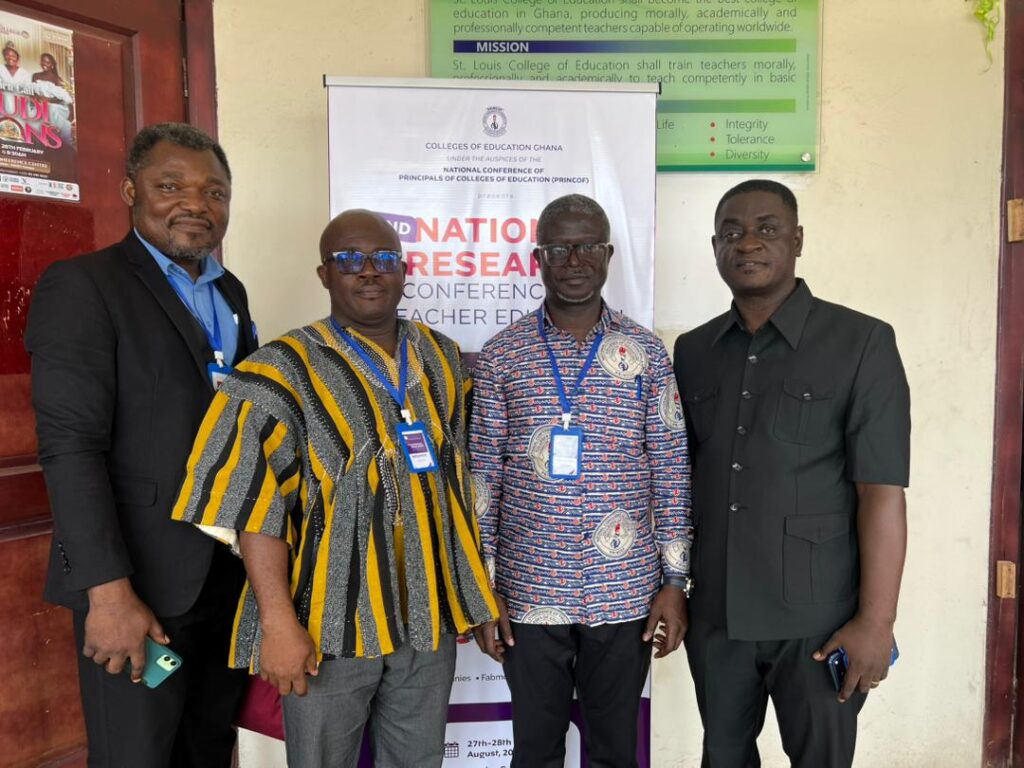
He envisaged a new relationship involving the teacher, the student and AI, where the teacher moves beyond simply transmitting information to becoming a designer, evaluator, mentor, interpreter and supervisor of intelligent systems.
According to him, AI competence must eventually become part of professional teacher preparation if educators are expected to guide students in its responsible use.
“If AI competence is important enough for the future teacher, then eventually it must be taught, practised, assessed, and ultimately recognised as professional competence,” he said.
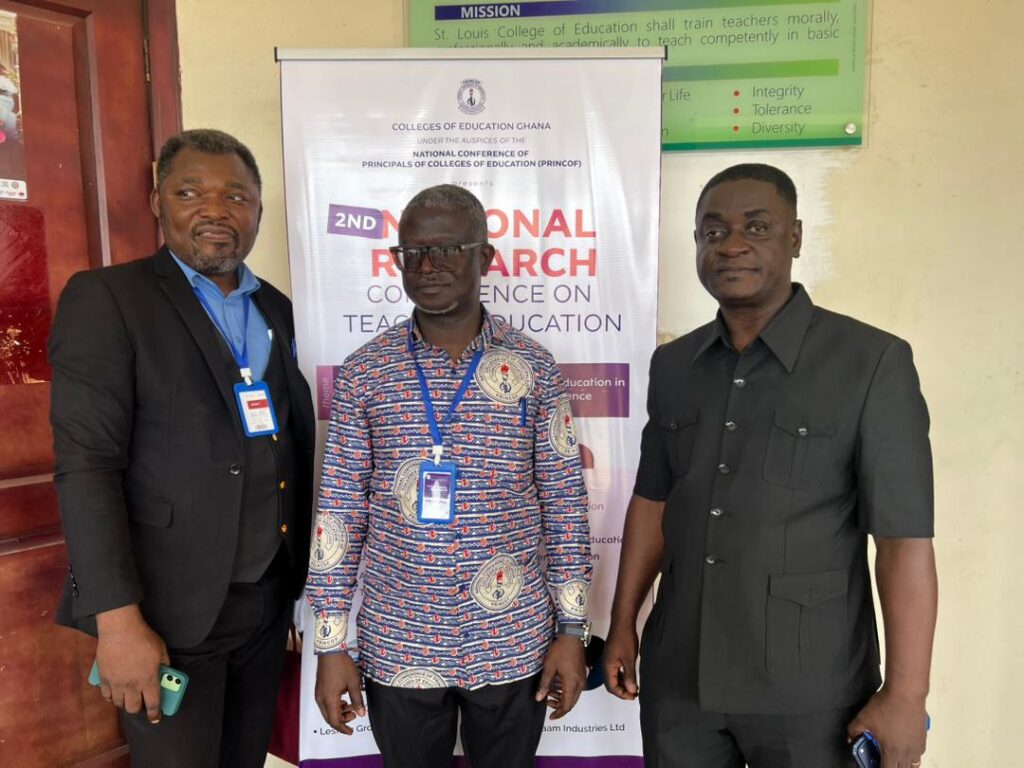
Professor Appau Asante said generative AI could help address some of the foundational content demands in teacher education and free up more time for educators to concentrate on pedagogical development.
He cautioned, however, that AI should not replace the critical thinking and professional judgement required of teachers.
“AI should not replace pedagogical thinking. It should create more opportunities for pedagogical thinking,” he stressed.
He identified research as another area where AI could offer significant opportunities, including literature triage, instrument design, initial coding of qualitative data, language-related research tasks, and the organisation and synthesis of information.
AI divide could worsen digital divide
Professor Appau Asante also raised concerns about unequal access to AI tools, particularly for colleges and students in rural and less-resourced communities.
He questioned whether a rural college could provide the same AI-enabled learning experience as a well-resourced urban institution, warning that Ghana could create an “AI divide on top of the digital divide.”
“If AI competence depends on who can afford data and premium subscriptions, then we risk reversing some of the equity gains that teacher education has worked so hard to achieve,” he said.
He therefore called for institutional access to AI tools, arguing that access should not depend on the personal finances of lecturers or students.
“AI readiness cannot depend on the personal finances of individual lecturers and students,” he said.
Call for institutional AI policies
Professor Appau Asante said the absence of clear institutional policies on AI use could create more problems for the education sector.
“A policy vacuum is itself a policy. It simply delegates the decision to whoever is boldest,” he said.
He urged institutions to establish clear guidelines covering permitted AI use, disclosure of AI assistance, assessment redesign, data and privacy, and staff entitlement.
He proposed five institutional layers for AI integration: governance, curriculum, capacity, infrastructure and evidence.
Under governance, he said institutions should develop AI-use policies aligned with the National Teachers’ Standards, the National Teacher Education Curriculum Framework (NTECF), institutional quality assurance mechanisms and relevant regulatory requirements.
He further called for AI competencies to be incorporated into Bachelor of Education courses rather than limiting AI training to occasional workshops.
On capacity building, he said teacher educators did not necessarily need to become AI engineers but should acquire sufficient competence to supervise and guide students in responsible AI use.
He also advocated institutional AI accounts, shared access and low-bandwidth options to bridge access gaps.
Professor Appau Asante urged education institutions to adopt an evidence-based approach to AI integration by piloting initiatives, measuring their outcomes, publishing findings and using the evidence to inform policy.
“We should not transform teacher education because AI is fashionable. We should transform it where evidence demonstrates educational value,” he said.
DISCLAIMER: The Views, Comments, Opinions, Contributions and Statements made by Readers and Contributors on this platform do not necessarily represent the views or policy of Multimedia Group Limited.
DISCLAIMER: The Views, Comments, Opinions, Contributions and Statements made by Readers and Contributors on this platform do not necessarily represent the views or policy of Multimedia Group Limited.
Source link
