


They are football’s most passionate and fearless supporters, the ultras. They arrive long before the stadium lights are turned on.
Before the cameras roll, before the first player steps onto the pitch, the ultras are already there, painting their banners, testing their drums, planning the fire that will roar through the terraces.
To outsiders, they look like chaos. To themselves, they are the heartbeat of football. From Europe to South America to the West and North Africa, ultras represent something raw, tribal and loyalty.
They are not just fans; they are defenders of an identity, guardians of a culture, willing to go where the passion of ordinary support cannot reach.
This is a journey into some of the world’s most iconic and hardcore ultras.
Pep Guardiola ‘pushing’ Manchester City to sign Semenyo to aid Haaland
The Curva Sud – AC Milan and As Roma (Italy)
Italy is often considered the birthplace of ultra-culture, and nowhere is that fire hotter than on the Curva Sud, a name shared by both AC Milan and AS Roma, each with their own legendary groups.
AC Milan’s Curva Sud


On derby nights, when the San Siro becomes a cathedral of red and black, Curva Sud isn’t just loud, it’s hypnotic. Hundreds of drums pound in perfect sync. Flags the size of houses ripple from one end of the stand to the other.
They chant for 90 minutes without rest, voices thick with smoke and devotion.
They call themselves the guardians of the club’s soul. They don’t just support Milan, they define what supporting Milan means.
AS Roma’s Curva Sud
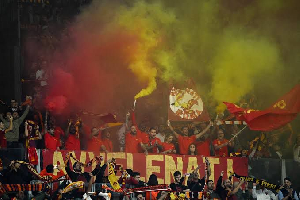

The Roman version is more explosive, rawer, and more emotional. Their banners are political, poetic, sometimes fierce enough to send warning shots to players and management.
The Olympico shakes when they launch into their anthem, their voices echoing through the historic city that has lived through wars, emperors, and revolutions. You don’t watch Roma’s Curva Sud, you survive it.
The Bhoys – Celtic (Scotland)
In Glasgow, passion takes on a mystical, almost religious tone. The Green Brigade, the modern ultras of Celtic, aren’t the largest group in Europe, but they are among the most disciplined and creative.
Their tifos are works of art, their political messages unmissable, their noise relentless.
During European nights, Celtic Park transforms into what many players call the loudest stadium they’ve ever experienced.
For the Green Brigade, football is fused with identity, history, and resistance. Their energy is a storm.
Fenerbahçe and Galatasaray – Turkey’s Fire
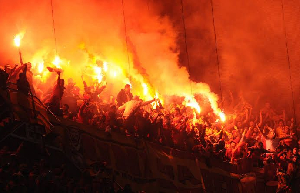

No city breathes ultra culture like Istanbul. The Bosphorus divides continents, but football divides lives. And in the middle of that electric tension stand two terrifyingly passionate ultra groups:
Fenerbahçe – Group One and Genç Fenerbahçeliler
They light up Kadıköy like a battlefield. Torches, flares, smoke; the stadium glows yellow and navy, as if the sky itself is on fire.
Their songs echo down narrow alleyways on match days. Outsiders fear the chaos; insiders feed on it.
Galatasaray – UltrAslan
Then there is Hell, Cehennem, as they call their stadium. UltrAslan are masters of intimidation.
When Galatasaray enters the field, 50,000 voices erupt with a roar that feels ancient, ceremonial, almost supernatural.
Many players say it’s the only place where you feel the fans screaming inside your bones.
The Yellow Wall – Borussia Dortmund (Germany)
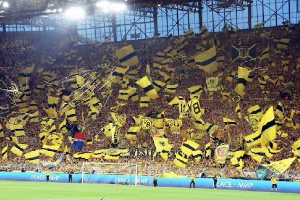
The Südtribüne is not an ultra-group; it is a force of nature. One gigantic stand, 25,000 people, no seats, just pure human electricity. The ultras within the wall. “The Unity”, coordinate a rhythm that never breaks.
Flags whip the air like battle grounds. The chanting is so loud that Dortmund’s opponents often struggle to communicate on the pitch.
The Yellow Wall doesn’t just support Dortmund; it swallows the visiting team.
Barra Brava – Boca Juniors (Argentina)

In South America, ultra culture is not just football; it is life, politics, neighbourhoods, pride, and survival. And no one embodies that better than La Doce, Boca Juniors’ infamous Barra Brava.
They arrive singing hours before the match. They own the rhythm of La Bombonera. Their drums are thunder; their chants are folklore passed from one generation to the next. The stadium’s structure trembles when they jump.
La Bombonera doesn’t just shake, it lives. And La Doce is its heartbeat.
Wydad and Raja Casablanca – Morocco’s Poetic Warriors
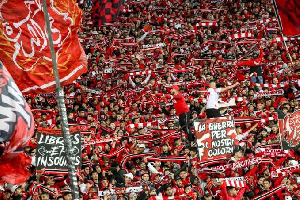
North African ultras have something the rest of the world admires: a lyrical, almost artistic style of chanting. The stadiums echo with synchronized songs that could pass as national anthems.
Raja’s Green Boys and Ultras Eagles
Their chant “Fbladi delmouni” went viral globally, a song of social struggle, pain, and identity that transcended football. Their tifos are masterpieces that blend politics, art, and defiance.
Wydad’s Winners
Winners are disciplined, militaristic, perfectly synchronized. Their voice feels like a single organism roaring through the red sea of supporters. Derbies in Casablanca do not feel like football events, they feel like revolutions.
Al Ahly – Egypt’s Red Devils

Egypt’s Al Ahly ultras, the Ultras Ahlawy, are known for bravery and tragedy. Their loyalty has cost lives; the Port Said disaster remains one of football’s darkest chapters.
Yet their presence persists: Red flares, roaring anthems. A devotion that outlives fear.
In Africa, no group matches Ahly’s combination of size, noise, and emotional weight. They are not just supporting a club, they are defending a history.
FKA/JE


