


The Institute for Liberty and Policy Innovation (ILAPI) has expressed deep concern over recent proposals by the Minister for Finance suggesting that the government could tap into dormant bank accounts to finance national development.
While acknowledging the urgent need to mobilise domestic resources to tackle Ghana’s fiscal pressures, ILAPI warned that appropriating private savings poses severe constitutional, economic, and ethical risks that threaten public trust in the country’s banking sector.
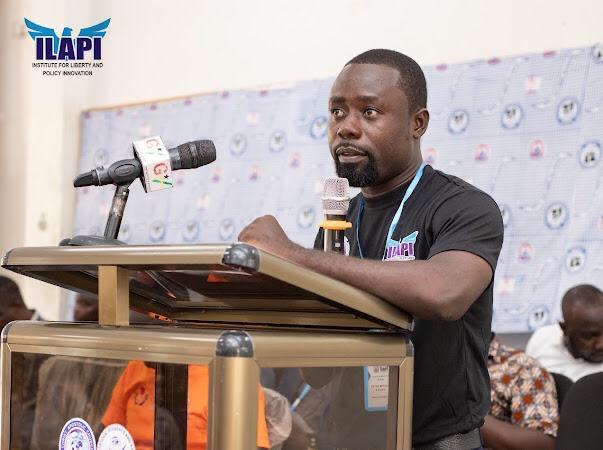
In a statement issued on Friday, Peter Bismark, Executive Director of ILAPI-Ghana, stressed that long-term national development cannot be built on policies that erode property rights or undermine confidence in the financial system.
“Citizens’ savings, whether active or dormant, remain private property,” Bismark noted. “An economy thrives when individuals have confidence that their assets are protected from arbitrary government interventions. Dormant accounts do not constitute abandoned assets merely because they have remained inactive for a period.”
ILAPI highlighted several legitimate reasons why accounts might sit inactive, including long-term savings strategies, overseas migration, illness, ongoing inheritance disputes, or retirement planning.
The policy group emphasised that financial institutions already have clear mechanisms in place to reactivate inactive accounts once ownership is verified. Consequently, the primary objective of any government policy should be reuniting citizens with their money, not converting dormant balances into government revenue for fiscal convenience.
Rather than treating dormant bank accounts as a source of government revenue, ILAPI urges the state to focus on structural fiscal discipline and institutional reforms.
To achieve this, the government must prioritise cutting unbudgeted and inefficient public expenditure to free up fiscal space. Furthermore, state institutions should strengthen accountability and anti-corruption mechanisms to recover misappropriated funds rather than targeting private savings.
ILAPI also calls for the creation of a publicly accessible, transparent online registry and guide to enable families and heirs to easily trace and claim missing assets. Finally, the state must eliminate long administrative bottlenecks so families can access these funds efficiently, directly helping lift households out of poverty.
To ensure proper governance and safeguard constitutional rights, ILAPI proposed that Ghana establish an Independent Unclaimed Assets Trust rather than absorbing dormant accounts into the national budget.
Under this proposed framework, the trust would operate under strict statutory protections free from political interference or fiscal raiding, while guaranteeing that legitimate account holders or their heirs retain rights to make perpetual or long-term claims.
The entity would be required to publish mandatory, regular public audits and financial reports to ensure total operational transparency. Additionally, idle balances would be managed conservatively in low-risk investment instruments to maintain sufficient liquidity for incoming ownership claims.
Crucially, all assets would be held strictly in trust rather than being treated as standard government revenue.
ILAPI called on policymakers to abandon any proposal that treats private savings as fiscal funding, urging the government instead to pursue reforms that expand economic prosperity, uphold fiscal discipline, and preserve constitutional protections for all Ghanaians.
DISCLAIMER: The Views, Comments, Opinions, Contributions and Statements made by Readers and Contributors on this platform do not necessarily represent the views or policy of Multimedia Group Limited.
DISCLAIMER: The Views, Comments, Opinions, Contributions and Statements made by Readers and Contributors on this platform do not necessarily represent the views or policy of Multimedia Group Limited.
Source link
