


THE Governor of the Bank of Ghana, Dr Johnson Pandit Asiama, has urged the banking and finance industry to deepen its intermediation role by expanding support for agriculture, manufacturing, Small and Medium-Scale Enterprises (SMEs) and other value-adding sectors to drive economic growth and job creation.
He said banks must take advantage of the improving macroeconomic stability to channel credit to the real sector and stimulate productive activity.
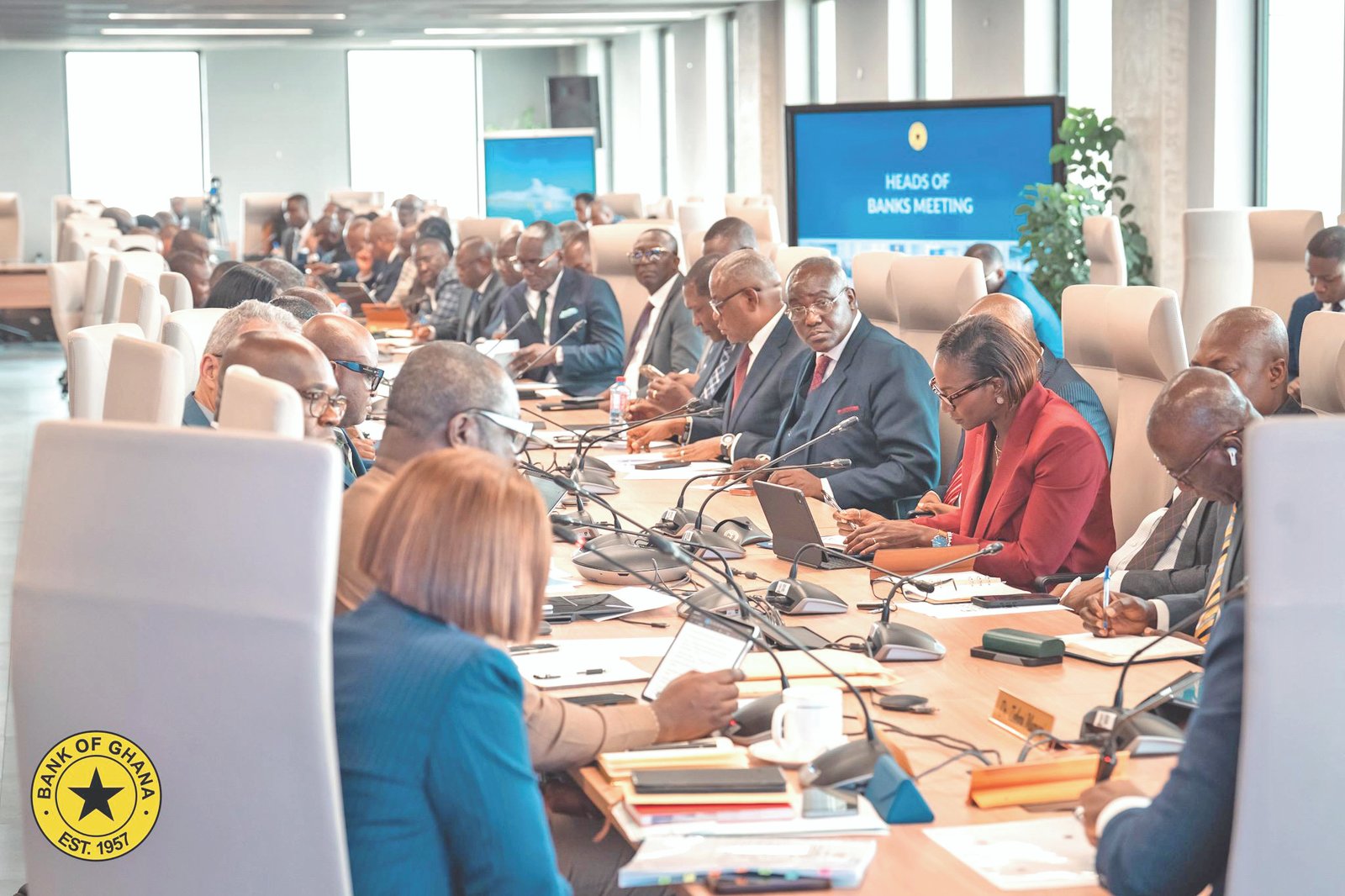
Speaking at a post-Monetary Policy Committee engagement with Heads of Banks in Accra yesterday, Dr Asiama noted that loans are accounted for less than one-fifth of total industry assets.
According to the governor, stability must now translate into purposeful intermediation without reintroducing asset quality pressures that could undermine recent gains.
Dr Asiama disclosed that the Monetary Policy Committee (MPC), at its 128th meeting in January 2026, reduced the Monetary Policy Rate by 250 basis points to 15.50 per cent, citing faster-than-anticipated disinflation and well-anchored inflation expectations.
He underlined that inflation had dropped sharply from 23.8 per cent in December 2024 to 3.8 per cent in January 2026, the lowest level since the adoption of inflation targeting.
Dr Asiama also highlighted the Virtual Asset Service Providers Act to regulate digital asset activities, noting that regulatory frameworks and supervisory processes were being finalised to ensure orderly implementation.
Moreover, Dr Asiama indicated that the bank had inaugurated Steering and Technical Committees to encourage more banks to list on the Ghana Stock Exchange, explaining that broader ownership and improved governance would enhance resilience and deepen public trust in the financial system.
“Stability has been restored. The task now is durability,” he emphasised, assuring banks of the central bank’s continued engagement as a firm but supportive regulator committed to building a resilient financial system capable of supporting Ghana’s long-term transformation.
According to him, asset concentration in sovereign and central bank instruments remained elevated, while about 68 per cent of industry profitability continued to be driven by net interest income.
“There is nothing inherently problematic about net interest income. However, a high dependence on it increases sensitivity to interest rate cycles and sovereign exposure dynamics. As margins compress in a normalising rate environment, earnings resilience will increasingly depend on diversification, particularly through transactional banking, trade services, payments, treasury activities, and other fee-based income streams that are less balance-sheet intensive,” Dr Asiama explained.
He observed that although non-performing loans had declined, they remained above benchmark levels, and urged banks to maintain strict underwriting standards as credit expansion resumes.
Furthermore, the governor said global growth in 2025 proved more resilient than expected, supported by easing inflation and strong investment momentum, creating a more favourable external environment for emerging economies, including Ghana.
On the domestic front, Dr Asiama said real Gross Domestic Product growth improved to 6.1 per cent in the first three quarters of 2025, driven largely by services and agriculture.
He added that fiscal consolidation, a strong primary surplus, declining public debt and improved external balances had strengthened macroeconomic stability, providing buffers and restoring confidence among businesses and consumers.
On structural reforms, Dr Asiama revealed that Parliament had passed the Bank of Ghana (Amendment) Act, 2025, reinforcing the central bank’s operational independence and strengthening transparency and accountability.
BY KINGSLEY ASARE
Follow Ghanaian Times WhatsApp Channel today. https://whatsapp.com/channel/0029VbAjG7g3gvWajUAEX12Q
Trusted News. Real Stories. Anytime, Anywhere.
Join our WhatsApp Channel now! https://whatsapp.com/channel/0029VbAjG7g3gvWajUAEX12Q

