


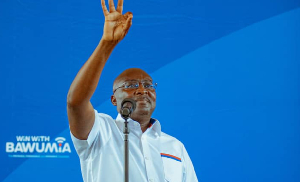
 Dr Mahamudu Bawumia is a former Vice President of Ghana
A Deputy Spokesperson for former Vice-President Dr Mahamudu Bawumia, Dr Ekua Amoakoh, has hailed the newly launched “Fuel Now, Pay Later” initiative as concrete evidence of what she describes as Dr Bawumia’s “visionary digital architecture” that continues to transform lives even while he is out of office.
In a statement titled “Building the Credit-Friendly Economy Ghana Deserves,” on December 9, 2025, Dr Amoakoh argued that Ghana’s transition toward a credit-driven economy is not only achievable but already unfolding—thanks to the digital foundations laid under Dr Bawumia’s leadership.
“I have long advocated for the transformational impact a shift toward a more credit-friendly economy can have on national development,” she wrote, stressing that access to credit “is not just about convenience, it is about unlocking opportunity, improving the quality of life for millions and stimulating sustainable economic growth.”
According to her, the former Vice-President’s digitisation agenda—particularly the Ghana Card, the national digital address system and mobile money interoperability was intentionally designed to support a modern and inclusive economy.
These interventions, she noted, “were not conceived as isolated initiatives.
They were deliberate, interconnected building blocks designed to support the modern, efficient, opportunity-driven Ghana we all aspire to build.”
Dr Amoakoh said the essence of a credit-friendly economy is its ability to empower citizens by expanding their purchasing power and stimulating domestic demand.
“That demand, in turn, boosts local production, fuels entrepreneurship, and strengthens the private sector,” she explained, describing it as “a natural cycle of economic vibrancy, far more practical and impactful than the phantom so-called ‘24-hour economy.’”
She pointed to the fuel-on-credit system introduced by Star Oil as a direct outcome of these digital structures.
“Today, even while Dr Bawumia is in opposition, we are witnessing a shining example of this vision materialising in real time,” she stated.
“Thanks to the very digital infrastructure he championed, companies like Star Oil have been able to introduce a seamless system that allows drivers to purchase fuel on credit.”
Dr Amoakoh highlighted the simplicity and efficiency of the system, quoting the step-by-step process to illustrate how digital interoperability is enabling real economic empowerment.
According to her, the process is straightforward: the driver arrives at the fuel station, an attendant verifies the driver’s Ghana Card and confirms their identity through NIA Face ID, after which the system instantly runs a credit check via the myCreditScore platform.
If approved, the driver buys fuel using their MoMo wallet without paying immediately and after eight hours the driver’s wallet is automatically debited.
Once repayment is completed, the system unlocks the ability for the driver to make the next purchase.
She emphasised that “this entire process identity verification, credit scoring, interoperability and automated payments is made possible because the digital rails already exist. Rails that were designed, constructed, and operationalised under Dr Bawumia’s leadership.”
Calling the system “the digital economy in action,” Dr Amoakoh insisted it demonstrated not future promises but present realities.
“This is credit access in motion. This is empowerment made real,” she declared.
Dr Amoakoh further stated that if such innovation is possible even before Dr Bawumia has “the chance to implement a full credit-led national economic agenda,” then a national mandate would unlock even greater transformation.
“Imagine what becomes possible when this vision is given the mandate and scale it deserves. Ghana is already stepping into its future. We must now choose to accelerate it,” she added.’
