There is a quiet crisis unfolding in Nigeria’s capital city, and not enough people are talking about it.
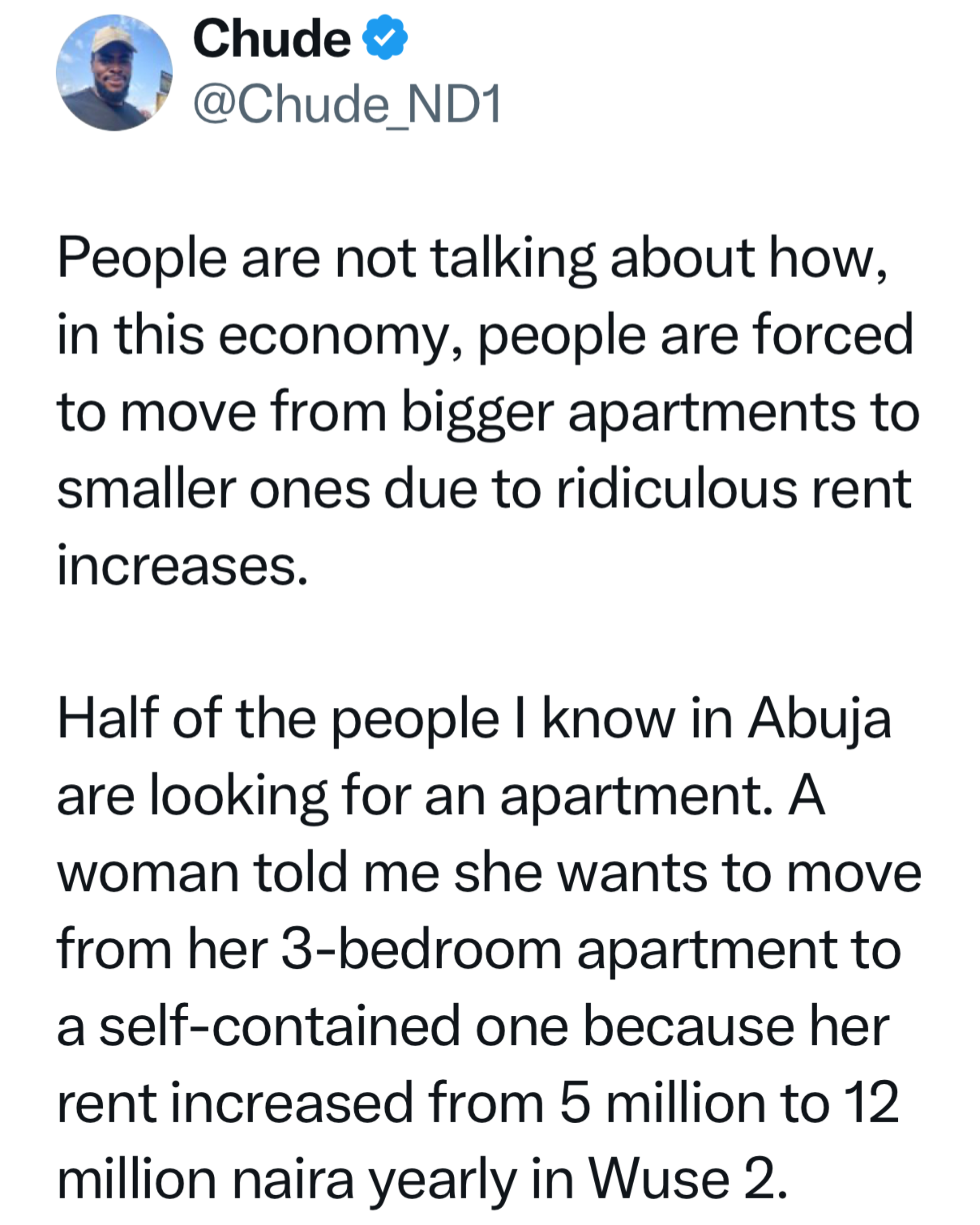
Popular media personality and Twitter influencer Chude (@Chude_ND1) brought it to the spotlight this week when he took to X (formerly Twitter) to share something that many Nigerians are living through but few are saying out loud, the brutal reality of skyrocketing rents that are forcing people to trade bigger homes for smaller ones, not by choice, but by financial necessity.
“People are not talking about how, in this economy, people are forced to move from bigger apartments to smaller ones due to ridiculous rent increases,” Chude wrote, and the post quickly resonated with thousands who clearly knew exactly what he was talking about.
He didn’t just speak in general terms either. He came with receipts.
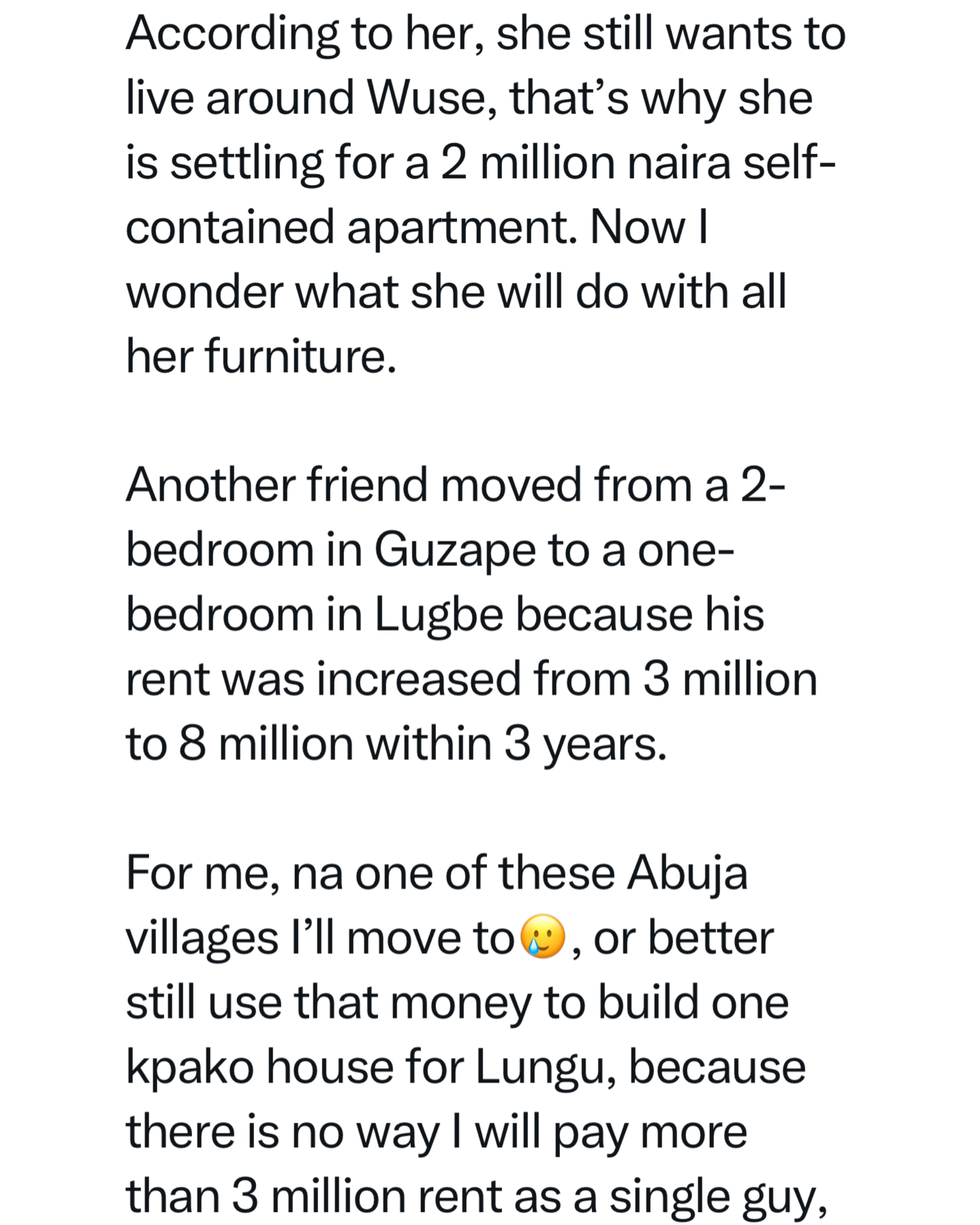
A woman in his circle, he revealed, is preparing to vacate her three-bedroom apartment in Wuse 2, one of Abuja’s most sought-after neighbourhoods — after her annual rent jumped from ₦5 million to a staggering ₦12 million. Her solution? Downsize to a self-contained unit at around ₦2 million, just to stay within the Wuse area. Chude’s reaction said it all: “I wonder what she will do with all her furniture.”
That story alone would have been enough to make people stop scrolling. But Chude had more.
Another friend of his made a similar move, from a two-bedroom flat in upscale Guzape down to a one-bedroom in Lugbe, after his rent ballooned from ₦3 million to ₦8 million within just three years. Three years. The numbers are not gradual. They are aggressive.
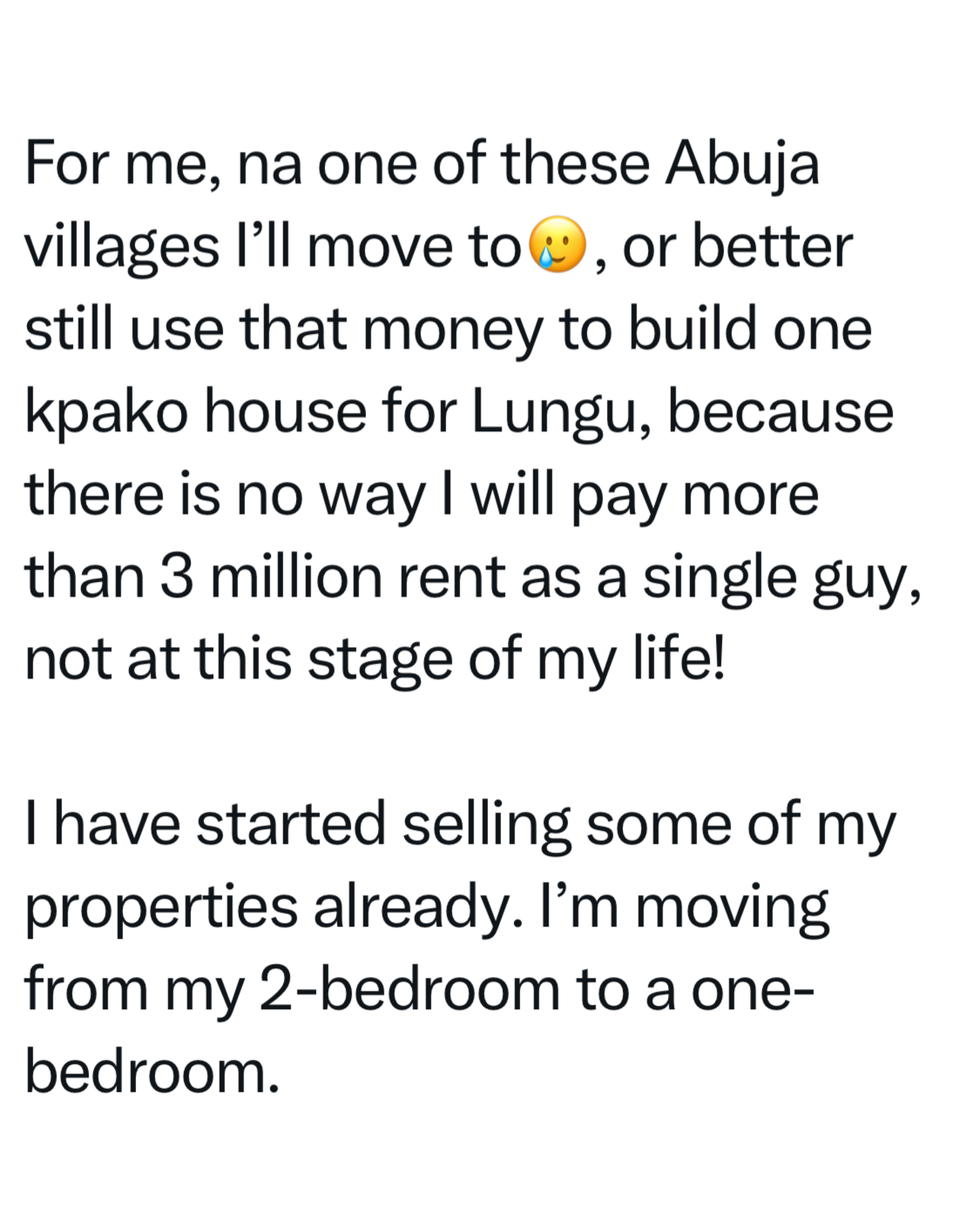
And Chude himself? He says he’s already started selling off some of his belongings and is making the move from a two-bedroom to a one-bedroom. He was refreshingly blunt about where his own limit lies: paying more than ₦3 million in rent as a single man is simply off the table. “Not at this stage of my life,” he said. His backup plan, delivered with the kind of dry humour only someone truly frustrated could pull off, either relocate to one of Abuja’s outskirt villages, or use the rent money to build a modest home in Lungu instead.
What makes Chude’s thread hit differently is how ordinary the people in his stories are. These are not people living beyond their means or making poor financial decisions. They are simply people trying to hold on to the lives they built, in a city that keeps pricing them out of it.
The conversation around Nigeria’s housing crisis often gets drowned out by bigger economic headlines — the naira, fuel prices, food costs. But rent? Rent is personal. It’s the address on your ID card, the school run your kids are used to, the commute you’ve structured your whole life around. When that gets yanked away by a landlord slapping a 140% increase on your renewal notice, something deeper shifts.
Half of the people Chude knows in Abuja are currently searching for a new apartment. Half. In a city. Among one person’s social circle. That number alone should make policymakers uncomfortable.
For now though, Nigerians are doing what they’ve always done; adapting, downsizing, and finding dark humour in situations that really aren’t funny at all.