


Football development has been the watchword of FIFA President Gianni Infantino since he was elected head of the world football governing body on February 26, 2016 in Zurich, Switzerland.
He set the tone for his presidency with the launch of the FIFA Forward program which has contributed over $5 billion towards development projects across all 211 Member Associations (MA’s), a sevenfold increase compared to the pre-2016 period.
A much greater proportion of FIFA’s revenues (which have not risen at the same rate) is now being put back into the game. This increase in investment is a consequence of the new FIFA being more efficient, well governed and fit for purpose.
‘He called Vinícius a monkey’ – Mbappé alleges racist remark by Benfica’s Prestianni
FIFA provides support to cover operational costs of all associations, as well as funding for specific football projects – such as pitches, technical centers, competitions, etc – and travel, accommodation and equipment costs of the national teams for those most in need.
The support of FIFA has aided over 150 MA’s with the provision of infrastructure and the necessary technical support towards the realization of their football dreams.
Africa, made of 54 Member Associations has been the biggest beneficiary thanks to a commitment of over $1.2 billion during the 10-year period fueling the completion of 203 Infrastructure projects.
The breakdown includes newly built and renovated 74 Technical centres and MA’s headquarters to ensure the base for development and strengthen local administration.
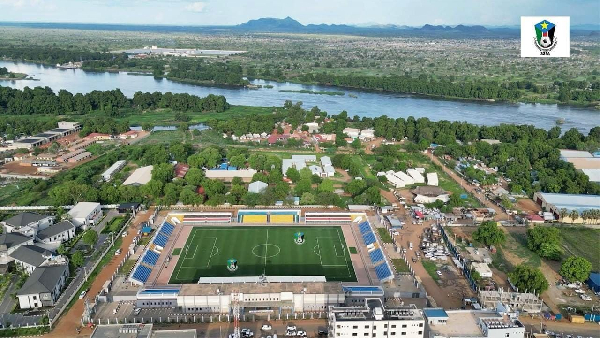
Others are the construction of 99 artificial turf pitches (including synthetic pitches) whilst over over 50 Stadiums have been upgraded to FIFA and CAF standards. An example is the 7,000-capacity Juba National Stadium in South Sudan after an investment of approximately $6.9 million courtesy FIFA Forward programme.
FIFA has also funded and supported the organisation of competitions and league across Africa notably in Burkina Faso, Chad, Equatorial Guinea, Malawi, Uganda, South Africa, Ghana, Nigeria amongst others.
To confirm Africa as a key cog, FIFA opened the Africa Hub located in Rabat, Morocco in July 2025 to get closer to the MA’s and support their activities and programs.
FIFA has also launched the Talent Development Scheme led by the renowned Arsène Wenger, now FIFA Chief of Global Football Development, which aims to give every talent a chance to develop everywhere around the world and will see 75 FIFA Talent Academies established by the end of 2027.
The results are tangible. Four teams that will make their debuts at this year’s FIFA World Cup; Cabo Verde, Curaçao, Jordan and Uzbekistan, have been able to consistently improve their football ecosystems thanks to FIFA Forward.
Another key highlight of the Infantino era has been the unrivalled support for club football. Last June, FIFA launched a new Club World Cup with 32 teams which turned out to be a huge success. An estimated 2.7 billion fans viewed content across all forms of media.
FIFA has also enlarged the scope and frequency of its youth competitions. Both the FIFA U-17 World Cup and the FIFA U-17 Women’s World Cup are now held annually, and the first-ever edition of the FIFA U-17 World Cup to feature 48 teams took place in Qatar last year and was an amazing celebration of football.

The increase in competitive youth matches provides consistent global elite exposure, bridging development gaps, and allowing more nations to compete.
Women’s football has not been left out at all. Over the past decade, FIFA has fundamentally changed the governance, scale and ambition of women’s football, embedding it as a strategic priority across the organisation. The first 32-team instalment of the FIFA Women’s World Cup, in Australia and New Zealand in 2023, was a resounding success and clearly vindicated the enlargement. Building on the momentum generated, the competition will be further expanded to 48 teams as of 2031.
FIFA significantly increased its investment in the Women’s World Cup, with $152 million distributed in prize money in 2023 – treble the amount paid in 2019 and ten times more than in 2015 – and overall service levels for players are now matching the men’s World Cup.
FIFA has also rolled out new competitions, including the FIFA Women’s Club World Cup, the FIFA Futsal Women’s World Cup and the FIFA Women’s Champions Cup.
Regarding technology, FIFA has been seeking to improve the game, most notably through the implementation and development of the video assistant referee (VAR). The world body has also been driving the use of semi-automated offside technology to further support VARs.
Following the ‘2015 FIFA Gate’, the organisation has fundamentally transform itself from a toxic organisation into a respected and trusted global sports governing body that is focused on its mandate to develop football all around the world. This has been achieved through deeply rooted governance and financial management reform, with a clear emphasis on transparency.
Thanks to its good governance, FIFA was able to support its Member Associations and global football during the COVID-19 pandemic by making $1.5 billion available through the COVID-19 Relief Plan.
FIFA has also implemented a thorough reform of the transfer system, including the introduction of the FIFA Clearing House, through which more than $500 million in training rewards has already been allocated and over $300 million has been distributed to 7,000 clubs from across the world.
Finally, new programmes have been launched to maximise the social impact of the game across the world. These include Football for Schools, through which more than 150 Member Associations have signed up to use football as a tool for education, as well as FIFA Arenas aiming to establish at least 1,000 new mini-pitches worldwide to benefit children.
The fight against discrimination has been another top priority under Infantino, with the implementation of anti-racism protocols at games to protect players as well as the launch of the FIFA Social Media Protection Service to combat online abuse.
Meanwhile, watch GhanaWeb’s exposé on the ‘dark side of Kayamata’ and its devastating impact


