


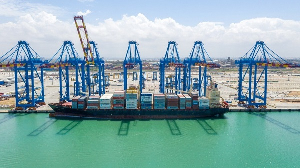
 A photo of parts of the Tema Port
The Food and Beverages Association of Ghana (FABAG) has issued a sharp rebuttal to the management of the Tema Port, declaring that operational challenges at the bulk cargo section have severely worsened and now represent the “worst performance” in more than two decades.
The association’s statement comes as a direct response to a recent press release from the port authorities claiming that previous issues had been resolved.
The FABAG had earlier, in December 2025, warned of staff strikes and labour unrests, which it said threatened operations at the port.
The port management, in response, had labelled the statement as inaccurate and unreflective of true happenings at the port.
However, FABAG, in a statement released January 5, 2026, representing a major share of Ghana’s food and beverage importers, warns that the crisis directly threatens national food security, inflation, and the survival of local businesses.
Tema Port workers not on strike – Management debunks claims
The body warned that vessel discharge rates have plummeted to approximately 200 metric tonnes per day, a staggering 90% decline from the previous minimum average of 2,000 tonnes per day.
“This represents a 90% decline in operational efficiency, with devastating consequences for bulk and bagged cargo port users.
“In fact, the introduction of the 24-hour shift system has not translated into improved productivity. Instead, inadequate staffing, low morale, and unresolved worker grievances continue to negatively affect throughput and turnaround times,” the body warned.
According to FABAG, vessel turnaround times are at historic lows, describing it as the most severe in over 23 years, with ships facing prolonged berthing and slow cargo evacuation.
“Vessel turnaround times have reached historic lows, making the present situation the most severe in more than two decades,” the body added.
FABAG further added that owners of three vessels currently at the port are facing substantial demurrage charges (fees for delayed unloading), which it warns will be passed on to importers, manufacturers, and ultimately, Ghanaian consumers.
FABAG has, thus, called for an immediate, transparent engagement between the Ghana Ports and Harbours Authority (GPHA), port management, labour unions, and user groups; urgent corrective measures to restore efficiency and honest communication with stakeholders, rejecting what it calls a “disconnect between official statements and ground reality”.
The association noted that Tema Port is a critical national asset and that public relations statements cannot substitute for real operational improvements.
ID/AE
