


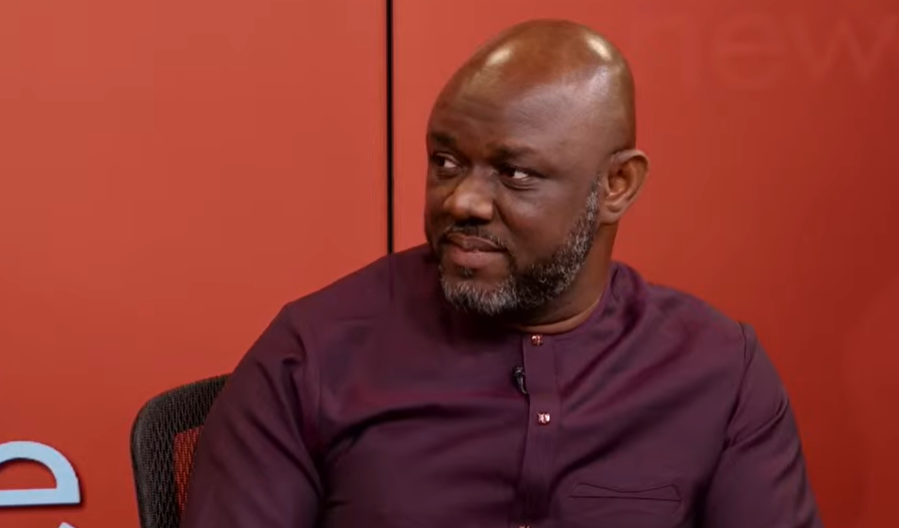
Executive Director of the Africa Centre for Energy Policy (ACEP), Ben Boakye, has accused politicians and politically connected individuals of benefiting from procurement practices at the Electricity Company of Ghana (ECG).
He argues that the utility’s financial challenges go beyond technical and commercial losses, with inefficiencies and alleged abuses in procurement also contributing significantly to its difficulties.
Speaking on JoyNews’ Newsfile on Saturday, September 12, during a discussion on the proposed private sector participation in ECG, Mr Boakye described the state-owned power distributor as part of what he called the “spoils of election”.
“The fundamental truth around this is that ECG is an essential part of the spoils of election,” he said.
“And that is where politicians milk. So when they appoint somebody to go manage it, that is where they share the business, they share the money.”
Mr Boakye said some of what is classified as losses at ECG should instead be viewed as benefits accruing to individuals and businesses that take advantage of inefficiencies within the company.
“What we consider as a loss, it’s actually a benefit to many people who are lined up to actually milk it. And that’s the bare truth,” he said.
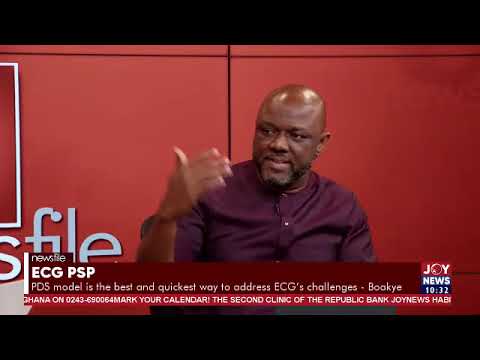
ECG procurement
Explaining what he believes drives the alleged leakages, Mr Boakye identified procurement as a major area of concern, claiming that some items purchased by ECG cost significantly more than their market value.
“I’ve said it on this studio many times. When you pick an item that is procured by ECG, if you get an item that you can buy for one cedi on the shelf, ECG will buy it an average of seven cedis,” he said.
He attributed the alleged price differences to procurement practices, including sole sourcing.
“And that’s because of procurement problems, sole sourcing, and I’ve seen people, private people, who have gone in; they will quote their price, and somebody in there will tell you that make it X amount before we give it to you,” he said.
When asked whether the difference was intended to facilitate the sharing of benefits, Mr Boakye responded: “The benefit that has to be shared. Absolutely, yes.”
He said such practices contribute to higher costs and inefficiencies within ECG, arguing that the company’s expenditure problems must receive as much attention as its technical and commercial losses.
“So beyond what we technically would say are technical and commercial losses, the expenditure problems even within the business will not allow the company to be sustainable,” he said.
Mr Boakye questioned why an item that costs one cedi on the open market would allegedly be procured by ECG for several times that amount.
“Why is it that an item that will cost one Cedi would be procured by ECG for seven cedis? And that is not a problem,” he asked.
Private sector participation
Mr Boakye also questioned whether transferring ECG’s management to private operators would, by itself, resolve the problems confronting the company.
He argued that the debate should not be reduced to whether ECG remains state-owned or is handed over to private managers, but should instead focus on addressing the practices that have allowed inefficiencies to persist.
“All we care about is ownership. If that is central, then fix the problem that sustains the ownership,” he said.
According to him, private companies already play significant roles in ECG’s operations, including revenue collection and the repair and maintenance of transformers and power lines.
“And this whole thing about the private sector, who is managing ECG’s business today?” he asked.
“There are businesses that are tied to the cash flow of ECG that are more liquid and more profitable than ECG entities are.”
He alleged that some of these companies have become financially stronger than ECG because of the contracts they receive from the utility.
“They are collecting revenue, they are the ones fixing transformers, they are the ones fixing lines, and they are richer than ECG itself, because they are the ones doing the contracting,” he said.
Mr Boakye described the situation as a form of “chronic capitalism” operating around a state-owned company.
“So technically, we are practising chronic capitalism that we feel is socialism because government owns the main company,” he said.
He argued that private businesses, rather than the state, are among those benefiting from the inefficiencies that have persisted within ECG.
“There are private businesses that are making billions because of the inefficiencies that we have actually cultivated over the years,” he said.
Consumers bearing the cost
Mr Boakye also rejected the suggestion that the financial burden of ECG’s challenges is borne primarily by government.
He said consumers are already paying for the cost of inefficiencies through electricity tariffs and other charges within the power sector.
“Already people are reeling under the tariffs,” he said.
“But is it not expensive? When I’m paying a tariff, right, I’m paying a tariff. And after paying a tariff, you know how much we’re paying? On every litre of petrol you buy, you’re paying more than two cedis to support the power sector.”
He questioned whether it was therefore accurate to suggest that government alone bears the cost of ECG’s financial difficulties.
“Who is paying? Is it the government? Is it the minister? It’s the same people who are paying,” he said.
Mr Boakye maintained that any meaningful reform of ECG must therefore go beyond questions of ownership and address procurement, expenditure and the broader network of interests surrounding the utility.
“So I don’t know what the fuss really is, but the problem is that we need to be intentional and honest about the problems that we have in that space and be able to address them,” he said.
DISCLAIMER: The Views, Comments, Opinions, Contributions and Statements made by Readers and Contributors on this platform do not necessarily represent the views or policy of Multimedia Group Limited.
DISCLAIMER: The Views, Comments, Opinions, Contributions and Statements made by Readers and Contributors on this platform do not necessarily represent the views or policy of Multimedia Group Limited.
Source link


