


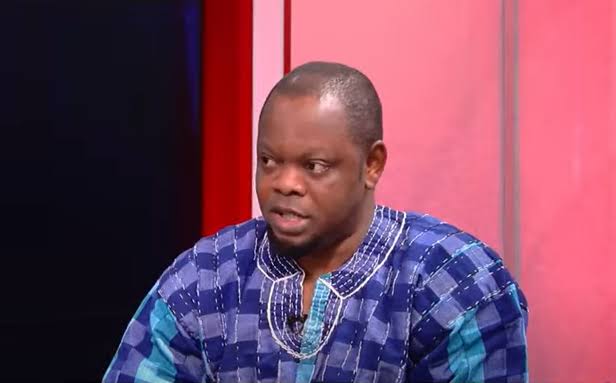
Deputy Attorney-General Dr Justice Srem-Sai has accused the Ghana Bar Association (GBA) of selective criticism, questioning the consistency of its response to recent comments by the Chief Justice.
Speaking on Joy FM’s Top Story on Monday, September 14, Dr Srem-Sai said the GBA’s criticism of Chief Justice Paul Baffoe-Bonnie over remarks he made about state institutions was inconsistent with its response to similar comments by previous Chief Justices.
“The point that we made at the conference is that when it comes to independence or when it comes to consistency, the leadership of the Ghana Bar Association leaves much to be desired,” he said.
Dr Srem-Sai argued that if the GBA’s position is that Chief Justices should avoid comments that could be perceived as political, the principle should be applied consistently regardless of who occupies the position or which government is in power.
“If the Ghana Bar Association is of the view that Chief Justices should not make comments that are seen as political, then anytime a Chief Justice or any judge makes such a comment, then the Ghana Bar Association should condemn it,” he said.
“But to condemn some and not condemn others, that is where the issue is.”
The Deputy Attorney-General said the Bar could either remain silent on such matters or consistently speak out against them, but should not selectively condemn comments based on the political circumstances surrounding them.
“So, our point is that if you decide to be quiet, then be prepared throughout. If you decide to talk, then talk throughout,” he said.
He accused the GBA of allowing political considerations to influence when it chooses to criticise comments by judicial officers.
“And then when you choose to talk when a particular comment favours your favourite, or you speak out when the particular comment is against your favourite, or it favours your opponent, then you are not being consistent. That is all the point we are trying to make,” he said.
Asked whether he believed the GBA was politically aligned with the opposition New Patriotic Party (NPP), Dr Srem-Sai stopped short of making a definitive assertion but said the perception persisted.
“We hope they are not. It is our prayer that they are truly not,” he said.
He argued, however, that the Bar’s perceived pattern of criticism had contributed to suspicions about its political neutrality.
“The point we are making is that the perception or the reality seems to persist. They pick and choose as and when they want to criticise. All their picking and choosing seem to align to a particular political party’s interests. That’s the issue,” he said.
Dr Srem-Sai also pointed to comments by the parliamentary Minority in defence of the GBA as part of what he described as evidence of the perceived relationship.
“The very fact that they are even comparing the Chief Justice with the Ghana Bar Association and accusing the Chief Justice of being an NDC Chief Justice is an admission that they are aligned somehow with the Ghana Bar Association. And that settles the matter,” he stated.
The Deputy Attorney-General said the controversy had also reinforced what he described as a longstanding public perception about the political neutrality of the GBA.
He said it was “no surprise that the general public consistently views the Ghana Bar Association as not aligned to the general good of the country or aligned to the public good as a whole, but rather aligned to a particular section of the political divide.”
His comments come after GBA President Efua Ghartey criticised remarks attributed to Chief Justice Paul Baffoe-Bonnie during visits to the Social Security and National Insurance Trust (SSNIT) and the Minerals Income Investment Fund (MIIF) on September 2.
The Chief Justice’s comments, which compared the performance of the institutions under the current administration with that of the previous government, triggered criticism from sections of the public and the political opposition.
Mrs Ghartey subsequently described the Judicial Service’s defence of the Chief Justice as “at best lacklustre” and cautioned that judicial officers must remain within the constitutional limits of their offices.
The National Democratic Congress (NDC) government has defended the Chief Justice, while the NPP has called for his resignation. The Catholic Bishops’ Conference, however, described the calls for his resignation as disproportionate while acknowledging that the remarks could be perceived as politically charged.
The latest exchange adds another layer to the debate over judicial independence, political neutrality and the role of the legal profession in holding constitutional office holders to account.
DISCLAIMER: The Views, Comments, Opinions, Contributions and Statements made by Readers and Contributors on this platform do not necessarily represent the views or policy of Multimedia Group Limited.
DISCLAIMER: The Views, Comments, Opinions, Contributions and Statements made by Readers and Contributors on this platform do not necessarily represent the views or policy of Multimedia Group Limited.
Source link


