


Iconic Australian department store David Jones has plunged into administration, throwing the future of the 188-year-old retailer and its 6,000 staff into doubt – after failing to pay to rent to Westfield.
Dozens of stores across the country could close, while customers with gift vouchers are set to lose the ability to redeem them, and suppliers set to be out of pocket.
CEO Erica Berchtold assured that David Jones’ physical and online stores will continue to trade in a statement issued on Thursday.
‘David Jones is an iconic company and so many Australians have stories and memories of visiting DJ’s stores and I thank customers, our team members and our partners for their continued support for David Jones through this period,’ she said.
‘We have a well-developed plan on how to reset the business for the future and will be working with the Administrators, the receivers and our secured lender as we continue to pursue that reset of the business’.
Staff are expected to be briefed later this morning on what the administration means for their jobs.
The collapse follows the breakdown of rescue talks with major landlord Scentre Group, which owns Westfield shopping centres, over rent relief and the closure of loss-making stores.
David Jones had sought a break from rent payments and permission to close several stores before their leases expired.


Iconic Australian department store David Jones has plunged into voluntary administration


David Jones’ financial position has come under renewed scrutiny after the retailer recorded a $95.5million pre-tax loss for the year to June 29, 2026, as sales fell by 8.7 per cent. Pictured, Australian model Miranda Kerr with former Group General Manager Sacha Laing in 2011
It also reportedly asked landlords to release about $70million held as security against its leases so it could pay staff and suppliers.
Scentre said David Jones had breached its lease agreements by failing to pay October’s rent.
The property group reportedly offered to delay rent payments and allow the retailer to close some Westfield stores over the next 12 months.
But David Jones’ private equity owner, Anchorage Capital Partners, rejected the deal, paving the way for the retailer to enter administration.
‘We have made a generous offer to Anchorage Capital Partners that would have facilitated the continuation of David Jones trading and that offer has disappointingly been rejected by them,’ Scentre CEO Elliott Rusanow said.
Stores considered highly likely to close include Westfield Parramatta and Warringah Mall in NSW; Carindale, Indooroopilly Shopping Centre, Robina Town Centre and Sunshine Plaza in Queensland; Westfield Marion in South Australia; Westfield Doncaster and Southland in Victoria; and Carousel, Booragoon and Karrinyup Shopping Centre in Western Australia, according to analysis by financial services firm MST Marquee.
Founded in Sydney in 1838, David Jones is recognised as the world’s oldest continuously operating department store still trading under its original name.
South Africa’s Woolworths Holdings bought the chain for about $2.1billion in 2014, before selling its operating business to Anchorage Capital Partners for $100million in 2023.
Retail expert Barry Urquhart said the crisis marked the end of an era for the Australian chain.
‘The inevitability is we will not be seeing David Jones around in the very near future,’ Mr Urquhart told ABC.
As the retailer searches for a new owner, he warned it could disappear altogether.
‘Unfortunately, department stores worldwide are in an attrition rate very, very rapid.

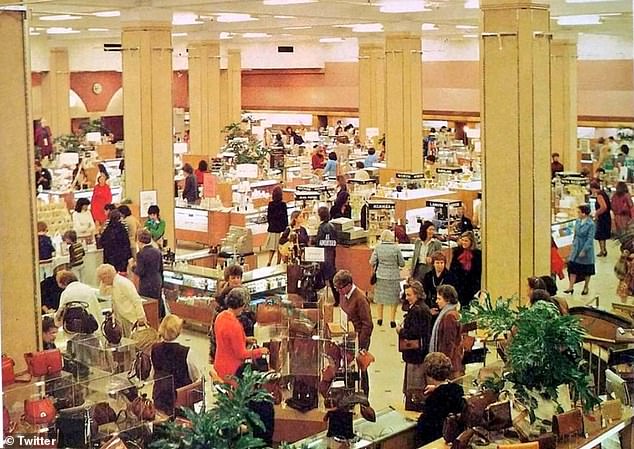
The busy David Jones’ Market St store in Sydney in the early 1980s


A David Jones food court in 1968

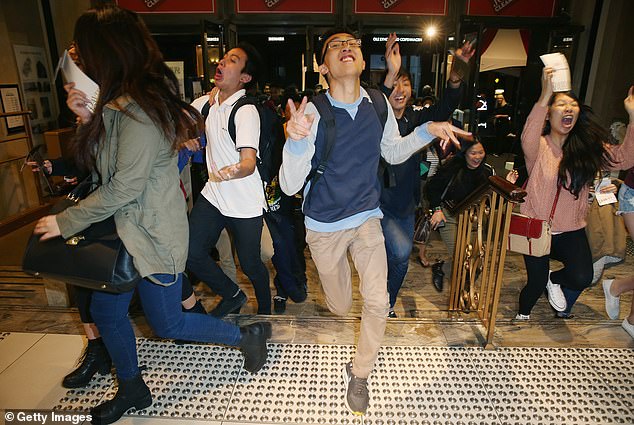
Customers enter the the David Jones city store in the early hours of the morning at the start of Boxing Day sales on December 26, 2013
‘And in Australia since 1946 or the conclusion of World War II, we’ve lost over 23 department stores.
‘So the department store model is obsolete and redundant.’
Mr Urquhart said David Jones’ biggest problem was a lack of funding.
‘The issue confronting David Jones is not retail, it’s not merchandising, advertising or marketing. It is undercapitalisation.
‘It has insufficient funds to be able to sustain itself, grow itself and to be competitive in the marketplace.’
He also identified the Covid-19 pandemic as a major turning point, with lockdowns placing retailers under immense financial pressure.
‘With the onset of the Covid-19 pandemic in February 2020, a lot of communities, towns, businesses closed down and therefore that had a huge impact on cash flows, debt levels,’ he said.
But David Jones’ challenges began long before the pandemic, as changing shopping habits transformed Australian retail.
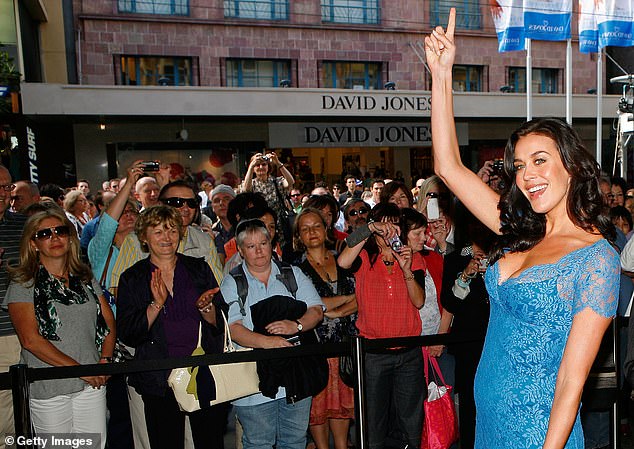
Model Megan Gale (right) gestures after officially opening Stage One of the David Jones Bourke Street Mall Store in 2009
Online shopping had been taking a growing share of retail sales since the early 2000s. The pandemic accelerated that trend, with online purchases surging to almost 20 per cent of total sales.
For David Jones, which had built its reputation on the in-store shopping experience, the shift was a major blow.
The retailer’s struggles are a stark contrast to the glamour of its heyday, when its brand ambassadors included Lauren Hutton, Miranda Kerr, Megan Gale and Jessica Gomes.
Its catwalk shows were equally star-studded, featuring some of modelling’s biggest names, including Linda Evangelista, Jesinta Franklin and Gigi Hadid.
Advertising expert Dee Madigan, owner of the Creative Edge agency, told the Today Show that David Jones’ management had failed to modernise the business and give shoppers a reason to visit its stores rather than shop online.
‘If I was David Jones, I would have maybe four or five flagship stores only and have an online experience that backs that up.
‘But I would just be pumping money into making that in-store experience, something you simply couldn’t replicate online.
‘Whether it’s stylists in there, whether it’s champagne nights, whether it’s free coffee. Bring back the piano player. Really try and make the brand.’
Many Aussies have complained about the shopping experience in recent years, describing the stores as deserted ghost towns.
‘The fitting rooms are dirty, dated, filthy carpet, hole the size of a plate in the ceiling and a dirty band-aid on the floor,’ one disappointed Sydney customer wrote.
David Jones’ owners say its 43 stores across Australia and New Zealand attract about 50 million visits annually and serve five million customers. The network includes flagship stores in Sydney and Melbourne’s CBDs.


