


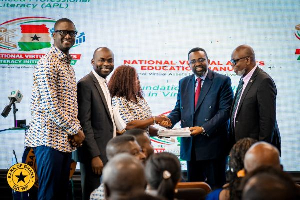
 BoG Governor Dr Asiama pictured at the launch of NaVALI
The Bank of Ghana has launched the National Virtual Asset Literacy Initiative (NaVALI) as part of efforts to strengthen regulation and public understanding of virtual assets in the country.
The initiative was officially launched on Friday, January 23, 2026, at Bank Square in Accra.
Speaking at the event, the Governor of the Bank of Ghana, Dr Johnson Asiama, said NaVALI forms part of Ghana’s deliberate and forward-looking approach to virtual asset regulation, following the recent passage of the Virtual Asset Service Providers Act.
He described the enactment of the Act as a major milestone in Ghana’s financial sector development, noting that the Bank of Ghana and the Securities and Exchange Commission, as the designated regulators, are working to put in place the necessary structures and systems for its effective implementation.
He stressed the need for strong collaboration among all stakeholders across the virtual asset ecosystem.
Dr Asiama cautioned that regulation alone would not be sufficient to address the risks associated with virtual assets, highlighting the importance of public education, consumer protection, and regulatory preparedness.
“Effective regulation and enforcement cannot be achieved by regulators alone. The entire ecosystem must be adequately prepared through a sound understanding of virtual asset activities, their implications, and associated risks,” he stated.
BoG clears six firms for Virtual Asset Sandbox
He further noted that the ecosystem must be adequately prepared through a sound understanding of virtual asset activities, their implications, and associated risks.
“This underscores an urgent need for public education, consumer protection, and regulatory preparedness. NaVALI has been designed precisely to meet this need,” he added.
The Governor also called for sustained collaboration among regulators and other stakeholders to ensure the successful implementation of the initiative.
SP/MA
DVLA set to go global with licensing services in USA, Germany, other countries
DVLA boss hits back at VEMAG over cancellation of alleged contract
