


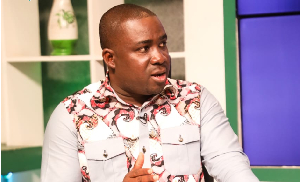

The true measure of finance minister Dr Cassiel Ato Forson’s performance can only be fairly determined after Ghana exits its current International Monetary Fund (IMF) programme, according to Akwasi Nsiah, host of Badwam on Adom TV.
According to Nsiah, Ghana’s economic history from 2009 to 2025 reveals a consistent pattern: the economy tends to stabilize and record positive indicators while under IMF supervision but often deteriorates once the country exits the programme and regains full policy autonomy.
He noted that Ghana entered an IMF-supported programme in 2009 following severe fiscal imbalances. Under that programme, inflation declined, budget deficits narrowed, and investor confidence improved.
However, shortly after exiting the programme around 2012, fiscal discipline weakened, election-year spending surged, and many of the gains achieved under IMF supervision were reversed.
“This pattern is not unique to one government or one political party,” Nsiah stressed.
“It is structural. The IMF imposes fiscal discipline, expenditure controls, and strict monitoring, which naturally forces improvement. The challenge for Ghana has always been sustaining those gains after the IMF leaves.”
He pointed out that the current IMF programme, which Ghana entered in 2023 after the 2022 debt crisis, has once again brought relative macroeconomic stability.
Inflation has been trending downward, foreign exchange reserves have improved, and economic growth projections have become more positive heading into 2024 and 2025.
However, Nsiah cautioned against rushing to either praise or condemn Dr. Ato Forson based solely on these developments.
“Most of the improvements we are seeing now are happening within an IMF framework. The policies are guided, monitored, and, in some cases, enforced by the IMF. That is why it would be intellectually dishonest to say the Finance Minister has either succeeded or failed at this stage,” he said.
According to the Badwam host, the real test of leadership at the Finance Ministry begins after Ghana exits the IMF programme. That is when the country must demonstrate the ability to maintain low inflation, control public spending, grow domestic revenue, manage debt sustainably, and expand the economy without external policy anchors.
“If after exiting the IMF, Ghana maintains discipline, resists election-driven fiscal recklessness, and builds buffers for the future, then history will be kind to Ato Forson. But if the old habits return, then we will know the IMF only treated the symptoms, not the disease,” Nsiah explained.
He concluded by urging Ghanaians to assess economic managers with patience and historical context rather than through short-term political lenses.
“The IMF period is about stabilization. The post-IMF period is about competence, vision, and discipline. That is when Ato Forson can truly be assessed.”


