


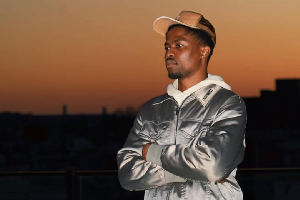

On January 21, 2026, rapper Kwesi Arthur issued a statement on social media accusing his former record label, Ground Up, and the group’s CEO, Glen Boateng, of demanding US$150,000 for him to use his own images in an upcoming independent project.
According to him, the label claimed ownership of his image, music, and brand from 2016 to the present, despite having no affiliation with him since his 2022 album, “Son of Jacob.”
Kwesi Arthur also alleged that he received no financial returns from his music during the period he worked under the label.
But the question remains: Why do some creatives earn nothing from their work?
This situation raises a fundamental question: how can a creative person or innovator produce work yet receive nothing from it, especially when the law states that creators automatically own the rights to their work once it is created?
Many observers argue that upcoming artistes often fail to carefully read or fully understand the contracts presented to them before signing.
What the law says about creative ownership
To clarify how intellectual property works, legal practitioner Seth Doe explained that under Ghanaian law, a creative artiste or innovator automatically owns the rights to their work once it exists.
‘Blame Ground Up, Glen Boateng if anything happens to me’ – Kwesi Arthur explodes
This includes the right to control how the work is used, distributed, published, and commercialised.
Section 5 of Ghana’s Copyright Act, 2005 (Act 690) confirms that authors hold exclusive economic rights over their works, including reproduction, distribution, public performance, and communication to the public.
Ownership can be transferred
However, owning the rights at the start does not mean the creator can keep them forever. The law allows creators to transfer, assign, or license their rights to another person or company.
This means a creator can legally make another person a co-owner or even give away full ownership of their work by contract.
If full rights are assigned, the original creator may no longer have control over how the work is used. These transfers must be in writing to be enforceable.
Once rights are assigned, the new owner can distribute, publish, brand, and commercially exploit the work under their own label or company name, depending on the terms of the agreement.
In simple terms, a creative work can legally be owned, controlled, and marketed by someone else if the creator agreed to it in a valid contract.
The importance of legal guidance for entertainers
This is why entertainers, whether musicians, actors, athletes, producers, directors, or filmmakers, must pay attention to the agreements they enter into.
The safest way to protect their interests is to consult a lawyer, and ideally an entertainment lawyer who understands the industry.
At the early stages of their careers, many upcoming artists are excited by the idea of signing deals, making money, gaining exposure, and chasing their dreams.
That excitement can make them overlook risky clauses or accept agreements that work against them from the outset.
Lessons for young talents
Hopefully, the situation involving Kwesi Arthur and Ground Up serves as a lesson. Young creatives entering the entertainment space must learn to involve a lawyer before signing anything.
Meanwhile watch GhanaWeb’s exclusive interview with Ghanaian musician/comedian David Oscar Dogbe

AK/EB


